Log in to save this article and keep your favorite resources in one place.
If you’ve ever sat on a subway underground when your train grinds to a halt for no apparent reason, you’ll know how critical it is to get information to figure out what to do next. And how frustrating it is when you don’t. In our world where we’re accustomed to having every answer at our fingertips, it’s more important than ever for mass transit systems to deliver helpful information, in real time, to their riders. Here come the artificial-intelligence-powered chatbots to our rescue.
AI Takes the Train in Paris
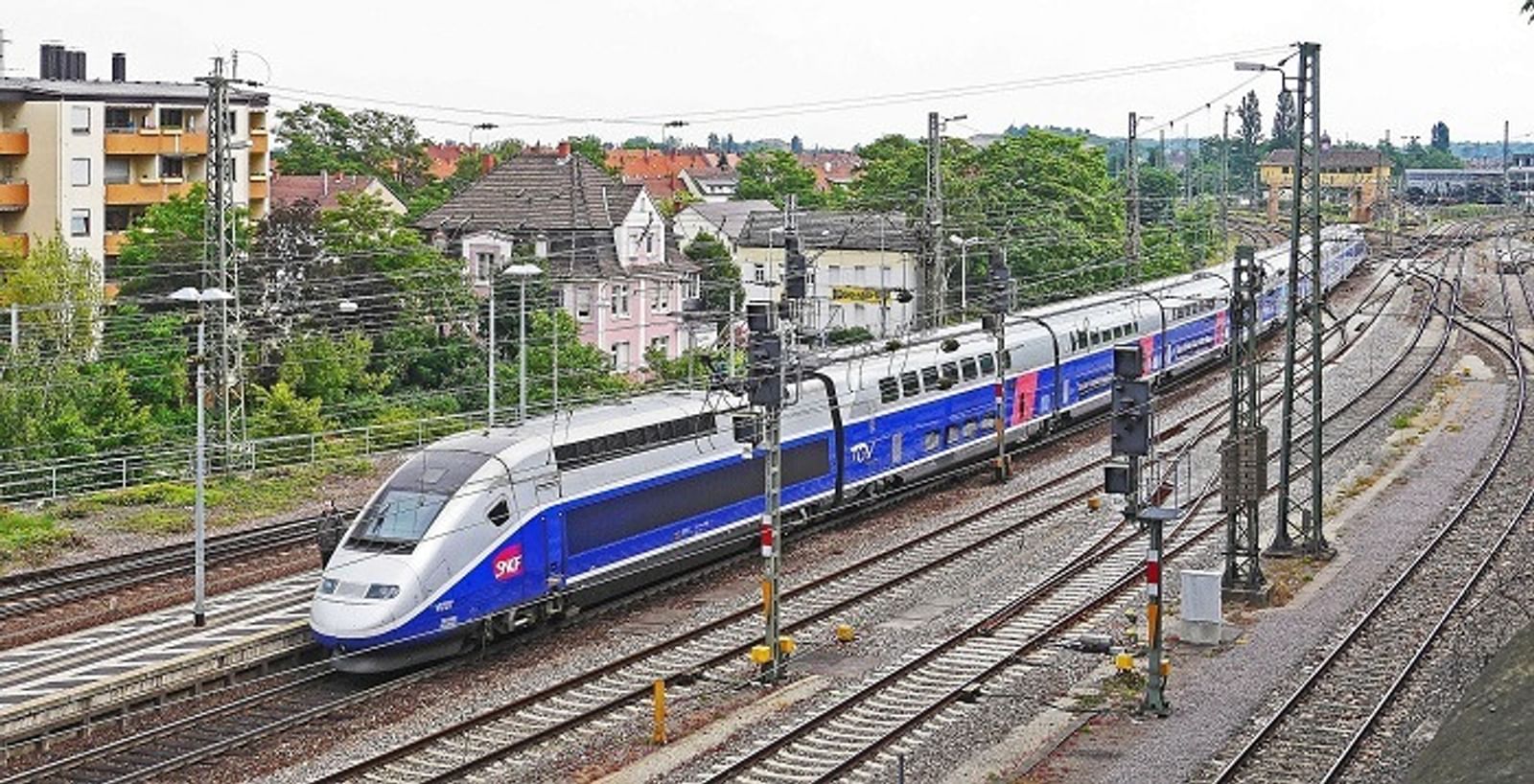
Take this transit scenario to a rail system as complex as what’s in place in Paris, where 3.2 million passengers ride 3,200 trains each day on the SNCF lines between the city center its sprawling suburbs. That’s second only to the number of trains that run daily in Tokyo.
At the 2018 SAPPHIRE NOW and ASUG Annual Conference, we had the chance to speak with Olivia Fischer who’s leading an artificial-intelligence-driven chatbot project with the digital media team at the Paris region branch of SNCF. (In case you’re wondering, SNCF stands for the Société nationale des chemins de fer francais, or in English, the French National Railway Company, and has been operating since the 1930s.)
A Personalized Experience for Passengers at Scale
SNCF is building a chatbot powered by SAP Leonardo Recast Conversational AI to help daily travelers plan their trips and navigate any of the inevitable delays that happen on a rail system. According to Fischer, it’s all about delivering a good customer experience to everyone. “Our obsession is helping people find the right information about where to go at the right time, when they need it, whatever the device they’re using, whatever their situation,” she explained. “This may be the suburban people going to work every day, but it’s also tourists. As public transportation, we must take care of every customer. That’s where our chatbot is really interesting for us, because it helps us deliver tailor-made service and personalized information at an industrialized scale.”
Teaching the Babybot About Transportation
Developing the initial chatbot took only about nine weeks with help from Recast Conversational AI. Fischer called it the “babybot, because it’s almost like a baby. You have to raise it and teach it how to speak.”
They launched this babybot on a small scale to the SNCF agents who work in each train station, as well as to a few customers who were early adopters. In that first wave of a few hundred people using the chatbot daily, SNCF learned a lot about how people interact with these bots. “People are both suspicious about using a bot with AI, but also have really high expectations,” Fischer recalled. “Because people are used to a certain level of conversation and don’t understand the limits of a bot service.”
The bot had to be trained using both deep learning and hands-on instruction. “It’s not a self-learning robot,” Fischer explained. “We are not to that extent of AI yet. So that means we have a moderator who tags every question, and then the bot attributes a level of confidence to how well it understands the question’s intention.” Above a certain level of confidence, the bot will answer without reformulating the question or asking for more information.
The Spaghetti Plate of Legacy IT
Fischer recounted the biggest challenges for this project as, “the natural language processing for transportation terms, which are very specific, and connecting the bot with our spaghetti plate of IT legacy systems. Because SNCF is an old company, the IT was built in layers so there are bits and pieces everywhere. We’ve been doing some work to reorganize and integrate this data, so the company can use it more easily.”
A Multitalented, Multilingual Chatbot
The chatbot is currently capable of speaking to its users in French, English, and Spanish. This will come in handy for the legions of tourists who will visit Paris for the Summer Olympic Games in 2024, and prior to that for the Rugby World Cup in 2023. “We expect a lot of tourists for these,” Fischer explained. “The bot will help us to deal with this population and the languages that would be very expensive to develop within a traditional messaging platform.”
The chatbot also helps provide accessible services to riders who are hearing impaired, vision impaired, and more. It’s strictly text-based at the moment, but Fischer said they’re exploring use cases that may involve voice commands.
A Bot With Personality
SNCF made the choice to bring some humanity to something that is basically just a robot. Users who interact with the bot will find it makes small talk and little jokes. “When you say, ‘thank you,’ the bot answers with smiley emojis, ‘Thank you, I do my best,’” Fischer recalled. “Naturally, people, when they deal with the bot, they want to chat.”
But all interactions aren’t marked with smiles. There are a lot of problems that arise in public transportation that make people angry. “Especially for public transportation, real-time information is always becoming obsolete,” said Fischer. “To deal with these limits and the hostility of some customers, the bot has to express its limits and admit that it’s a bot.”
No Threat to Agents
Throughout the bot development process, SNCF has remained transparent about its aims for the bot and how it can help its human agents. “The bot cannot be an SNCF agent. It’s a bot, and it stays in its place. It delivers a certain service very well, but then, for the real relationship, you have agents,” Fischer explained. “You can call the call center. You can go to station and speak to real people. It’s two different experiences.” Fischer has actually found that the chatbot alleviates some of the frustrations SNCF agents experience from answering the same questions over and over.
The Train Trip of the Future
SNCF plans to launch the bot with its full capabilities in early 2019. As the chatbot evolves, that’s where it brings real value to SNCF’s customers. “To understand the real behaviors and needs of the passengers — if they need traffic info or an itinerary. When do they need to be informed? That’s the real work, and that’s really the core of the chatbot,” Fischer said.
Fischer and her team hope to integrate the bot with SNCF’s social media presence. Currently, every train line in the Paris region already has a Twitter account that delivers information as quickly as possible. For example, the community manager can update the Twitter account with information about a slowdown, then the bot could deliver personalized information to users who want to reroute their trips in response.
“What’s really important for me is how the bot is creating a big revolution in customer information in transportation,” Fischer said. “It’s going to bring really great benefits where we can go to them with the information and speak in natural language. That’s a real revolution.”
Looking for innovative ways to enhance your customer experience with SAP technologies? Join us for the Customer Experience Innovation Forum, our newest event for retailers, consumer products companies, and wholesalers.
You Might Be Interested In

Log in to save this article and keep your favorite resources in one place.

Log in to save this article and keep your favorite resources in one place.

Log in to save this article and keep your favorite resources in one place.

Log in to save this article and keep your favorite resources in one place.