Log in to save this article and keep your favorite resources in one place.
Everyone has had a job they disliked — it’s just a fact of life. We’ve all been in the situation where our manager is a taskmaster, micromanager, or there’s just a clash of personalities that makes working life painful.
Usually, in these situations, the employee turns to the human resources (HR) department for a resolution. As most of us may know, HR managers are usually tasked with training and recruitment, but they also often play the role of the sympathetic, understanding “ear” that we need to get through life in the workplace.
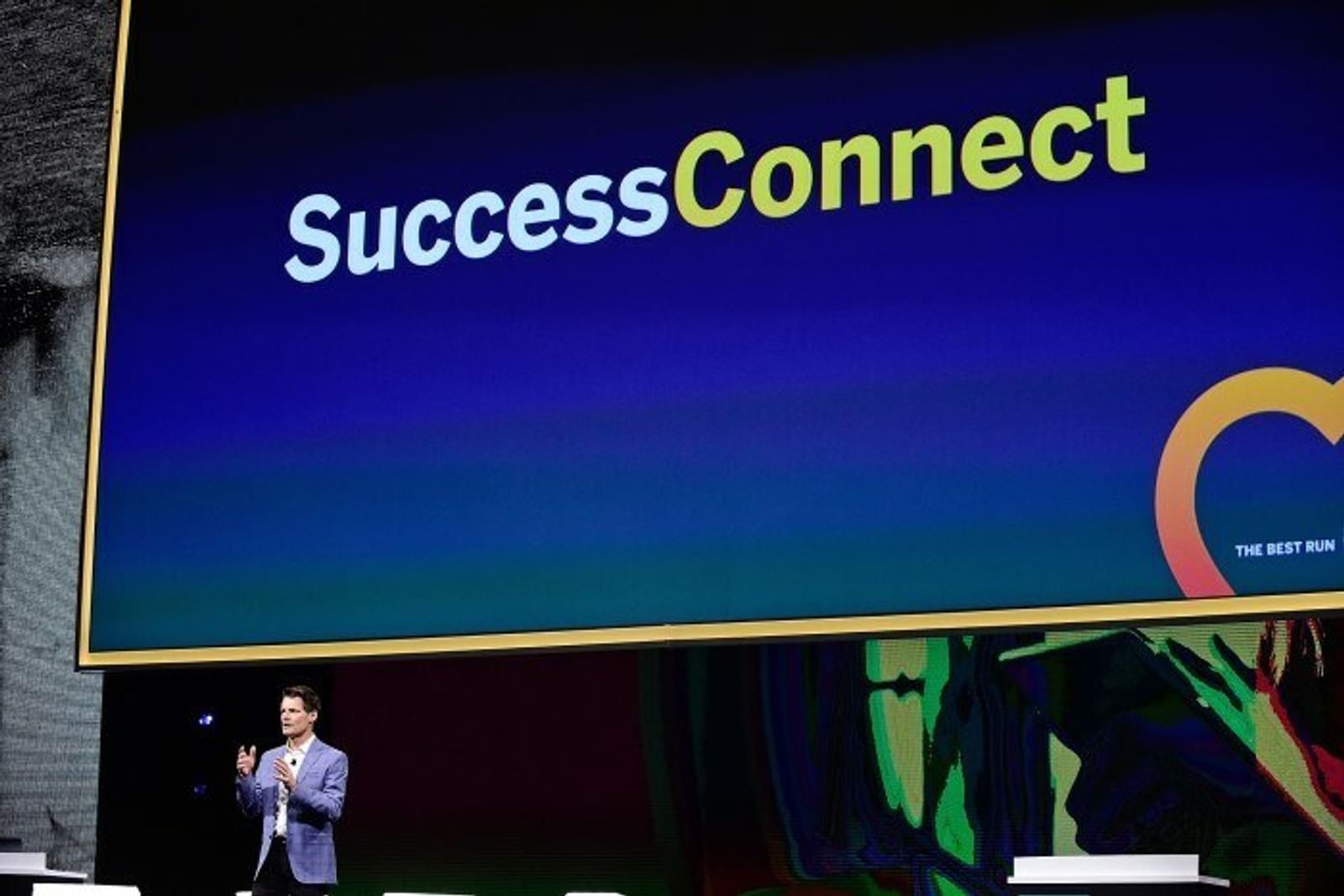
The question we need to ask ourselves as we get on the road to digitally transformed data-centric, cloud-native business is, “Will automated, digitally driven HR be less human?” With this specific concern in mind, SAP used its SuccessConnect conference in Las Vegas to reinforce many of the areas where SAP SuccessFactors technologies are making the whole employee-to-HR relationship even more human and enriching.
Digital-to-Human HR Connection
The company has noted that the number of SAP SuccessFactors Performance and Goals solution customers has now surpassed 5,000. Greg Tomb, SAP SuccessFactors president, argues that we can bridge the digital-to-human connection in HR by accurately tracking workforce goals and performance, and that this is vital for both employee happiness as well as achieving business objectives.
At least one SAP customer agrees. Byron Duarte, CIO of Guatemalan food processing business Arrocera Los Corrales S.A., said, “SAP SuccessFactors solutions have been critical to improving our operations and facilitating ongoing dialogue between employees and managers to ensure they are passionate, engaged, and adequately trained. This high level of employee experience has earned us recognition as a ‘Great Place to Work’ in Guatemala and directly impacts our customers.”
Although it’s not surprising to hear positive feedback from a customer that’s been selected by SAP to share it, there do appear to be tangible, human benefits coming out of SAP SuccessFactors and its continuous performance management processes. They encourage meaningful, timely conversations at all levels and facilitate engagement to accelerate both recognition and personal improvement.
A Modernized Employee Experience
Let’s talk about the employee life cycle management and its importance to the HR function. These processes include digital onboarding procedures (where artificial intelligence advantages will help create employee passes, order company laptops, grant access privileges, and so on), through to employee training (during working life), and finally to review tools to assess employee’s departure status (when they leave a role or are laid off). These are the life cycle elements that SAP SuccessFactors is addressing to create what we can now call a modernized employee experience.
In terms of platform specifics, there are several SAP SuccessFactors solutions that are devoted to workforce planning, global HR compliance, and compensation and benefits management.
“SAP SuccessFactors solutions have enabled our human resource functions to now play a strategic role in meeting our business goals,” said Marcus von Pock, Kongsberg Automotive executive vice president of HR and communications. “As we look to offer a modernized employee experience, having a one-stop shop for all HR processes makes it easier for us to deliver exceptional services, while also establishing a culture of ongoing employee training and development.”
People and Personas in Productive Processes
In terms of major collaborations announced during SAP SuccessConnect Las Vegas, the company noted that Ernst & Young LLP, a member of the global EY organization (EY), has worked with both SAP SuccessFactors and SAP Qualtrics XM to release the EY PX360 People Experience Transformation Platform.
SAP says it is focused on curating better “people experiences” as a result of using Qualtrics experience data (X‑data) with operational data (O‑data) from multiple SAP and non-SAP systems. Managers can use EY PX360 to view a “persona-based” management dashboard interface that provides actionable insights with drill-down capabilities to get at root causes of experience indicators. Once again, this is the intersection point of people issues and technology designed to make working life better.
The Connections Between Employee Experience and Company Success
SAP has for some time insisted just how laser-focused it is on addressing human experience management. Speaking at the SAP SuccessConnect keynote, SAP SuccessFactors President Greg Tomb took this position further and explained that SAP is now focused on HXM (human experience management) as a core operational fundamental.
“We know that there is a key correlation between employee engagement and company results.” Tomb said. “Better employee engagement drives companies to higher levels of productivity and lower levels of staff turnover. With Qualtrics we can measure employee experiences as they are happening in real time throughout the total employee journey. We do this because we believe that employee experiences will draw the dividing line between winners and losers.”
Also of note, SAP announced a partnership with Skillsoft to offer an SAP Solution Extension. This collaboration allows SAP to sell an integrated solution featuring SAP SuccessFactors Learning, Skillsoft’s own content, and the Percipio learning experience platform. The content management of the learning materials here is digital, but the connection points to the content management administrators who need to get training materials to employees is very human. Skillsoft also provides Skillsoft Aspire, which offers practical on-the-job learning journeys specifically built to support individual employees’ progression paths.
People Are the Bottom Line
The bottom line is this discussion comes back to people. We spend more on people than compute or storage. And there is a global talent shortage for many of the new and emerging skills that we need for roles that, in many cases, we have yet to fully define due to still-nascent platforms like blockchain, quantum computing, and the wider realms of artificial intelligence (AI).
Digital HR might have a few more shiny apps and alerts, but the core concern here is people, welfare, and happiness, and the onward impact that all has on productivity. The new world of work is here. Though it is technology-enabled, it still includes the human touch.
Register for the ASUG Experience for HR & Payroll Oct. 16 – 18 in Toronto to learn from peers how to strengthen your workforce technology and meet your business goals.
Photo credit: SAP
You Might Be Interested In

Log in to save this article and keep your favorite resources in one place.

Log in to save this article and keep your favorite resources in one place.

Log in to save this article and keep your favorite resources in one place.

Log in to save this article and keep your favorite resources in one place.