Log in to save this article and keep your favorite resources in one place.
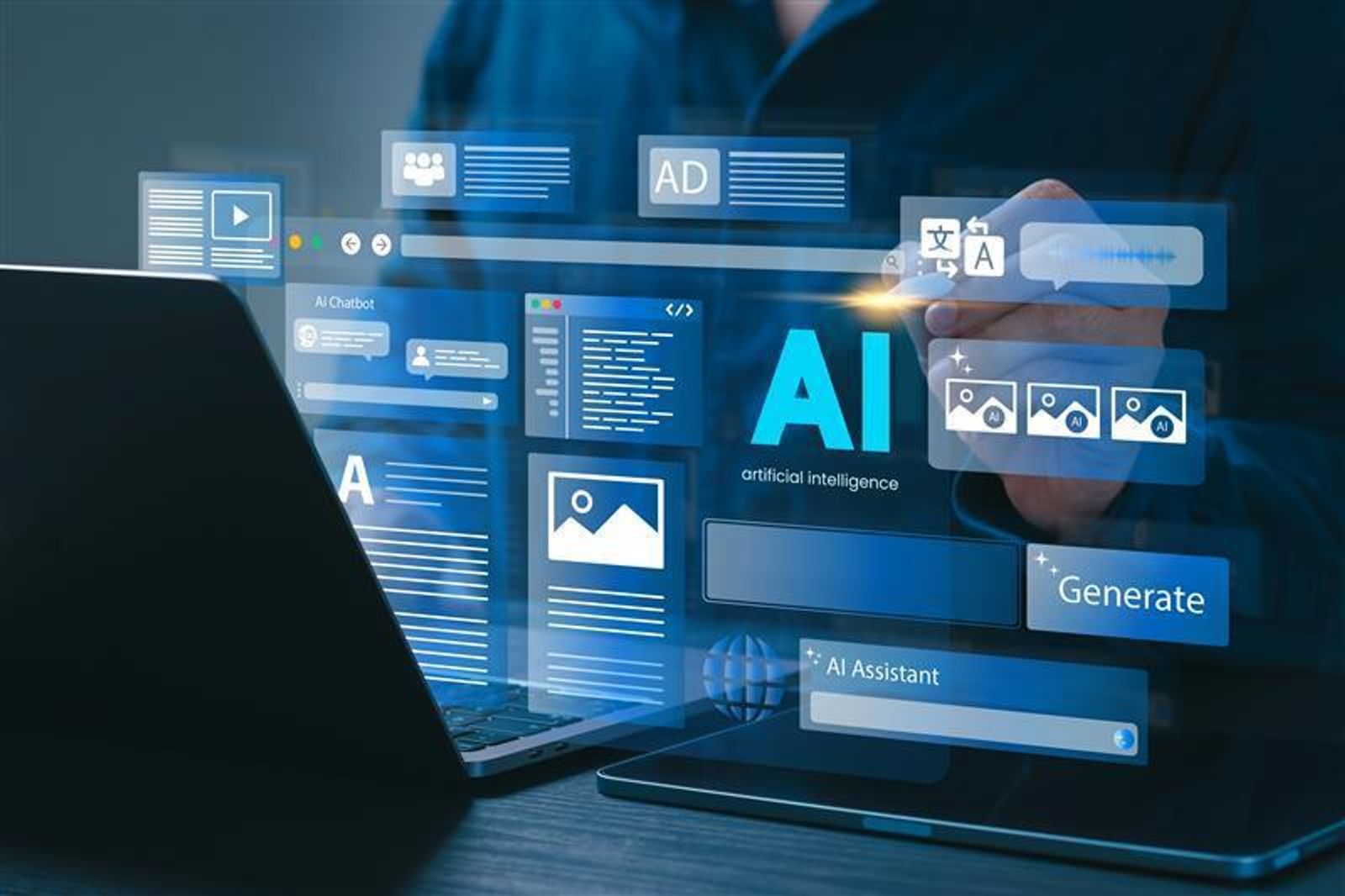
Popularized in recent years by the mainstream debut of ChatGPT, generative AI capabilities continue to attract the attention and curiosity of leaders in enterprise technology.
But there’s much more to discuss when it comes to artificial intelligence, from the promise of agentic AI capabilities to the concrete business value that AI stands to unlock within the next decade.
To discuss these topics and more, ASUG recently caught up with Andreas Welsch, the Founder & Chief AI Strategist at Intelligence Briefing and the author of ‘AI Leadership Handbook: A Practical Guide to Turning Technology Hype Into Business Outcomes.’ Welsch previously spent 23 years with SAP in a variety of leadership roles, most recently advising Fortune 500 leaders on realizing business value from AI and accelerating the integration of AI across SAP’s enterprise applications.
AI’s Slow Start
Since the 1950s, researchers and industry leaders have been trying to build systems that can mimic human behavior, human reasoning, and drive automation. But it hasn’t been easy, with plenty of periods of excitement and disappointment, explains Welsch. “We are now at a stage where we have lots of data available, we have infrastructure available that’s scalable and elastic, and we have better algorithms and models in place that can, to a good extent, mimic human behavior and reasoning,” he says.
“About eight years ago, machine learning (ML) and deep learning emerged, enabling systems to analyze data, identify patterns, and draw conclusions or inferences. Today, with GenAI, for the first time in the history of computing, we’re able to not just make predictions or give recommendations, but to generate information and create something new, whether it’s text or image or video or audio, and do that at a level of quality that is almost human-like,” says Welsch. “So, from an enterprise perspective, we’ve come from statistical methods and optimization and forecasting to making predictions, recommendations, and classifying information, to now being able to generate information.”
Generative AI Challenges for CIOs
Beyond the hype, it’s still early days for generative AI, especially when it comes to adoption and assessing business impact. Practical issues such as managing costs, integrating data, and upskilling employees are on the minds of many technology executives.
“Lots of organizations have started pilot projects, and many organizations have adopted productivity tools,” says Welsch. “But I think CIOs are well advised to collaborate with their CHRO [Chief Human Resources Officer] peers and their learning and development teams to also help employees learn how we actually use these tools.”
Welsch additionally advises CIOs to keep an eye on costs for these solutions. They’ll need to fine-tune their data strategies to ensure business and customer data is accurate and clean. Another key challenge is investing in upskilling and training.
“Skills need to be built on different levels,” says Welsch. “But where I believe generative AI does actually lower the barrier of entry is for developers. You don’t have to be a data scientist to use and incorporate generative AI tools, unlike machine learning, where you were building models based on your data. Now you can use a model off the shelf from one of the main providers,” Welsch says. “From there, it’s about learning how to integrate the data and write good prompts that cost-effectively deliver the desired outputs.”
From Generative AI to Agentic AI
According to Welsch, we’re heading toward even more autonomy and higher levels of automation. Agentic AI, or AI agents, can take a user’s goal, interpret it, break it down into sub-goals and tasks, and work on those tasks independently. These agents can also reason and review their work to decide if results meet user requirements before sharing back with those users.
Within such advancement, Welsch emphasizes the importance of keeping humans in the loop. People will need to review the information that these agents create, and there will still be tasks that humans are better equipped to handle.
Agentic AI is moving fast. Last fall, SAP – along with other major vendors like Salesforce, Microsoft, and several others announced or launched their first AI agent offering. Some open-source frameworks and startups are developing agent frameworks in this space. Welsch predicts we’ll see an experimentation phase for AI agents akin to enterprise technologists’ initial work with large language models (LLMs) like ChatGPT 18 – 24 months ago.
Welsch advises senior IT leaders to have their teams dig into this technology, which could automate tasks more complex than those robotic process automation (RPA) has been historically able to handle. Welsch suggests that now is the right time to start talking with enterprise software vendors and test agents in a controlled environment to understand how they work and their limitations. Building trust is crucial — both within organizations and with external audit teams and end users. Risk mitigation, governance, and review processes will similarly become increasingly important for IT organizations.
Still, Welsch stresses there is great potential for AI agents to take on tasks that traditionally require human effort. Understanding, creating, and sharing text in areas such as customer service operations and IT service desks could be one such task. “If you can train an AI agent to address basic requests, that means your human agents can spend more time on the really complex tasks without having to deal with and respond to each of the manual and repetitive tasks like resetting my passwords,” he says.
AI agents could also assist in reviewing customer service requests — identifying inquires, categorizing them, finding relevant information, checking for past responses to similar queries, and drafting responses. The drafts could then be sent to a human customer service agent for review and approval before being sent out. Another area ripe for AI agents is within marketing functions, where they could help draft strategies, create marketing briefs, refine messaging, and write copy. While these tasks will still require human review, AI agents will enable marketers to work at a much faster scale, Welsch predicts.
AI’s Transformative Future
While a lot can change in just six months, and predictions several years out can feel like a shot in the dark, Welsch believes that over the next few years, we’re likely to see the rise of intelligent, collaborative, and autonomous multi-agent systems.
“Roughly 10 years ago, when I was working for SAP’s chief technology officer (CTO), we were putting together a vision,” Welsch recalls. “At the time, machine learning was just emerging. IoT was a big thing, and big data analytics was the billion-dollar story. And we created this visionary video about a company using a multi-agent system. Now, we’re at this point where there are feasible and viable frameworks that let you do that.”
In October 2024, SAP introduced collaborative AI agents with custom skills to complete complex cross-disciplinary tasks within Joule, its generative-AI copilot. Other vendors are also integrating similar capabilities into their platforms. Ultimately, this will enable specialized virtual agents to operate autonomously and collaboratively – within teams, across departments, even between companies. For example, a virtual procurement agent could negotiate a deal with a supplier’s virtual sales agent and then coordinate with its company’s virtual agents handling manufacturing, supply chains, and logistics.
Welsch says it will take time for this innovation to permeate organizations. “We’ve seen this time and again, and I don’t think that’s going to change. But in the next five years, I’m excited about seeing organizations adopt this technology and become ever more capable with the help of AI,” he says. “I think there will be a lot more automation, and we’ll be seeing [these agents] move towards autonomy between companies. That’s where I think the big potential is.”
Additional Resources from Andreas Welsch: Andreas has recently published via LinkedIn Learning. Individuals in organizations with a LinkedIn Learning subscription can get a 20-minute overview of AI agents and what to look out for at no additional cost.
- AI Agents: Preparing Your Organization for Change as a Business Leader
- Agentic AI: Challenges and Opportunities for Leadership
FAQ Section:
Q: What is SAP Joule AI?
A: SAP Joule AI is SAP’s generative AI assistant designed to enhance user productivity and decision-making across SAP applications.
Q: How does agentic AI differ from traditional AI in SAP?
A: Agentic AI in SAP refers to AI systems that can autonomously perform tasks, make decisions, and learn from interactions, offering more dynamic solutions compared to traditional AI.
Q: What are the benefits of integrating SAP’s generative AI into business operations?
A: Integrating SAP’s generative AI can lead to improved efficiency, enhanced decision-making, and the ability to generate new insights from existing data.
Interested in More Executive Insights?
Fill out the form below to apply for the ASUG Executive Exchange program, a unique community of executive leaders where connections, lessons, and best practices are shared.
You Might Be Interested In

Log in to save this article and keep your favorite resources in one place.

Log in to save this article and keep your favorite resources in one place.
Log in to save this article and keep your favorite resources in one place.

Log in to save this article and keep your favorite resources in one place.