Log in to save this article and keep your favorite resources in one place.
Join utilities industry peers this fall in San Antonio for SAP for Utilities, Oct. 6 – 9, 2026. Register today.
Until recently, field crews at BC Hydro’s generating stations and substations were coordinating their days through calendars pinned to walls, dispatch files passed hand-to-hand, and work lists scribbled on whiteboards. The utility knew its aging SAP ERP system needed to be modernized. Getting its field workforce to come along would prove to be the harder problem.
“Just moving to standard EAM alone is very significant,” said Mike Seblani, his voice carrying the weight of someone who has spent nine years navigating BC Hydro’s digital transformation. As Senior Manager for Mobility, Analytics, and Integration, Seblani witnessed a problem that had grown over a decade: field workers relied on multiple mobile applications across different devices just to complete daily tasks.
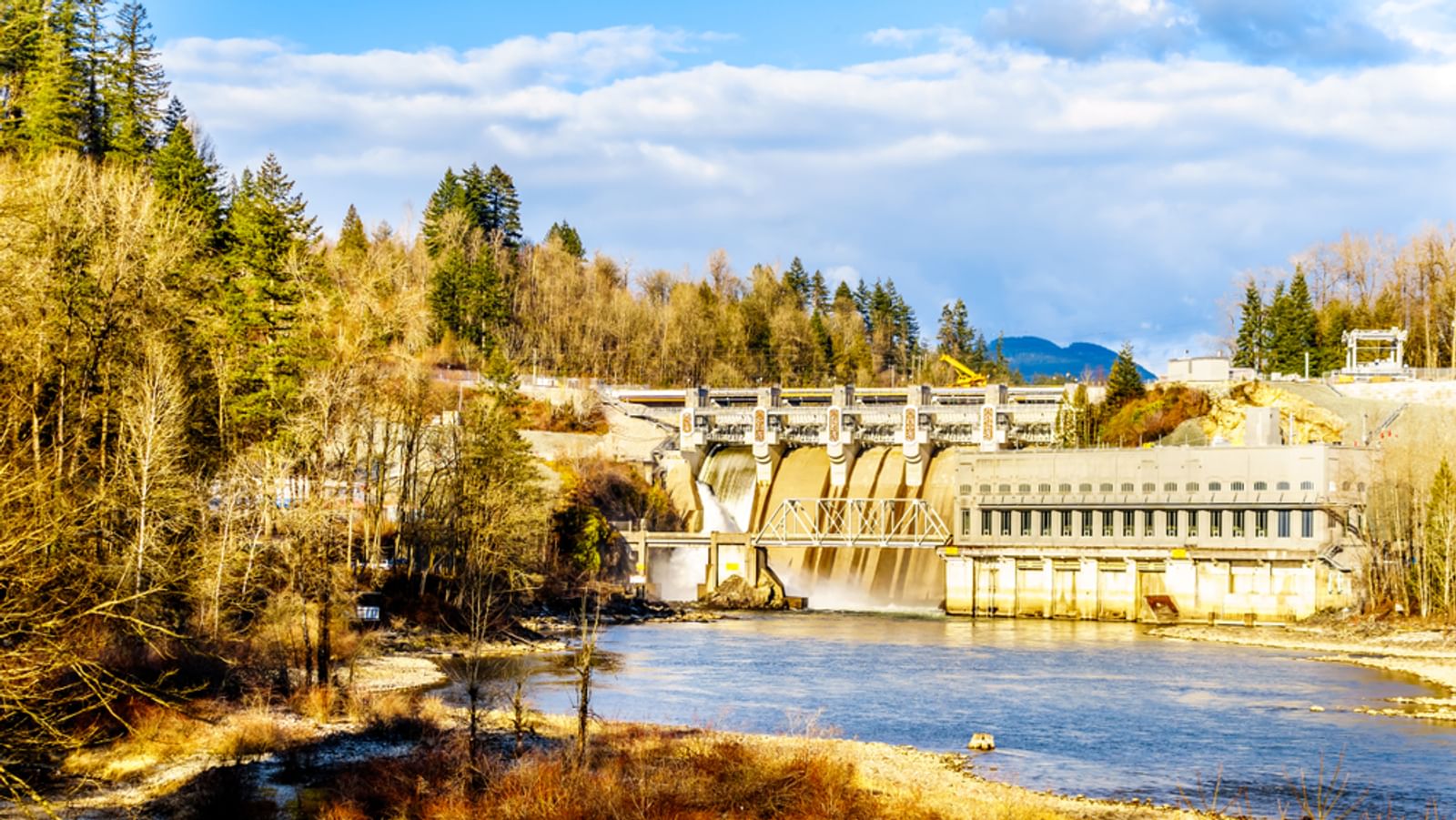
A company that generates clean electricity for over 5 million people across British Columbia was running on homegrown tools, Excel spreadsheets, and back-office support that couldn’t keep pace. Field workers managing 31 hydroelectric facilities with 83 generating units faced frequent application switching, repeated data entry, manual reconciliation, and delays as office staff compiled fragmented records.
The breaking point came when BC Hydro realized its core SAP ERP system, which supported everything from hiring to procurement to customer billing, needed to modernize. Without intervention, the already fragmented mobile landscape would only deteriorate further.
The utility launched a 10-project ERP program, with each initiative designed for delivery within approximately 18 months and overseen by its own steering committee. All projects were sequenced under a unified program to manage dependencies across the portfolio.
The Stations SAP project, the effort to digitize field operations at BC Hydro’s generating stations and substations, became one of the program’s most visible proving grounds.
“Workers Are Attached to Their Ways of Working”
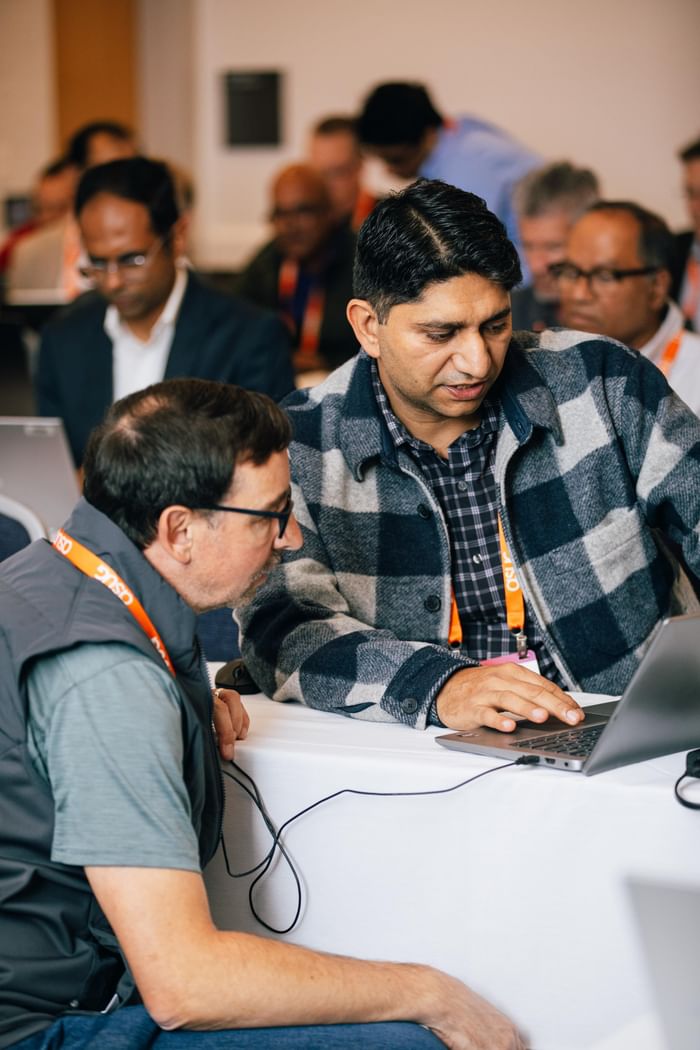
“We’re introducing smart devices like iPads to complete the work in the field. This in itself is a significant change to workers,” explained Seblani, describing the cultural shock of digitization. Field crews at BC Hydro’s stations had worked this way for years, and those analog processes had become embedded in the culture.
Beyond training, asking people to trade tactile, visible processes for digital workflows done on a tablet required trust. Vincent Koh, BC Hydro’s Mobile Product Owner, understood this from the beginning. The solution had to feel right to people whose workdays were spent in the field, not behind desks. The human element of this transformation became central to every design decision that followed.
BC Hydro’s mobility strategy was guided by principles that served as decision filters throughout the Stations project. A key principle was consolidation: the team replaced Excel tools and paper processes with a unified SAP environment built on EAM, Resource Scheduling (RSH), Service & Asset Manager (SSAM), and Field Service Manager (FSM).
Selecting solutions with prebuilt SAP integration components meant the 9‑phase work management lifecycle could operate across enterprise systems without the burden of custom integration work. SSAM and FSM were chosen in part because their mobile interfaces were intuitive enough that field workers would actually use them, and their offline capability ensured that over 600 workers at remote hydroelectric facilities and substations could execute work regardless of connectivity.
Underneath all of it, a strong integration layer connecting ERP, GIS, and OMS gave BC Hydro native access to supply chain, project systems, human capital management, and finance modules, eliminating redundant data management.
Phase-Based Maintenance and the Real Implementation
The Stations SAP project became the proving ground for this new approach. The 9‑phase work management lifecycle it supported covered everything from work initiation and planning, through scheduling, execution, and completion.
“The project solution will enable various functions performed through the nine-phase work management lifecycle,” emphasized Koh. Delivering it meant replacing a constellation of legacy systems — PassPort for work orders and maintenance, Excel-based scheduling tools, paper maintenance instructions, change request and work plan tools, and SharePoint workflows — with the unified SAP environment and dynamic forms.
The technology was one dimension. The project also delivered 42 new or revised processes and 26 training courses created specifically to prepare field workers for the transition. Change management and expectation setting would remain ongoing challenges well beyond the go-live: moving to standard EAM represented a profound shift in how people worked.
The ultimate validation came in August, when the Stations EAM implementation and BC Hydro’s S/4HANA brownfield migration went live on the same weekend.
In a single cutover, BC Hydro moved to the cloud, changed its database, consolidated separate SAP instances, migrated all integration interfaces to SAP BTP Integration Services, shifted its front end from Portal to WorkZone, and launched the greenfield EAM platform that replaced the paper processes and spreadsheets BC Hydro had spent years working around. The cutover transitioned 10,200 active users and compressed BC Hydro’s database from 13 terabytes to four.
Lessons for Others on the Same Journey
Seblani sees this as the beginning. “After the Stations SAP project is complete, there are several projects lined up to implement SSAM and FSM to other parts of our business,” he said. The 5‑year roadmap anticipates a planned expansion from Stations to Transmission EAM, Distribution EAM, and eventually contractor workflows and service orders.
This phased approach kept the team focused on addressing issues as they arose and working with SAP to refine solutions based on real-world feedback. BC Hydro is in the process of activating Joule and piloting predictive capabilities in SAP Analytics Cloud as it explores how AI can extend the value of its modernized SAP foundation.
The transformation also surfaced a critical lesson about change management. BC Hydro invested heavily in training materials, but Nada Kovacevic, BC Hydro’s Director of Enterprise Solutions and Analytics and ERP program director, said the real gap was elsewhere. “What we would do differently now is we would focus more on how you can do your job differently in the new system, not just how to use the new system,” she explained.
Field workers had no trouble navigating S/4HANA. Their confusion surfaced when they tried to replicate familiar manual steps that the system had automated away, and no one had explicitly mapped those old routines to the new way of working.
Kovacevic candidly acknowledged the toll the program exacted on the people who delivered it. “I don’t want to sugarcoat it and make it sound like it was all wonderful and smooth. It wasn’t,” she said. “But everybody had the same mandate, the same goal, and looked toward the same thing. Everybody stepped up at the end and made it happen.”
For other utilities embarking on similar transformations, BC Hydro’s experience offers clear lessons: consolidate fragmented systems before trying to innovate, treat the ERP platform as a strategic foundation, engage field workers early to ensure solutions reflect real operational needs, and don’t underestimate the cultural challenge of moving from familiar analog processes to digital workflows.
The journey from whiteboards and paper calendars to iPads running integrated mobile applications required new software and, with it, a fundamentally different way of thinking about work.
You Might Be Interested In

Log in to save this article and keep your favorite resources in one place.

Log in to save this article and keep your favorite resources in one place.

Log in to save this article and keep your favorite resources in one place.

Log in to save this article and keep your favorite resources in one place.