Log in to save this article and keep your favorite resources in one place.
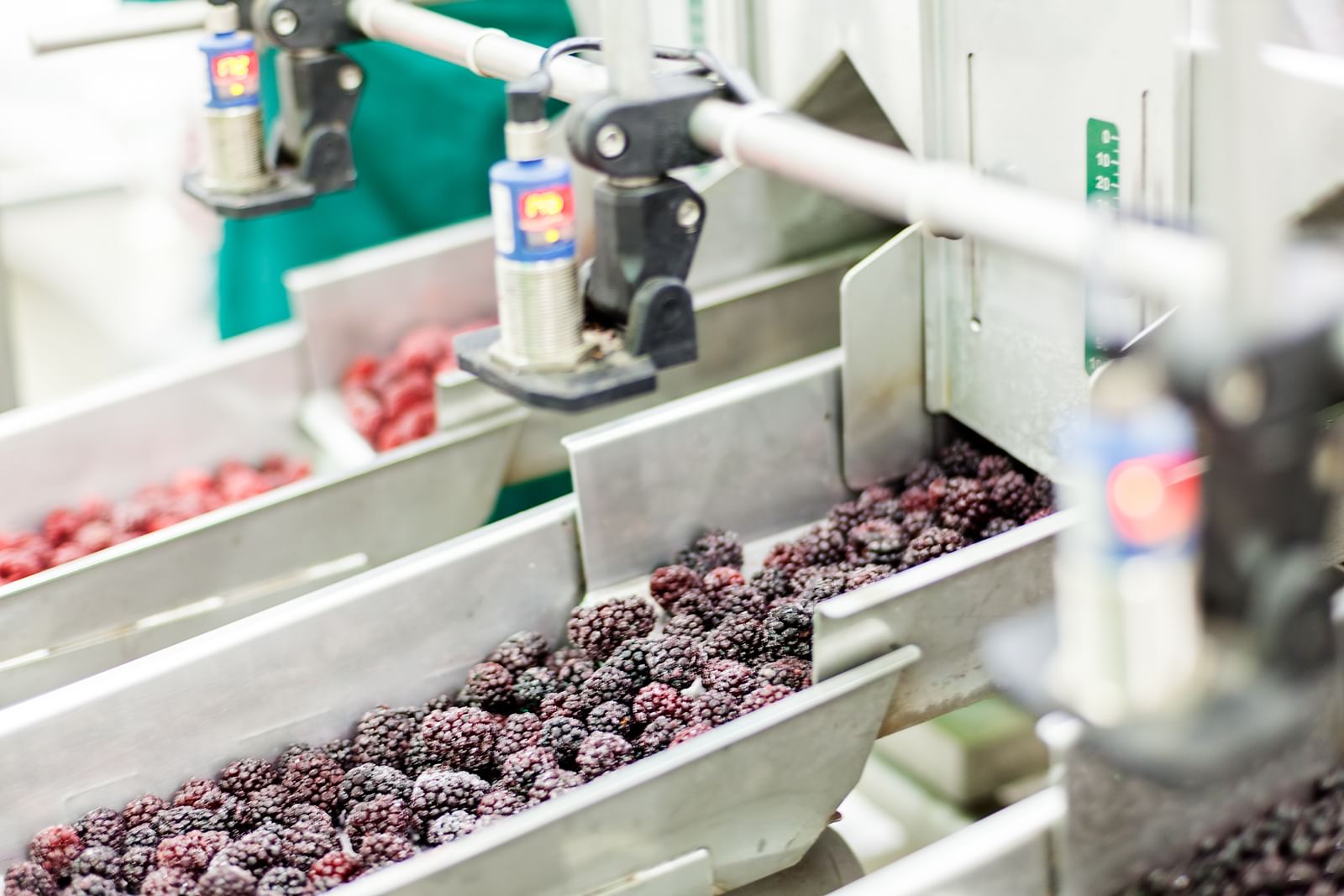
Through its commitment to cultivating with care as one of North America’s largest growers, marketeers, and sellers of fresh and processed berry fruits, Naturipe Farms is a pioneering force in the fresh produce industry.
Formed through a partnership between four distinct berry growing organizations (Hortifruit S.A., Michigan Blueberry Growers, Naturipe Berry Growers, and Munger Farms), Naturipe cultivates blueberries, strawberries, blackberries, raspberries, cranberries, and avocadoes through an extensive network of growers.
Managing all operations involved in bringing its produce to market, from its family-owned farms to family tables, Naturipe’s scope encompasses transportation, distribution, and sales, a significant undertaking that poses logistical challenges across its supply chain.
To manage growth while sustaining the current scale of its operations, the grower-owned cooperative leverages SAP applications including SAP S/4HANA, which it upgraded to in 2018, a decade after first implementing SAP ECC.
“Our business is very complex,” Dario Cruz, Senior SAP Application Developer at Naturipe Farms recently told ASUG, in a discussion focused on how the enterprise managed the technical transition of most of its applications from SAP Graphical User Interface (GUI) to SAP Fiori.
In doing so, Naturipe shifted from a more traditional interface for interacting with SAP systems to a modern UI framework intended to ensure a more consistent user experience. The organization did so with the intention of implementing SAP Fiori Launchpad as the delivery mechanism for any new application functionality.
Alongside Cruz, ASUG spoke with Brian Galloway, Senior Technical Architect at Naturipe, and Hussein Alaedin, Senior Application Engineer at Naturipe, about how the enterprise achieved success with SAP Fiori Launchpad, working toward cleaning its core and eventually moving the organization’s data backend to streamline its data access layer.
Transitioning from SAP GUI to SAP Fiori
For Naturipe to move products through its far-reaching supply chain and eventually into the hands of customers, it must regularly engage a variety of end-users within its ERP system; doing so required the creation of various interfaces for those end-users to interact with.
Before upgrading to SAP S/4HANA, the organization had developed applications that enlisted SAP GUI to build a visual interface for users to interact with to access SAP applications, as well as Web Dynpro ABAP apps, to define how data would be defined and interacted with within that interface.
However, with SAP S/4HANA in place, Naturipe could go further by implementing SAP Fiori Launchpad, an application container that could host multiple SAP Fiori apps and serve as a central entry point for end-users, whether they were engaging SAPUI5 components, Web Dyno ABAP components, or other applications.
Naturipe specifically sought to leverage applications within SAP Fiori Launchpad to directly engage with growers and better manage vital processes, including liquidation, sales, and warehouse management. With SAP S/4HANA and SAP Fiori Launchpad implemented, the cooperative’s development team could completely move these processes inside its SAP instance, significantly improving efficiency and ease of access.
“As UX developers, we’re trying to ensure end-users have the same experiences they have on social media or any other application they are using in their daily lives,” Cruz said.
Navigating SAP Fiori Adoption Processes
It wasn’t initially easy for Naturipe to ensure adoption of new SAP Fiori apps, according to Galloway, who recalls the early days of rolling out the apps less than positively.
The implementation process involved consolidating a number of complex processes into streamlined application workflows. Shipping the farms’ berries, for example, involves a variety of processes, which were reflected by these workflows; but end-users wanted more simplicity, in the form of a single button they could push to initiate the shipping process.
“People are used to using a certain application a certain way,” Galloway said. “A lot of people don’t like change.”
Looking back, Galloway told ASUG, the development team could have focused more on examining Naturipe’s existing business processes and adapting them to adhere to SAP best practices, as opposed to simply attempting to take existing business processes and “push them into SAP,” he said.
Initially, adoption was slow; but as time went on, and Naturipe moved more apps to SAP Fiori and SAP UI5, it became a true “launchpad” of functionality, Galloway said.
Improving Naturipe’s Data Strategy
During this implementation process, Naturipe’s development team moved the organization’s backend data methodology from ABAP Classes/ABAP SQL to CDS Views/AMDP and RAP, streamlining the organization’s data access layer.
“We undertook this process because it made sense,” Galloway stated.
The organization had historically placed business logic in SQL queries and would run it in ABAP, SAP’s proprietary coding language, according to Alaedin. However, the business knowledge contained in that logic was thousands of lines of code long, and the team knew it could not leverage ABAP to move all of this logic over to SAP S/4HANA, so it leveraged CDS and AMDP to do so.
While previously using SAP GUI within SAP ECC, the company had kept sales, vendor, inventory, and invoice data all on different servers. In moving to SAP S/4HANA, the team was also able to migrate all that data to a single core, using CDS Views. “That changed the game forever,” Cruz said. “It’s a powerful tool.”
Now, the team can pull any data from across the business into the models they create. “We are not a complete SAP shop because SAP told us to be,” Galloway added. “Everything has been moved from outside of SAP into it because the process just makes sense. If it didn’t work for us, we wouldn’t do it.”
Lessons Learned for Other Enterprises
Based on their experience implementing SAP Fiori Launchpad, developing applications, and rolling them out to Naturipe’s end-users, the development team also shared insights for other enterprises to consider before embarking on similar implementation projects.
Galloway encouraged enterprises to engage with end-users early, learn their processes, understand how apps can meet their specific needs, and eventually obtain their buy-in by sharing that knowledge, rather than expecting them to buy-in right away.
Additionally, the three developers encouraged companies to take the opportunity, in upgrading from SAP GUI to SAP Fiori — and from SAP ECC to SAP S/4HANA — to evaluate organization-wide business processes.
“An upgrade is the best time in the world to change your business processes,” Galloway said. “It’s a great time to implement new changes.”
One suggestion? Organizations should strip out legacy code and processes where possible before moving to SAP S/4HANA or completing other application upgrades, he said; at most companies, he said, outdated and disused processes and code can remain in a company’s IT landscape long after they become irrelevant.
“Never stop asking why,” Galloway added, referring to the importance of continuing to seek efficiencies and question how and why processes could improve. “Never be complacent.”
You Might Be Interested In

Log in to save this article and keep your favorite resources in one place.

Log in to save this article and keep your favorite resources in one place.

Log in to save this article and keep your favorite resources in one place.

Log in to save this article and keep your favorite resources in one place.