Log in to save this article and keep your favorite resources in one place.

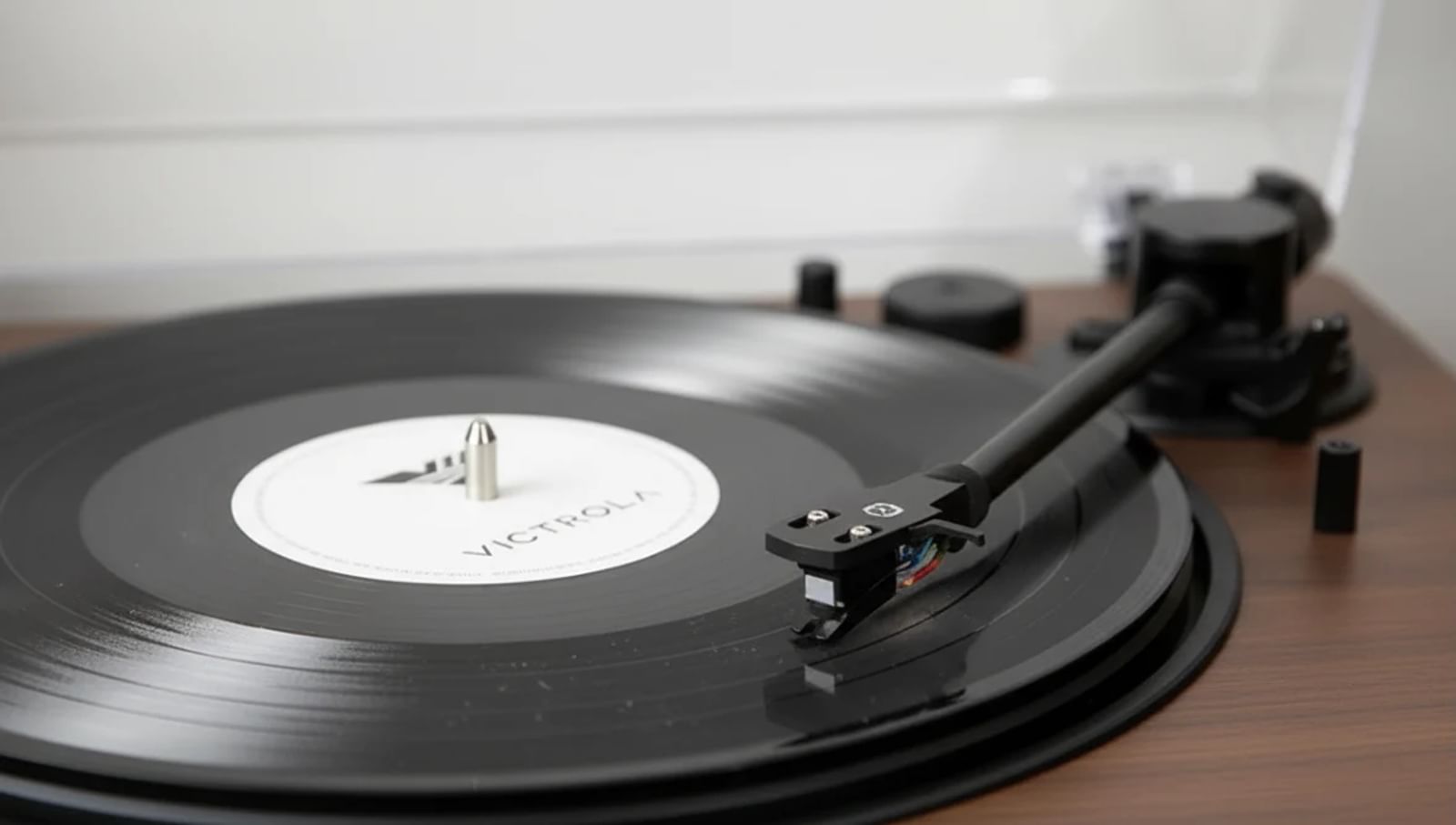
Though founded some years earlier, Victrola didn’t release the first version of its famous namesake record player until 1906. Since then, cementing its status as a leading manufacturer of audio products, the company has passed through multiple owners while maintaining the mentality of a startup.
“We call ourselves the world’s oldest startup,” explained Adam Schneider, SVP of Digital Strategy. So, when it was time to transform from SAP ECC to a new ERP system, “change wasn’t a scary thing for us. We’re driven to keep going and get better.”
From ECC to ERP
Schneider joined Victrola four years ago, when the company’s ECC instance “was very stable, but it wasn’t the system for where they wanted to go.” Among other things, the on-premise system required a mid-market company without a large IT department to worry “about connectivity every single day to make sure VPNs were up and running. So, I came in and built a roadmap to get us to par with technology and define the systems for what they wanted to accomplish. The end was a new ERP system, because we were up against a maintenance deadline with our current system.”
Beyond the deadline pressure, Victrola wanted a system that could scale with its ever-evolving needs. “We evaluated multiple ERP systems and providers and landed with the Cloud ERP public edition,” Schneider said, “because we could make it as simple or as complex as possible based on what we wanted to activate, and it was maintained by SAP on the infrastructure.”
Getting the Transitional Buy-In
When Schneider was brought in to assist with the transition, his top priority to make sure that whatever system Victrola decided on served the business leaders who’d be using it most. “Maintaining an ECC system is not cheap, and it requires a very technical skill set,” Schneider explained. “While I love a technical skill set, we wanted our business users to help define the system, so it’s much more maintainable by a business team as opposed to a very technical team.”
Despite his prior experience with the company, deciding to continue with SAP wasn’t necessarily a given. “I’ve been working in the SAP ecosystem for almost 20 years now, so that was just a good network of folks that I know — but it wasn’t about who I knew or knew could do it well,” Schneider said. “We landed with them because they spoke business.” He explained what he meant by that: “There are a lot of partners out there that love to throw acronyms and technology around. If you come from Sapphire, you learn a new acronym every year. Our business is not at Sapphire, does not have their finger on the pulse of SAP, and they don’t know what the Autonomous Suite is — but they know business.” He needed someone that could speak that language and then help translate it, so his team landed with Syskoplan Reply.
To help figure out what system would best suit Victrola, the company conducted a digital discovery assessment (DDA). “We brought in our business leads from the ground of this project,” Schneider said. “This wasn’t an IT project, and I did not want to take full responsibility. 75% of our project was business leads, the other 25% were IT consultants. I was there to execute for them and make sure that it happened, not to pick their system or processes.” At the end of the process, the scope emerged directly from the DDA, with a deviation that Schneider estimated was no more than 10% at the end of the process.
Schneider added that the changeover was by no means turnkey: “There were some things that we had to bend away from the standard methodology.” One necessary deviation from SAP’s template involved a change that would have created a great deal of additional work for the finance department. “I wasn’t going to recommend we increase staff just to support a new system, because that is the opposite of what we’re trying to do,” Schneider noted. The solution required “getting creative with some of our consultants and my background.”
The Transitional Process
While the implementation was ready to go during Victrola’s Q4, the transition didn’t actually take place until the following year. “We’re in retail and distribution, so Q4 is our Super Bowl,” Schneider explained. “That period involves preparing partners at big box stores for their products, as well as fulfilling direct-to-consumer orders (DTC).”
Preparing for the transition took six months, after which implementation was put on pause until the busy season took place. Then, after Christmas, Victrola jumped into the transition head-on. “Our business leads brought their teams into that system ready to do some training and hands-on exercising, so it got them familiar with what was coming,” Schneider said. “We didn’t have a massive training budget, so we were more focused on managing the change. We started migrating data and connections over. We had a cutover plan that our COO actually was super-involved in, so the energy was there.” That’s not to say the transition was flawless: “We had our hiccups. Our biggest challenges were actually integrations: we have a lot of connected partners that we work with. If you don’t meet their needs, things snowball.”
But by and large, the process went smoothly, with most problems ironed out after a month. “We’re not going to be at 100% on day one, but if you’re hitting that 80% mark and working through some kinks, that’s okay,” Schneider said. “There’s nothing in it we can’t figure out. Just last month, we found something that we made a mistake on, but it’s just that order-cash cycle — you don’t see it until the very end, right? We found an invoicing issue with one of our customers, and we had to correct it. Honestly, that could have also happened in a 10-year-old system. We’re realizing so much value from on-demand data and making this transformation. We’re set up for it now and feel very confident going forward.”
Measuring Results
With limited IT resources, Schneider chose not to fixate on creating multiple metrics and KPIs. In Victrola’s case, measuring success was simple: “We didn’t want to see business disruption or decline in revenue. We can’t let this business lose its momentum. There’s more we want to do in regards to engagement in the system and adoption, but I wasn’t that worried about it. Our team knew that this was their system and they were going to latch onto it. We’re realizing so much value from on-demand data and making this transformation.”
For the future, Schneider said that Victrola is “looking at AI like everyone else.” The company has a foundation that it can execute on, with a cloud ERP and clean data, and teams have already started discussions with SAP on what AI looks like and use cases on implementation. “I strongly believe that we’ll be talking next year about a use case that’s in production.”
You Might Be Interested In
Log in to save this article and keep your favorite resources in one place.