The following guest perspective was authored by Joshua Greenbaum, Prinicipal at Enterprise Applications Consulting (EAC).
SAP’s ability to serve the needs of business users has never been in doubt. The company lists 24 separate industries on its website, and many—like industrial manufacturing and wholesale distribution—are themselves made up of different sub-verticals that SAP has successfully supported for years.
But despite 50 years of success as a provider of industry functionality, SAP’s marketing and sales efforts, including its flagship SAP Sapphire conference, have focused more on the IT department than the line-of-business stakeholder. That model, which propelled SAP to a leadership position in ERP, started to shift in 2012 with the acquisitions of Ariba and SuccessFactors — products targeted at procurement and HR professionals, respectively. The resulting Success Connect and Ariba Live conferences became keystone events for procurement and HR professionals, partners, and SAP itself.
But, for a time, SAP’s ability to target the full range of stakeholders that represent those 24 industries still lagged behind a cloud-based enterprise software market increasingly focused on engaging with—and selling directly to—line-of-business stakeholders in domains such as CRM, HR, supply chain management and execution, and finance.
"SAP Connect was intended to help SAP position its suite approach as a viable replacement for the best-of-breed functionality that its cloud competitors offer."
To that end, SAP Connect—which took place last month in Las Vegas—was meant both as a course correction and a stake in the ground for SAP’s new effort to sell end-to-end functionality across the entire enterprise. Embodied in the newly repurposed SAP Business Suite brand and the company’s suite-first initiative, SAP Connect was intended to help SAP position its suite approach as a viable replacement for the best-of-breed functionality that its cloud competitors offer.
For the most part, the inaugural conference succeeded in this goal. While the majority of its audience hailed from the technology side of the house, not the business side, virtually all the customers I spoke with were at the conference to learn about how to solve their company’s business challenges — not just to learn about new SAP technology. Importantly, most of the attendees I spoke with came to SAP Connect to learn how to do more than just a technology-first upgrade to the cloud — the kind of upgrade that has often failed to provide enough net-new business value to engage internal business stakeholders.
Connecting end-to-end process value
While this quest for business case knowledge was evident, whether SAP Connect’s more comprehensive goal—getting different line-of-business audiences to learn how SAP can support components of key end-to-end processes that lie outside their individual business domains—was achieved wasn’t as evident. The two main keynotes—one by Muhammad Alam, a member of the Executive Board of SAP SE who leads the Product & Engineering board area, and Sebastian Steinhaeuser, a member of the Executive Board and Chief Operating Officer of SAP SE who leads the Strategy & Operations board area—pushed forward those themes. But the success of several of the individual line-of-business keynote sessions in spreading the gospel of suite-first, end-to-end process excellence was less clear to me.
I was able to attend three keynote sessions live: Spend Connect, Success Connect, and Supply Chain Connect. The other two—Finance Connect and Customer Experience Connect—I watched online. Of the five, the Supply Chain Connect keynote was by far the most attuned to the advantages of SAP’s ability to support an end-to-end process that involved personas other than the head of supply chain.
In part, this was because Dominik Metzger, Chief Product Officer, Supply Chain Management, used part of his keynote to discuss the SAP Business Network, which spans product lifecycle management, manufacturing, distribution, warehousing, asset management, and other LOB domains. Metzger also highlighted two new product offerings: SAP Supply Chain Orchestration and SAP Logistics Management, both of which require a silo-busting focus that brings a multitude of personas into the process, both inside the organization as well as outside.
The Finance Connect keynote was also able to bring an end-to-end process focus to the stage. With the finance function being touted as the “nerve center” of the enterprise by David Imbert, Head of Finance Product Marketing at SAP, there was a natural follow-on to the issue of end-to-end process excellence and suite-first concepts. Two of the customers on stage, Pfizer and AIDS Healthcare Foundation, also alluded to these larger goals for the conference.
I’m not surprised these two LOB keynotes were able to meet those goals. SAP’s end-to-end, process-based, silo-busting strategy comes with an innate problem: there is no buying center called “vice president of silo-busting” or “vice-president of end-to-end processes.” Nor is there a “vice-president of business networks.”
But there are three personas that typically have this end-to-end focus: the CFO, COO, and vice president of supply chain. In this regard, what I saw in those keynotes makes sense: with keynotes focused specifically on those personas, SAP seized the opportunity to deliver that message to the two buying audiences that, ipso facto, understand the core concept.
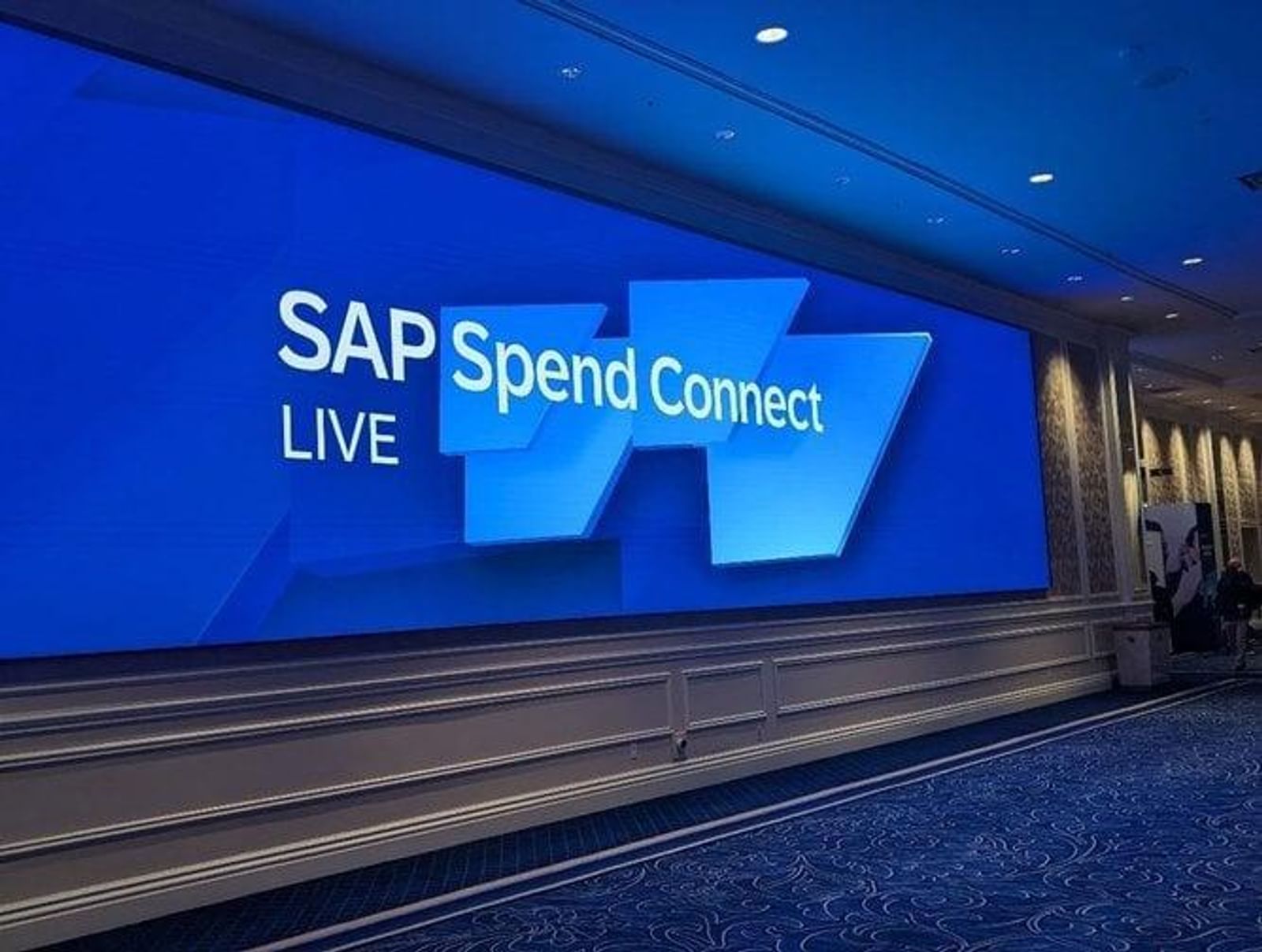
But the other three keynotes—Spend Connect, Success Connect, and Customer Experience Connect—were focused on their core personas: the CPO for Spend, the CHRO for Success, and a collection of sales, commerce, and marketing personas for Customer Experience. To a certain extent, this was understandable for Spend and Success, as these two LOBs have had standalone conferences—Ariba Live and Success Connect—for years, and as such each had an audience that expected a LOB focus similar to what they’ve been given in the past.
But for Customer Experience—in my opinion—not bringing in other personas, in particular supply chain and finance personas, was a missed opportunity to make a connection between CX and the rest of the SAP Business Suite that would have highlighted the key end-to-end process capabilities that SAP is one of very few vendors able to provide. This missed opportunity is particularly acute for CX; SAP’s CX strategy can only hope to succeed if it leverages a more comprehensive suite connection. Going head-to-head against the category leader as a CX-only vendor has been a losing proposition for SAP’s CX efforts for some time.
Local Optimums and Global Maximums
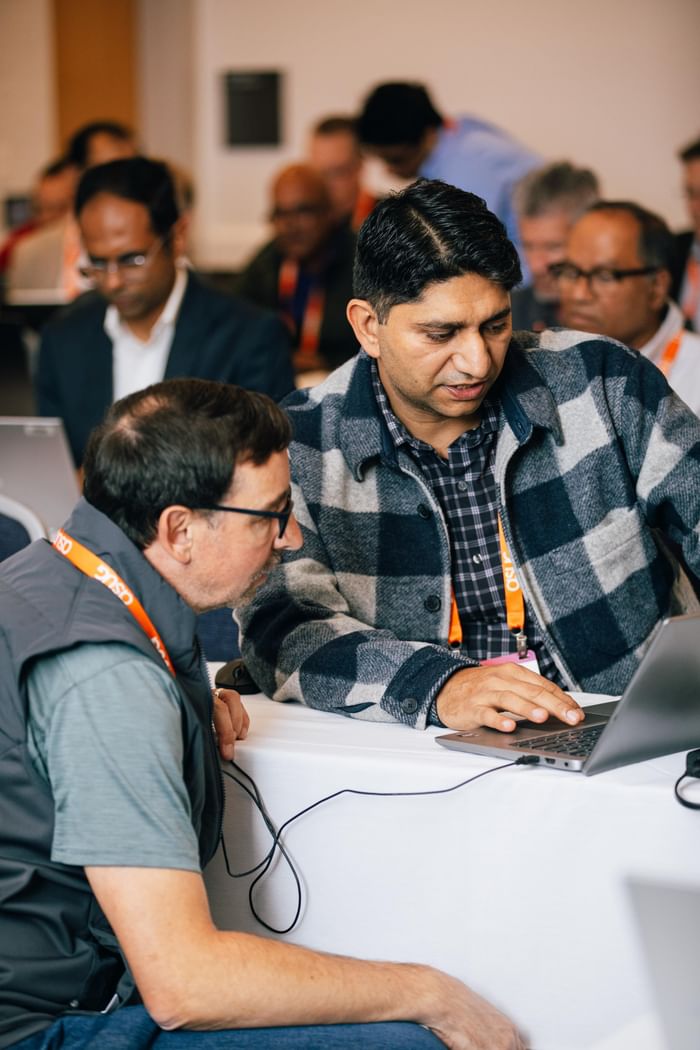
Nonetheless, there were definite signs that SAP’s larger goal for SAP Connect—that of cross-pollinating the idea of end-to-end processes that span former process silos—was a success. One example came up during a chance meeting on the SAP Connect show floor, between myself, Diginomica co-founder Jon Reed, and a group of supply chain experts from a major aerospace company.
This team had come back after a tour of the industries booth area to ask an SAP aerospace expert some questions specific to their supply chain migration. While the team was definitely focused on their specific requirements, they told Jon and me that the show had helped them see how SAP’s suite approach will extend their transformation beyond just supply chain into the other domains highlighted at the conference — when the time is ripe.
Other encounters with customers reinforced Alam’s keynote aspirations for SAP Connect. Customers need to focus their efforts beyond merely achieving what Alam called “local optimums,” which he defined as optimal functionality and ROI only within an individual line of business domain, like supply chain or CX.
Alam used his keynote to urge customers to focus on a larger, enterprise-wide set of goals, which he referred to as the “global maximum.” In Alam’s vision, enterprises need to optimize across the entirety of their core end-to-end processes, breaking down silos and pursuing highly optimized processes that, for example, unite customer experience, supplier collaboration, and supply chain planning and execution. This “global maximum” concept permeated the conference, with Alam and his fellow executives highlighting the fact that the SAP Business Suite strives to achieve “best of suite” capabilities in support of this goal.
The global maximum concept was also Alam’s salvo against SAP’s LOB SaaS competitors. Those competitors, with very few exceptions, go to market with products that focus on a single domain. These best of breed products, Alam emphasized, are therefore limited to achieving only local optimums, such as solely within the supply chain LOB, without supporting the optimization of the end-to-end processes of which supply chain is just one component.
It’s safe to say that this message was well-received, at least in theory. But this first attempt at uniting the different LOBs in a single conference will need significant follow-up—more conferences, better synchronization at the individual keynote level, and more concrete customer examples—before the concept of “global maximum” becomes the unifying north star of the SAP ecosystem Alam would like it to be.
Trusted AI — and AI Everywhere
There’s no such thing as a technology conference without a heavy emphasis on AI, and SAP Connect was no exception. What was exceptional was the degree of practicality—almost bordering on humility—that characterized SAP’s approach. This was particularly evident in Alam’s discussions with analysts and during his keynote. While SAP Connect was very much a showcase for SAP’s new agentic AI capabilities, focusing in particular on a flurry of new agents that can help support and orchestrate key processes across the conference’s main LOB domains, Alam made a point of emphasizing that SAP will focus its agentic AI capabilities in support of a “human-first” approach. That approach, Alam said, would allow SAP to “build trust in the AI first.”
This was a welcome breath of fresh air for enterprise AI, particularly at a time when numerous published reports are calling into question—a healthy and much-needed correction, I believe—the over-hyping and relative lack of customer ROI for LLM-based AI. It was also clear that several new products and functionalities announced at SAP Connect—such as the re-architecting of SAP Ariba on the BTP platform, as well as the debuts of SAP Supply Chain Orchestration and SAP Logistics Management—are all leveraging SAP’s 20-plus years of experience with machine learning, predictive AI, and other established AI technologies, in addition to LLM-based AI. Those new products, along with SAP’s focus on Joule and agentic AI as an orchestration layer that leaves human decision-makers in the loop, helped to ground SAP’s embedded-AI approach in an emerging, more practical reality for AI.
"There's little doubt that SAP Connect, particularly in this first iteration, was a success."
There’s little doubt that SAP Connect, particularly in this first iteration, was a success. Steinhaeuser called out the different LOB groups—supply chain, CX, HR, finance, and spend—during his day two keynote, and each group’s audience members responded enthusiastically — effectively cheering themselves for being there and SAP for making it possible. By the time day three rolled around, a save-the-date notice was circulating among insiders for the 2026 event; my conversations with both Alam and Steinhaeuser made it clear their initial goals for the conference had been met.
What’s now abundantly clear is that, with an SAP ecosystem event calendar dominated by SAP Sapphire and TechEd, as well as this week’s ASUG Tech Connect, there is a genuine hunger for line-of-business events that unite their respective communities and help their technology allies learn to speak the language of business. I’m convinced that this focus on global maximums—even if those words are never spoken in customer board rooms—will translate into much-needed cloud transformations that provide a level of business value, not just technology value, that’s thus far been all too elusive for too many customers.
Joshua Greenbaum is Prinicipal at Enterprise Applications Consulting (EAC).