Log in to save this article and keep your favorite resources in one place.
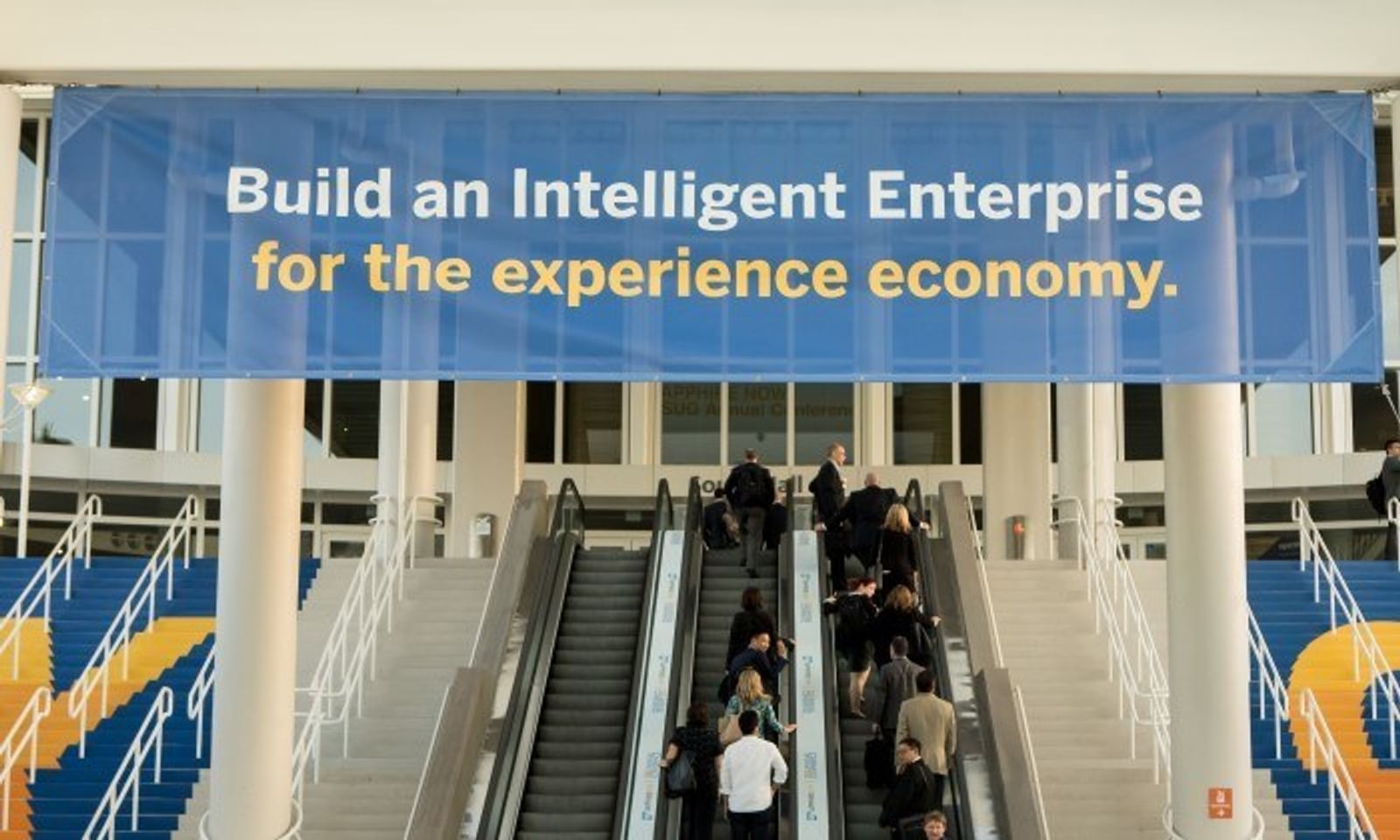
Today, if you need a branding label for your new technology platform, all you need to do is insert an inspirational, dynamic, and thought-provoking descriptive term before the word enterprise.
Technology vendors are espousing the data-driven enterprise, the self-driving enterprise, the automated enterprise, and the (plain and simple) smart enterprise. SAP is following suit and coined the term intelligent enterprise.
SAP defines intelligent enterprises as those that “effectively use their data assets to achieve their desired outcomes faster — and with less risk, so it’s all about automating complex business processes around a united core of master data in the cloud.”
Have We Graduated Yet?
It has been a year since SAP pushed forward the concept of the intelligent enterprise. But what does the phrase mean now, and what’s on the horizon next?
Let’s first remind ourselves how keen SAP is to shake off its “just an ERP company” reputation. It insists that a truly intelligent enterprise is one with SAP Cloud Platform at the center of an operational foundation that has radial arms out to as many of the other core SAP technology stacks as possible. This includes: SAP SuccessFactors for HR; SAP Ariba for procurement; SAP Fieldglass for vendor management; SAP Concur for expense management; and (of course) SAP S/4 HANA and SAP C/4HANA for analytics and CRM, respectively. Along with API connectivity to other software components and services, SAP Leonardo also is in the mix for productized workshop prototyping and design thinking.
Amusingly, SAP also draws smaller bubble extensions to show where customers might be using third-party technologies. Perish the thought, right?
The point is that it’s supposed to be a complete ecosystem of interconnected, symbiotic, and reciprocal technologies that integrate seamlessly inside the SAP wheelhouse. So then, the question is: What exactly should ASUG members pay attention to, and where should they look to reinvent their business processes and wider approach to technology?
Take Your (Intelligent) Partner by the Hand
Oliver Huschke, global head of solution marketing and external communications for SAP Digital Business Services, argues that businesses need to be an intelligent enterprise and adopt the SAP cloud core-to-connections approach. He adds that these businesses also need to surround themselves with partner companies that share that same vision for cloud, analytics, platform-level efficiencies, and data-centric intelligence.
“As interest in intelligent technologies — such as artificial intelligence (AI), blockchain, machine learning, predictive analytics, and the Internet of Things (IoT) — continues to grow, partners are increasing in importance. In fact, I am finding that businesses on a path to becoming intelligent enterprises are building and managing a trusted, collaborative network of partners that offer a wide array of expertise and methodologies,” Huschke said.
Obviously, that’s a nice idea conceptually, but it’s probably quite hard to stipulate and enforce at any kind of extreme level in practice. Perhaps what Huschke is inferring is that looking out for companies that exhibit a general trend toward adopting connected data intelligence technologies is a smart move? If ASUG can deliver one thing, we hope it is an ability to provide a practical and pragmatic balance for approaching real-world SAP technology implementations.
Is Intelligence Urgent?
Although we are perhaps diluting Huschke’s enthusiasm for all-encompassing migrations, he does quite fairly make the point that there is some urgency here, and that companies should think about wider intelligence platform plays as a whole.
Why the urgency? According to Huschke, “Because we need to bust corporate cholesterol…. The older and bigger a company, the more resistant it is to change. Often, the workforce is stuck in a restrictive culture governed by policies, procedures, layers of management, and a fear of risk — leaving little room for innovation and creative thinking.”
If we accept the fact that enterprises are being driven toward a higher level of intelligence, then can we put some parameters on how far, deep, and wide that intelligent business approach is supposed to span? Sindhu Gangadharan, global VP and head of integration, office of the CTO at SAP, says that an end-to-end process approach to adopting what she calls “embedded intelligence” is needed if firms are going to gain a 360-degree view on any business.
In a recent blog she wrote, she notes, “In order to achieve holistic end-to-end user experience, integration, and embedded intelligence throughout business processes, you need to have a great team, clarity in direction, and a prioritized list of activities and milestones. My team has been working on building a consistent set of technology guidelines with the goal of ensuring out-of-the-box integration, modularity, ease of extension, and consistent experience.”
Customer Validations
That’s all well and good, but can we pinpoint where SAP customers are in moving to become an intelligent enterprise, as well as some (if not all) of the major building blocks that go to make up the SAP intelligence vision?
Christian Eigen, senior vice president for business applications at German media company Bertelsmann SE & Co KGaA, says that his company performed an SAP Readiness Check for SAP S/4HANA. He notes that the results helped his company validate its path to SAP S/4HANA and accelerate its decision-making process. Intelligence doesn’t happen overnight then — a visit to the readiness clinic makes for longer term health here.
SAP also notes that Stara, a manufacturer of farming equipment, collaborated and co-innovated with SAP Digital Business Services to embed intelligence across its business. Stara now uses the SAP Hybris solutions to enable intelligent sales processes. Through SAP Enterprise Support, Stara developed new intelligent services to help its customers increase farming efficiency.
We also can mention a leading retailer that co-innovated with SAP Digital Business Services to embed intelligence into its demand modelling and forecasting processes, using the guidance and support of SAP MaxAttention. This premium service is a multi-year commitment that typically spans multiple complex projects and deployments. The above noted retailer applied predictive analytics and machine learning capabilities to optimize its processes, reducing costly overstocks, and environment-impacting waste.
How SAP Intelligence Becomes Smarter
Let’s also ask ourselves whether the intelligent enterprise has evolved for SAP? What has the company added to its core notion of intelligence and are we now really on the road to being smarter operators? Probably the biggest development in the last 12 months comes in the shape of the Qualtrics acquisition and how it fits into the SAP intelligent enterprise vision.
We already had some of the “experiential” factor in SAP C/4HANA for customer CRM. So, Qualtrics XM sitting under SAP SuccessFactors can logically add to this wider employee experience measurement and management.
SAP talks about Qualtrics giving customers the opportunity to move from basic HR operational data (O‑data) to a more contextual level of experience data (X‑data). O‑data might include basic job movement information, but X‑data includes sentiment analysis, social media expression, and personal feelings from the workforce to express beliefs, emotions, and other previously intangible factors.
The Human Side of Intelligence
An intelligent enterprise that only looks after its physical assets and intellectual property — without concerning itself over the welfare of the human beings that go to make its systems intelligent in the first place — is not being very smart. That’s not an SAP line; that’s us trying to explain where this all comes full circle with the human factor.
Finally, how do we get to this new point of enterprise intelligence? SAP says there are three ways. We can reimagine business processes completely from scratch; we can keep some older processes but design new business models to drive enterprise intelligence; or we can migrate specific lines of business to the cloud one at a time.
Where will all this lead us in the future if we follow SAP’s vision? The vendor says that it drives us toward a positive point of what it calls “augmented humanity.” The argument is, if enterprises become more intelligent, then we as humans can expand our own brains and intelligence quotients. That’s smarter than the average bear by anybody’s yardstick.
Interested in becoming an intelligent enterprise? Register one of our many events that cover intelligent enterprise in SAP.
You Might Be Interested In

Log in to save this article and keep your favorite resources in one place.

Log in to save this article and keep your favorite resources in one place.

Log in to save this article and keep your favorite resources in one place.

Log in to save this article and keep your favorite resources in one place.