Log in to save this article and keep your favorite resources in one place.
The following Utility Voice was authored by Tammy Powlas, an ASUG Volunteer and Senior Business Analyst at a Northern Virginia utility.
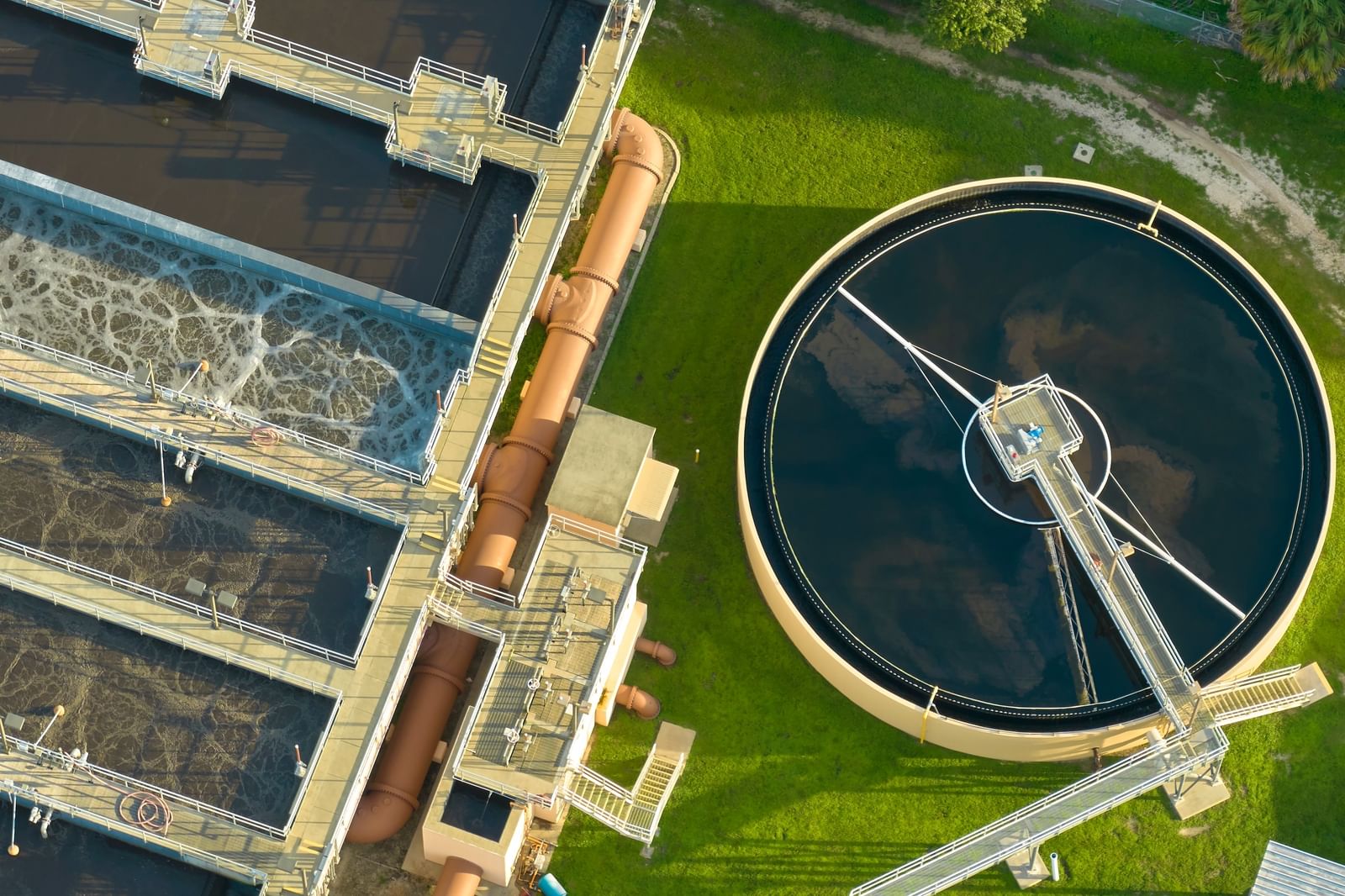
SAP is developing an AI and platform strategy to address current challenges facing water utilities: the loss of undocumented workforce expertise, increasing energy costs from pumping and treatment, and impending migration deadlines for legacy service management functions.
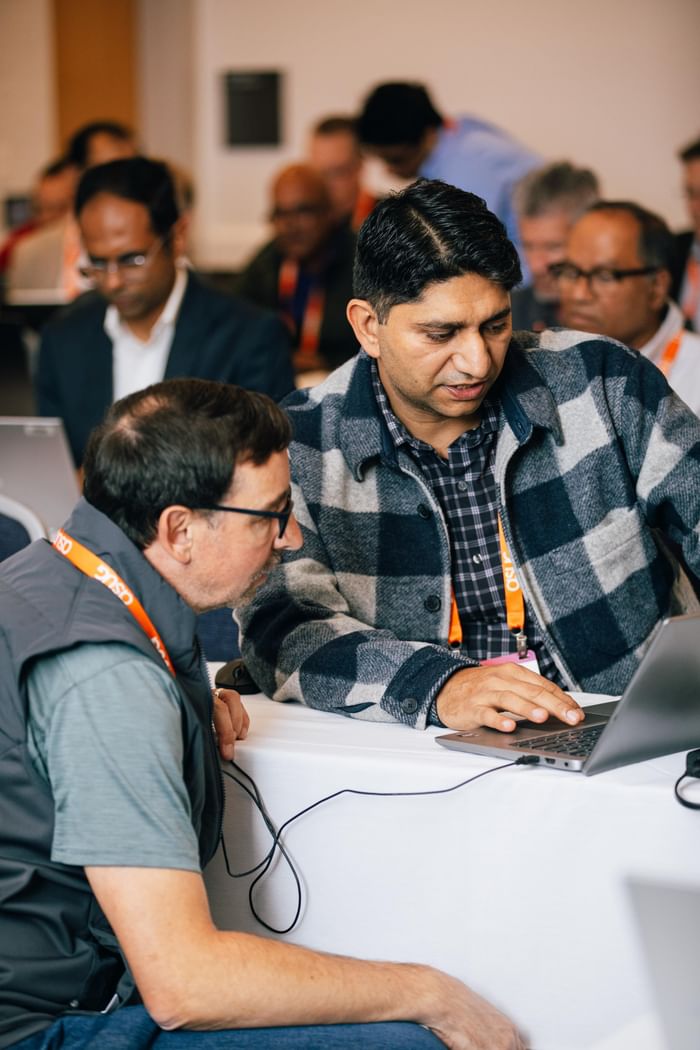
At a session held specifically for water utility SAP customers, SAP’s Miquel Carbo, Director of Water and Waste Management, laid out how several of these threads are converging into a more cohesive roadmap. With a big thanks to Marc Rosson for organizing, here’s what stood out.
The Knowledge Gap Is Real — and AI Could Help Bridge It
Water utilities are facing what many in the industry call a “silver tsunami.” According to Black & Veatch’s 2025 Water Report, as many as half of all employees may retire within five years, and unlike industries where turnover is routine, much of what these workers know has never been written down.
A separate Black & Veatch industry survey found that 83% of respondents said some portion of their organization’s working knowledge disappears when staff leave, and 60% said their systems have some quirks that only a few people understand.
Replacing headcount is the obvious problem. The harder one is preserving the operational judgment and system-specific understanding that veteran staff carry in their heads.
This is where SAP’s Joule comes in. My coworkers recently returned from an SAP Enterprise Asset Management (EAM) conference where the conversation was “all about Joule,” and the workforce knowledge gap is a major reason why. For a newer worker at a utility who doesn’t yet know the quirks of their system, being able to ask Joule how to create a maintenance order or pull up relevant guidance without hunting through manuals is a meaningful reduction in the learning curve.
On the implementation side, Joule for Consultants gives project teams a way to ground their decisions in accumulated expertise rather than starting from scratch. It draws on more than 200,000 pages of SAP documentation and learning content and over three million non-public documents, including SAP Notes and Knowledge Base Articles that general-purpose AI tools can’t access, so that the people building and configuring these environments have the same kind of knowledge backstop that Joule provides to end users.
AI Agents: Replacing Manual Steps with Automated Workflows
At SAP Devtoberfest, one of the hands-on exercises involved using Joule to create a maintenance order. Carbo’s water utilities session covered similar ground while also featuring several AI agents that SAP is developing for asset-intensive and utilities-specific operations:
- Maintenance Planner Agent: Monitors real-time equipment and scheduling data, then recommends how to prioritize and sequence maintenance work, helping planners streamline scheduling and stay ahead of disruptions.
- Dispatcher Agent: Evaluates service orders and determines optimal crew assignments using real-time data and technician availability, running dispatch simulations to figure out who goes where and when.
- Sourcing Agent: Recommends suppliers and procurement paths for parts and materials needed to execute maintenance work, reducing the back-and-forth that typically slows sourcing decisions.
- Expense Validation Agent: Reviews submitted expenses against policy rules and project budgets, flagging exceptions that would otherwise require manual line-item audits.
- Shopfloor Supervisor Agent: Identifies production disruptions in real time, assesses their impact, and recommends rescheduling and stock adjustments to keep operations on track.
- Utilities Customer Self-Service Agent: Handles routine customer interactions (billing inquiries, service requests, outage notifications) through automated interfaces that serve customers in multiple languages on whatever channel they prefer.
What ties these agents together is their ability to chain across a workflow, passing context and decisions from one step to the next without requiring human intervention at every handoff. SAP calls this agent orchestration — coordinating multiple agents so that when a maintenance notification comes in, one agent evaluates it, another assigns a crew, another lines up parts, and the whole sequence flows from start to finish. Carbo cited one process where this approach replaces 57 manual steps.
Smart Water Platform and Distributed Energy Resources
While AI agents and knowledge tools support workforce needs, SAP is also enhancing the underlying data and infrastructure. The session highlighted SAP’s Smart Water platform, a reference architecture that integrates SAP Business Technology Platform (BTP), Datasphere (as part of the Business Data Cloud strategy), and distributed energy resources capabilities into a unified operational blueprint for water utilities.
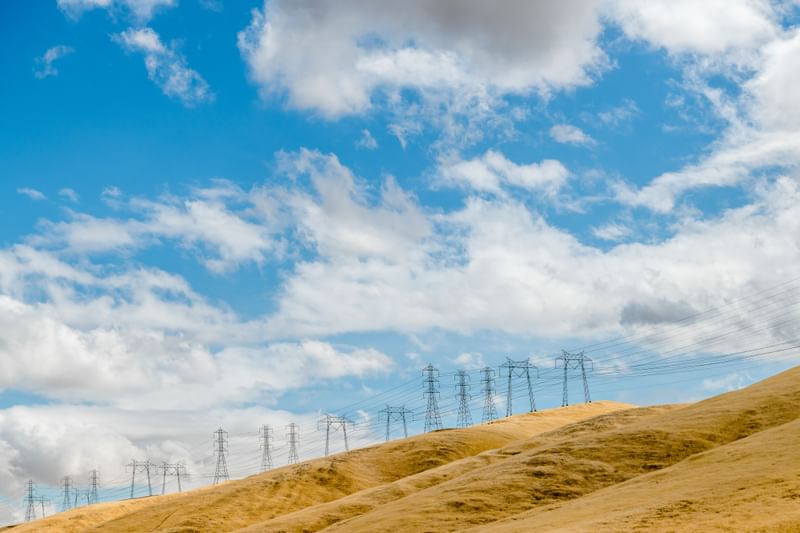
He also discussed distributed energy resources (DER), smaller-scale energy assets (solar panels, battery storage, on-site generators) that produce or store electricity near the point of consumption rather than depending on the central grid.
SAP recently launched a dedicated DER product on BTP that helps utilities manage the data these assets generate at every stage, whether the energy is being produced, consumed, or stored.
The broader portfolio Carbo outlined spans S/4HANA EAM, Asset Performance Management, BTP, Datasphere, and Cloud Energy Management. SAP does not currently offer water-utility-specific BDC products, which leaves a gap in the data and analytics layer of this architecture.
For water utilities, though, the DER connection is already practical: pumping alone typically accounts for 70 to 80% of electricity use in water production and distribution, according to Bluefield Research. This makes water operations natural candidates for load shifting, scheduling energy-intensive work like pumping during off-peak rate windows or periods of strong on-site renewable generation.
Customer Service Notifications: A 2030 Migration Deadline Worth Planning For
All of this forward-looking strategy, however, only delivers value if utilities also address the legacy obligations on their plate. One of the most operationally relevant takeaways from last year’s SAP For Utilities, Presented by ASUG, is that utilities still running legacy Customer Service (CS) notifications and service orders must migrate to S/4HANA Service with Advanced Execution. For customers on S/4HANA on-premise or S/4HANA infrastructure as a service, use rights for CS expire in 2030; those on cloud ERP S/4HANA with SAP have until 2033.
Advanced Execution redesigns how service processes integrate with maintenance planning and industry-specific functions like metering. For organizations that have built years of workflows around CS, the transition adds another planning layer to an already complex S/4HANA transformation.
Between the workforce challenges, the emerging AI and platform capabilities, and the hard migration deadlines, water utilities have a full and converging set of priorities to navigate. I’m looking forward to SAP For Utilities in October to see how these threads develop and how far SAP has come in turning this roadmap into reality.
You Might Be Interested In

Log in to save this article and keep your favorite resources in one place.
Log in to save this article and keep your favorite resources in one place.

Log in to save this article and keep your favorite resources in one place.

Log in to save this article and keep your favorite resources in one place.