Log in to save this article and keep your favorite resources in one place.

The following ASUG Partner Insight was authored by Fabian Pfau, SVP of Solution Architecture and Pre Sales at SNP Group.
Outdated processes are hindering innovation. Limited resources, large data volumes, and critical downtime requirements in utilities companies slows their ability to satisfy growing demand in areas such as electric vehicle charging stations, solar power, and large data centers — all while meeting sustainability goals.
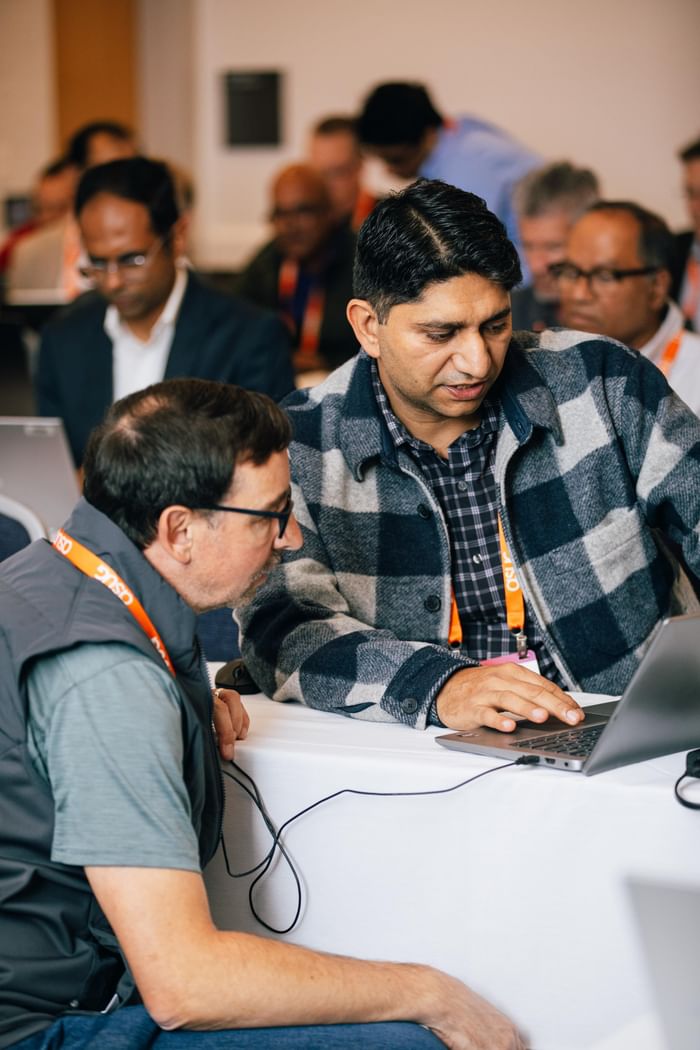
At the SAP for Utilities conference in mid-September, ASUG brought together more than 1,500 utilities industry experts to learn about the SAP technology roadmap and how to boost efficiencies while margins are slim.
We heard from utilities companies presenting on their improvements in customer experience, data management, AI, finance, and more, sharing their challenges, successes, and future vision.
We noticed one recurring theme: Working with the right partners who have the right experience and approach makes all the difference during digital transformation.
Now Is the Time to Get Started
The utilities companies that have made the necessary technology investment are already reaping the benefits less than two years after getting started. Setting their organizations up for the future, modern utilities companies that have gone through the necessary digital transformation journeys and are now able to tap generative AI, SAP Joule, and SAP Business AI to improve customer experience and internal efficiencies.
SAP utilities customers need to answer these most important questions as they consider the future of their technology landscape:
- Should I move to SAP S/4HANA or continue waiting?
- How do I most efficiently utilize the cloud?
- What can I do to prepare my data before the move?
- How do I handle high levels of customization in legacy ECC environments?
- How do I decide which customizations to take to the new system?
- How can I mitigate risks and minimize business downtime?
- What is the cost, and how long will this project take?
Because business models evolve faster than legacy systems, the longer that utilities companies wait, the more difficult it will be to catch up to their more advanced counterparts. SAP ECC mainstream support ends in 2027, making the transition to SAP S/4HANA more top of mind than ever.
Making Important Decisions
The hesitation to tackle digital transformation is understandable. There are years or even decades of data the company doesn’t want to lose. Mission-critical, highly-differentiated business process are supported by custom code. There is even compliance to keep top of mind.
As utilities companies weigh their options, SNP encourages asking the following questions:
- What business processes can be switched to standard and which necessitate customization?
- What data needs to be delivered in an online manner to support the business? Are there long-divested companies still in the system? Discontinued reporting structures?
- Where is the company applying AI and where do they look to do more in the future?
- Are there new features in S/4HANA that you would like to adopt?
- What are the downtime constraints?
- Are there any other external factors or schedules influencing the timeline?
- Can multiple systems be merged and consolidated?
These sorts of considerations will help to inform how the company will migrate its systems and set the stage for the future of its digital landscape.
Greenfield migration is an approach to ERP implementation that is totally new, independent from current systems. Especially if current processes are outdated or inefficient, a greenfield migration helps companies plan for the future and build out a new system accordingly. However, a greenfield approach does away with historical data and often requires more effort, higher costs, and longer timelines. This is essentially a reimplementation — starting from zero. Most organizations have not recovered the costs of their initial implementation, so it is not surprising that there is little appetite for this in mature organizations.
A brownfield migration is a process of transforming an existing ERP system into SAP S/4HANA through a system conversion. This approach involves less risk and less time than greenfield, due to using current systems, historic data, and existing processes. However, innovation and optimization are not at the forefront of this approach. A common question CFOs ask after hearing this option is “So were going to pay all this money and take all this disruption and get exactly what we have now? Time to rethink this…”
Bluefield® combines the best of both greenfield and brownfield migrations, allowing SAP utilities customers to select only certain data and processes for migration. With a priority on business needs and future goals, bluefield migrations are highly customizable while retaining the necessary historic data and transforming it into any new structures to make it look like you were on the new system all along.
Real Results
The SNP process covers the end-to-end migration cycle — through analysis, to pre-built data migration content, to a high degree of automated verification. Then, SNP supports clients through cleaning up data, execution of the migration, and management after go-live.
SNP has led more than 600 SAP S/4HANA migrations, leading to the following results for the utilities industry, specifically:
- Machine learning insights into asset health that helped with up to 80% capital reallocation
- More than 30% improvement in service reliability
- AI-powered scheduling enabling up to 30% increase in field worker productivity
- Up to 30% increased customer satisfaction
Utilities are confronted with several major challenges on this journey. Huge asset portfolios with complex maintenance histories, huge data volume growth with dubious quality due to IoT streaming and remote monitoring, an uncertain regulatory environment, and the need to constantly deliver service improvements at reduced cost are just some of the major hurdles; and ERP modernization can either help or exacerbate these issues. This is why many utilities opt for a partner who specializes in SAP ERP data migration and modernization and comes equipped with the tools, processes, automation, and expertise to navigate this complex landscape.
At SNP, we have delivered over 15,000 successful projects over more than 30 years using our industry-leading Kyano Platform that accelerates an end-to-end modernization process through analysis, migration and verification.
For more information, please contact us at americasmarketing@snpgroup.com.
Fabian Pfau is SVP of Solution Architecture and Pre Sales at SNP Group.
You Might Be Interested In

Log in to save this article and keep your favorite resources in one place.

Log in to save this article and keep your favorite resources in one place.
Log in to save this article and keep your favorite resources in one place.

Log in to save this article and keep your favorite resources in one place.