Log in to save this article and keep your favorite resources in one place.
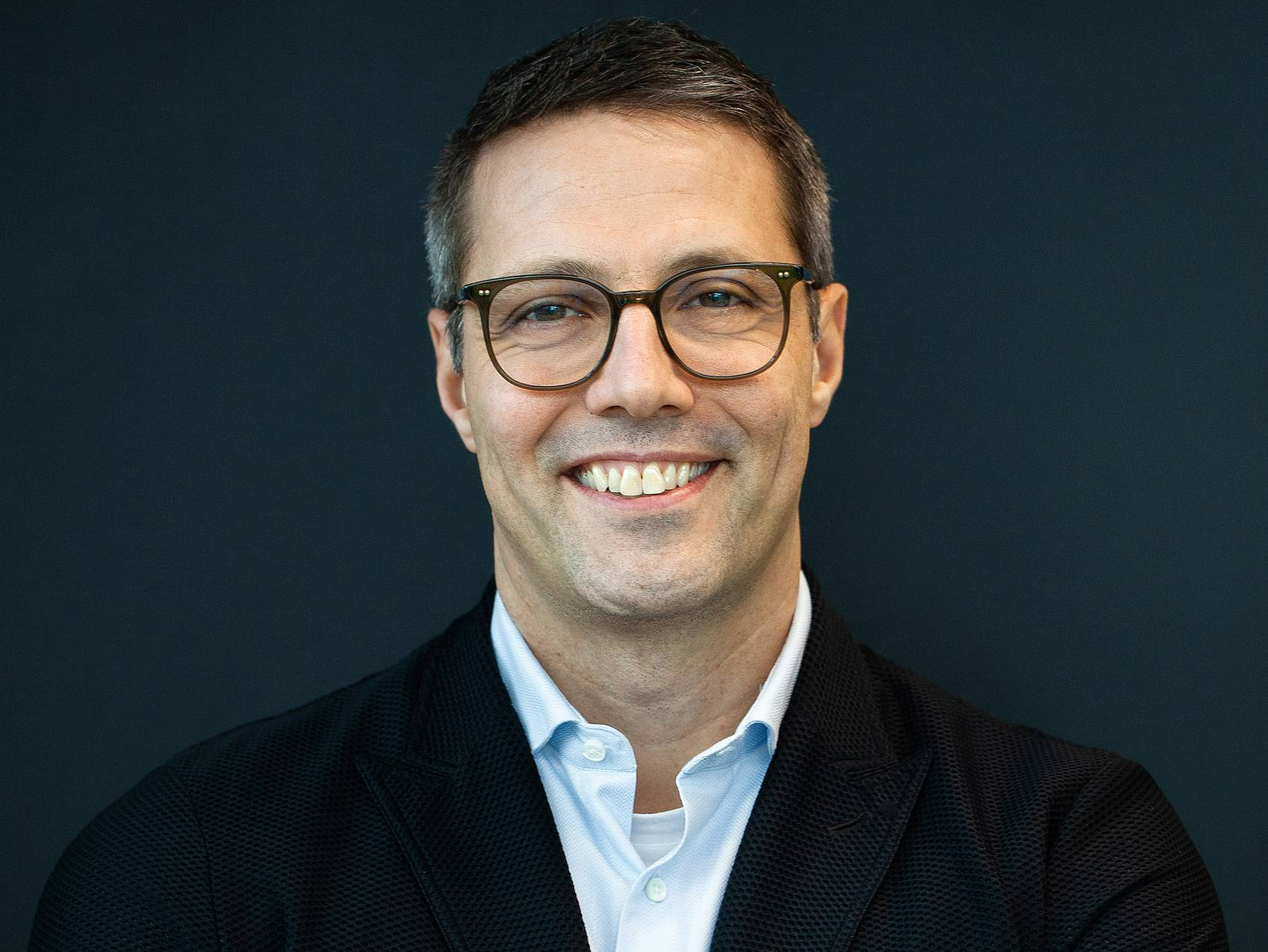
Few at SAP are better-qualified to speak to the evolution of the company’s cloud ERP portfolio than Jan Gilg, President and Chief Product Officer, Cloud ERP.
An 18-year veteran of SAP, Gilg has served as Global Head of Enterprise Architecture, Global Head of IT Business Services, and SVP & Head of SAP S/4HANA. That last position, which Gilg started at the beginning of 2019, expanded a year later to encompass SAP’s digital supply chain portfolio, leading to his current role, in which he’s responsible for digital supply chain and SAP’s cloud ERP.
As adoption of cloud ERP solutions continues to accelerate in the SAP community, ahead of maintenance deadlines that start to take effect at the end of next year, SAP is focused on providing its customers with technology and services to facilitate moving mission-critical ERP processes to the cloud. In recognition of this push, SAP was recently named a leader in Gartner’s Magic Quadrant for Cloud ERP for Product-Centric and Service-Centric Enterprises for the third consecutive year.
In the first half of a wide-ranging conversation, Gilg recently discussed key developments he’s observed in SAP customers’ journeys toward cloud ERP, clarifying the clean-core approach, and what Gartner’s recognition signifies for SAP’s approach.
This interview has been edited and condensed.
When you reflect on 2024, what are the key developments you’ve observed in terms of SAP customers’ journeys toward cloud ERP?
For years, we have been debating the transition from SAP ECC to SAP S/4HANA. In the earlier years of that debate, it was all about, “What’s the business case? Why should I do this? What are the benefits of doing this?” That’s settled down. Every customer is clear: “If I want to stay with SAP, and look at SAP as my strategic partner to run my core business processes, I will need to move to SAP S/4HANA.”
There are plenty of smaller ECC customers still out there, many of whom haven’t moved yet but are planning to. For many of them, it will not be a huge move, which is why I believe there is still enough time for them; there are always laggards who come along at the end. But the majority has already answered that question by saying that they are moving to SAP S/4HANA.
Of course, we’ve seen a lot of customers move forward on SAP S/4HANA on-premises, and we see significant growth there in terms of go-lives. Now, the discussion on cloud and RISE has emerged; to a certain extent, we’ve also course-corrected here and said, “If you are moving to the latest ERP version, which is SAP S/4HANA, then do it in the cloud with us. We do want to provide ERP as a service, and we do believe this market category is ready to move to the cloud.”
And why is that? It’s because we’ve seen that, even in industries that traditionally wouldn’t even talk about the cloud — public services, aerospace and defense, defense and security — that attitude has changed. Those industries are coming to us proactively and saying that they want to go into the cloud, that they need to know what paths exist for them to do so and how they’ll get there.
That’s encouraged us to say the market has decided, and that our customers want to adopt a cloud model. But it has become a very diversified model in the cloud. It’s not one-size-fits-all. While SaaS is still a huge driving force and for many customers probably the right way to go, nuances exist — including one we created ourselves, which is the private cloud, especially for our largest customers. Consider also the sovereign cloud; that’s become more important as customers ask questions about where their data resides. In 2024, this was another big shift where everybody said, “It’s clear I need to adopt a cloud model. This has many, many benefits. The question is, how do I do that?”
Especially for those customers that moved already to SAP S/4HANA on-premise, perhaps on a hyperscale infrastructure there are still discussions ongoing as to what the benefits are for them to also shift over to RISE and give us the responsibility, so to speak, to manage their estate. But we’ve certainly seen acceptance on the general direction of cloud.
Surprisingly, I also saw a larger shift to public cloud. The smaller ECC customers are asking, if they’re moving to SAP S/4HANA, why shouldn’t they go to the public cloud? Though disruptive, they can look at this more as a transformation than a technical step. If they have to retouch their processes and see benefits in standardization, why not then adopt a SaaS model? How do they get there? How is this different than moving to a SaaS competitor? Those are questions we need to answer to help customers, because we know it’s not always a greenfield implementation. I predict more of those long-term ECC customers will move to the public cloud directly than to a private cloud.
To your point of larger business transformation, what SAP customers are also showing in the ASUG community is a creativity and innovation around how to make cloud ERP functional for their businesses, with sidecar scenarios or hub-and-spoke models that allow, for example, a business to pursue RISE with legacy business units and have new acquisitions come in through SAP S/4HANA Cloud, public edition.
We see this as well, and I fully agree. Especially with our larger customers, from Colgate to Shell to BMW, it’s common to have both private and public cloud editions of SAP S/4HANA Cloud running. There’s been a shift away from this push toward a global single instance, which had been the direction for years; it was always very rigid, that concept. And when you acquire companies that becomes a part of the business dynamic you have to account for; moving them into a central instance could feel like shackling them, especially if that process doesn’t move fast enough for them or account for how they approach certain processes. With acquisitions, specifically, we see customers opt to move them to the public cloud.
This is why we’re pushing in the private equity area to find portfolio companies and get them set up with SAP S/4HANA Cloud, public edition, because the likelihood that they’ll get acquired by a larger company that is an SAP customer is very high, and getting ready for that increases the value proposition, given that integration is the first step that follows mergers and acquisitions (M&A). That’s currently a big motion for us, to look at helping fast-growing companies get to the public cloud.
And that process has changed, as well. Now, we’re thinking, “What are your commodity processes that need to be implemented fast, to be up and running, for which you can apply best practices without spending much money, to have reliable operations? And what are the added innovations you can take advantage of, from distinct line-of-business extensions to distinct industry capabilities, partner capabilities, even custom-built processes that integrate without disrupting the life cycle of the software and that work well in the public cloud?” This separation between the core and its extensibility has never been made so clear in the past, between the commodity backbone and the differentiation on top.
One nuance of this discussion that’s emerged this past year has been around the idea of extensibility for the public cloud, which had previously been so linked to the clean-core methodology and move toward standardization. We’re now seeing SAP embrace this nuance of not asking customers to sacrifice differentiating customizations but instead shifting them out of the core ERP and gaining more development capabilities through SAP BTP.
Clean core is an interesting topic, because I feel sometimes it’s misunderstood quite a bit. This idea comes from the public-cloud world, where the core is clean by default, because SAP is managing it 100% and customers can only extend, in a way, how we allow them to, through pre-defined interfaces that have become increasingly sophisticated. In transferring that concept to the private cloud, we asked, “Why are we not doing this there as well?”
There’s always a question of what you do with processes you had in the past and what you do going forward. When you then extend, you should do it in a way that’s clean-core compliant, like you would in a SaaS environment; for all that came from the past, you have to decide, because it’s not cheap to refactor. We’ve seen, with many extensions, that on average 60% of RISE customers’ custom code is not even in use. So, why keep it? It’s a dead weight, so to speak. Of course, what do you do with the rest, and where is your real differentiation? Clean core doesn’t mean you shouldn’t extend. I think every ERP customer has to have certain extensions, because that’s where differentiation is. And the closer you come to operational processes — manufacturing, enterprise asset management, and so on — the more that happens. But that’s why I think extensibility in the way of clean core, also in the private cloud, is very powerful.
What are you hearing from the on-premises customer base, including those on earlier versions of SAP ECC, about their readiness to migrate to the cloud ahead of the earliest maintenance deadlines?
There are many elements to this discussion of the maintenance strategy, specifically. Many SAP ECC customers out there are smaller and simpler; the larger multinational customers are largely deciding for SAP S/4HANA via RISE, but the challenge there is that they have so many ECC systems, and it takes time to convert them. Through RISE, SAP is granting a service that allows customers to carry forward older SAP S/4HANA and ECC releases that risked running out of maintenance; therefore, with RISE, we’re providing better options for those customers, through services that we provide rather than what they own as a license.
ECC customers are getting ready, I think. The majority want to move and will move, but the question is what the best strategy is for each of them to do so. Is it more of a technical move, for example? What we see quite a lot is a selective data transformation method, where you take certain pieces as they are and start fresh with others. That we see more often, together with our partners who provide the necessary tooling to either do that or take a greenfield approach. The closer it gets to the end of mainstream maintenance, the less likely it is for a customer to go greenfield, because it typically takes more time, but it’s also shown from a value realization perspective to be more effective and yield more return on investment in the immediate term.
If companies are very disciplined with a brownfield approach, and they continue to renovate that after the implementation, they can of course yield those benefits as well, but it takes work to have discipline. But we do see that customers are getting ready. We also see that knowledgeable resources and consulting resources are starting to get stretched thin, which we always predicted; there will be a big wave of projects coming soon.
We’ve also taken more measures, in the context of RISE, to steer our system-integrator partners to do this right, not to build up all this custom code and carry it forward but to truly follow the RISE methodology. We are measuring that. We have dashboards we look at that through, and we hold our partners accountable, because we do want our customers not to move from an SAP ECC system to SAP S/4HANA and get stuck there again. Most of them are getting ready. They will move. We have to accept that some will stay with ECC, and they will then pick up third-party maintenance; those customers are usually the ones we haven’t had much relationship to in the past. I’m pretty optimistic that, with the timelines that we set, we will be really able to move the majority of our customers over.
SAP S/4HANA Cloud is a leader in Gartner’s Magic Quadrant for Cloud ERP for Product-Centric Enterprises for the third consecutive year. What does this achievement signify for SAP, and what does it say about SAP S/4HANA’s success as a composable ERP solution?
Currently, Gartner has two ERP Magic Quadrants: service-centric and product-centric. And both of them are looking at a lot of capabilities that go beyond a single product, which is in line with their view on composable ERP but also representative of how we think about our software’s suite capabilities.
Next year, we will talk even more about our suite; as we transitioned the portfolio into the cloud, I believe this focus was diluted, because we had so many additional cloud services required that wouldn’t fit technically together. We’ve spent quite a lot of time bringing that suite back together. Now, we’re looking beyond the capabilities that you would have only as a customer of SAP S/4HANA Cloud. It’s great to be in there, given that competition is strong in this area.
In terms of our product-centric recognition, we have been pushing quite heavily into the manufacturing space. The last market segment moving to a SaaS model is production, and we see a significant portion of our installed base in our public cloud offering that is in production, so it is catching on — the majority, of course, being in discrete manufacturing, but we see more process manufacturing coming in as well.
At SAP Sapphire, we brought SAP Sales Cloud and SAP Concur expense management into GROW with SAP; it’s become an entitlement, not an additional subscription. For that to work, it needs to feel like it is just a module of SAP S/4HANA Cloud, and that’s what we are working on: as customers put them together in a much more flexible way, to ensure they work seamlessly together. That’s how I look at the composable architecture and so-called suite qualities. Those are technical attributes and services that each of the applications have to build in in order to make sure we have harmonization on the UI level, and all the way down to the technical attributes like provisioning, downtime maintenance windows, and so on. Cloud exists as a service, and customers basically buy entitlements to pieces of the service. That’s the vision and where we are headed, and that’s why I think this is a great achievement to be there in the leaders’ quadrant. But of course, we do work hard to become that leader, which we are not yet, but that is certainly something we are focused on.
Looking ahead to 2025, what does SAP need to prioritize for customers, based on feedback received this year?
It’s all about helping customers to get into the cloud as easily as possible and to look holistically into their landscapes. AI will continue to play an extremely important role, because it can be an accelerator for many of those areas. Extensibility will remain a critical topic. In the age of AI, data becomes even more critical; if the data is not reliable, then the results are not reliable. We need to help customers get to reliable data, then to as much data as possible, in order to improve the quality of whatever models they run to drive generative AI output. We will help customers with SAP Datasphere to extract the data that’s most valuable in their system, bringing it together with all kinds of other data they have in the enterprise. We’ll look further into the data that we have received from our customers that have given us consent, that we are using to provide a foundational model ourselves on tabular data. Next year, we’ll start to pilot that. At the end of the day, it is all about helping our customers to move to the cloud as quickly as possible, then to start capturing benefits, adopting, and staying current.
You Might Be Interested In

Log in to save this article and keep your favorite resources in one place.
Log in to save this article and keep your favorite resources in one place.

Log in to save this article and keep your favorite resources in one place.
Log in to save this article and keep your favorite resources in one place.