Log in to save this article and keep your favorite resources in one place.
The following Utility Voice was authored by Marc Rosson, Community Connector at Utility.Community.
For those of us who have spent careers in regulated utility environments, the concepts of security, governance, compliance, and performance are not aspirational; they are prerequisites. Those were the table stakes: the assumption was always that nothing moved to production until those boxes were checked.
Then came the exuberance of AI.
Across our industry, teams have built impressive proofs of concept: predictive maintenance models, DER dispatch optimization tools, outage analytics dashboards, and intelligent metering pipelines. The demos were compelling. The business cases were sound. And then, one by one, many of these projects stalled. The technology worked fine, but when security, performance, and governance questions were finally raised in earnest, the answers weren’t ready.
We had the innovation: what we’d forgotten was the infrastructure that makes innovation safe.
This is not a failure of ambition. It is a natural consequence of moving fast in an industry where we are not accustomed to moving fast. And this is precisely what makes SAP’s announcement at Sapphire 2026 significant: it establishes the foundation that’s been missing.
What SAP Actually Announced
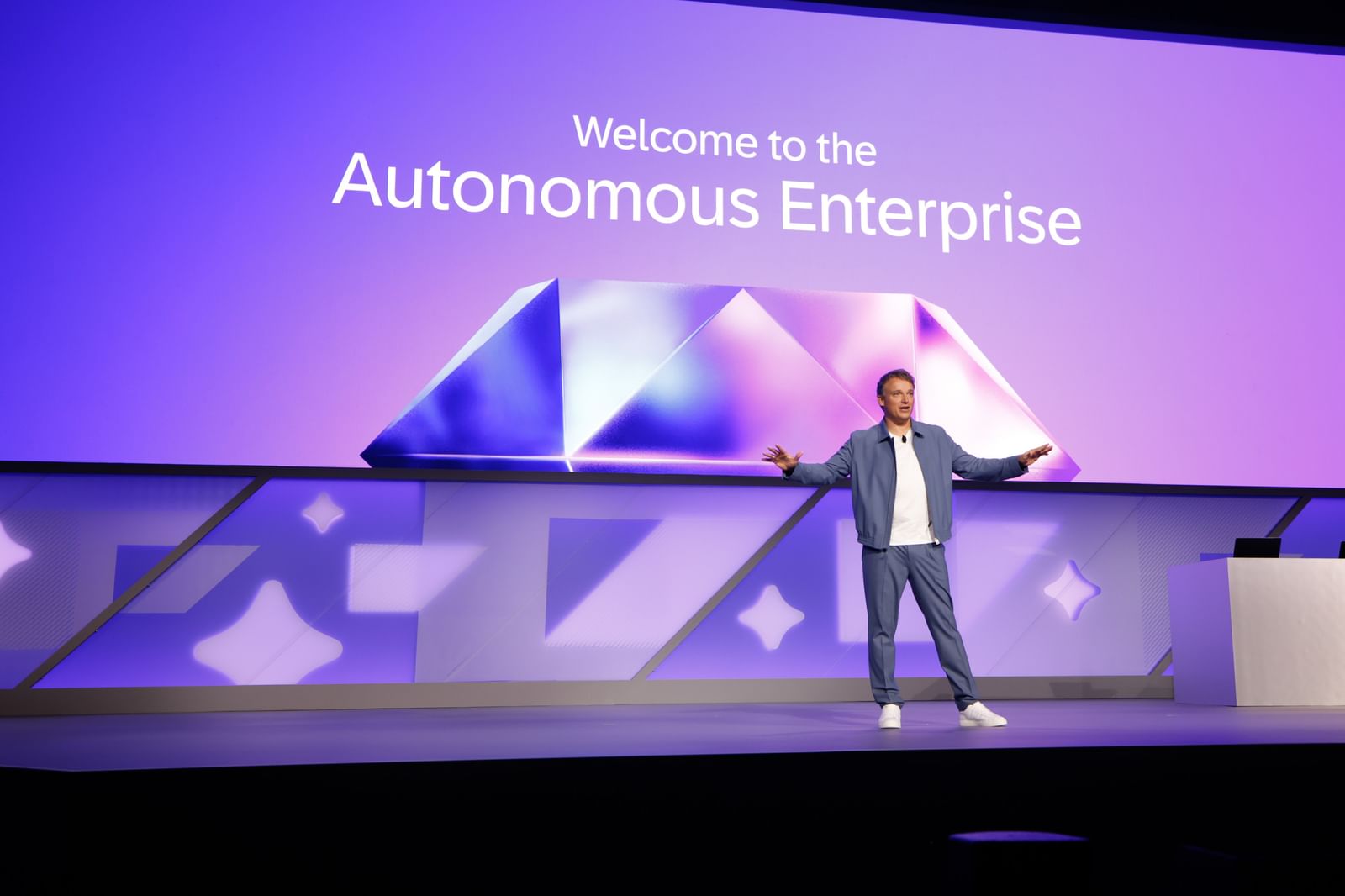
At Sapphire 2026, SAP unveiled what it calls the Autonomous Enterprise — a unified platform built around three pillars: the SAP Business AI Platform (context, build, and governance layers), the SAP Autonomous Suite (50+ domain-specific Joule Assistants orchestrating 200+ specialized agents), and a new user experience designed for human-AI collaboration.
For utilities specifically, SAP and Anthropic announced a partnership to build custom agents and agentic workflows targeting the utilities sector, covering asset management, field operations, and the integration of operational and transactional data that has long been our holy grail.
Ahead of Sapphire, SAP also updated its API Policy (v4/2026), restricting the use of SAP APIs for unsanctioned agentic AI integrations, specifically those involving autonomous systems that execute sequences of API calls, and large-scale data extraction outside endorsed architectures. This policy update has generated significant community debate.
We believe that debate, while valid, is missing the larger point.
Why the API Policy Is the Right Move — Even If the Communication Was Not
Let us be honest about something: the AI integrations many of us have prototyped involve third-party tools calling SAP directly, often via undocumented interfaces, often at scale, often without formal governance frameworks. Some of these have been enormously valuable as demonstrations. Very few have been ready for production.
The reason they were not ready for production is exactly what SAP’s new policy and Autonomous Enterprise framework are designed to address.
Security
Agentic AI systems that can read — and increasingly write — to production systems represent a categorically different security surface than traditional integrations. A human makes one decision at a time. An AI agent can execute thousands of actions in the time it takes a security team to be notified. SAP’s Agent Gateway and endorsed architecture model create a controlled, auditable channel for agent activity. For utility CISOs who have been reluctant to approve any agentic AI in production, this is the security perimeter they’ve been waiting for.
Governance and Compliance
We operate in one of the most regulated industries in the world. NERC CIP, state PUC requirements, FERC oversight, and an evolving landscape of data privacy and cybersecurity mandates all touch our systems. SAP’s governance layer, built on LeanIX, Signavio, and Cloud ALM, provides auditable agent telemetry, verified agent enforcement, and workforce impact mapping. These are not nice-to-haves for utilities. They are prerequisites for any regulator conversation about autonomous AI in production.
Performance
Our production systems — IS‑U billing, outage management, Plant Maintenance, PSCD — were designed for human-paced transactional workloads. Agentic AI creates a fundamentally different load profile: high-frequency, parallel, potentially recursive API calls that can destabilize systems not designed for them. SAP’s concern here is legitimate and practical. The endorsed architecture model is as much about system stability as it is about commercial interests.
Audit
When an AI agent acts on production data — closes a work order, adjusts a rate schedule, dispatches a field crew — who is accountable? Under current third-party integration models, the answer is often unclear. SAP’s framework, with its agent activity logs, policy enforcement layers, and company memory audit trails, creates the accountability chain that regulators will eventually demand and that our internal audit functions need today.
The Vendor Lock-In Question Deserves an Honest Answer
The concern about vendor lock-in is real and should not be dismissed. But it deserves a more complete analysis than it has received in the community conversation so far.
Every AI vendor is building a proprietary moat. What matters is whether you’re choosing yours deliberately.
Consider what is happening across the AI landscape right now. Microsoft Copilot captures your employees’ interaction patterns, document workflows, and decision logic in its memory layer. Google’s Gemini Enterprise builds organizational knowledge graphs from your workspace activity. Anthropic’s Claude, used at scale, accumulates company-specific context through memory systems that are not portable across vendors. While open standards like MCP (Model Context Protocol) and A2A (Agent-to-Agent) protocols enable interoperability at the integration layer, the company memory is proprietary to each vendor. The captured tribal knowledge, the learned preferences, the institutional process context that makes an AI genuinely useful: none of that is portable.
That isn’t a criticism of those companies; it’s simply how value gets created in AI systems. The more your people interact with an AI platform, the more contextually valuable it becomes to your organization, and the more embedded it becomes. SAP is doing exactly what every other AI vendor is doing. The difference is that SAP is doing it with 50 years of utility industry process knowledge already embedded in the platform.
The lock-in ship has sailed industry-wide. The question worth asking now is: “With which partner do we want to build our institutional AI knowledge, and do they have the industry depth, governance framework, and regulatory awareness that our business requires?”
And for many utilities already deeply invested in SAP, the answer may well be SAP’s Autonomous Enterprise. Its utility-specific agent roadmap, Anthropic partnership targeting the utilities vertical, and governance framework make it the most defensible path to production AI.
The Data Architecture Shift We Cannot Ignore
For many utilities, we have spent a decade building robust analytical architectures: replicating SAP data into BW, data marts, and data lakes, then running read-only dashboards and decision-support tools on top. This model has served us well. It is also insufficient for the agentic AI era.
Traditional AI recommends. Agentic AI acts. That distinction comes down to write access to production systems. An AI agent that can update a maintenance work order, adjust a demand response signal, or modify a billing account is not operating on a read-only copy of your data. It is operating on your production system. That requires an entirely different level of security, governance, and performance infrastructure than we have historically built around our analytics layers.
SAP’s Autonomous Enterprise framework, with its Agent Gateway and endorsed architecture model, is the first credible industry-specific answer to the question: “How do we give AI agents safe, governed, auditable write access to our production utility systems?” We should engage with that answer seriously, even as we push to improve it.
What We Still Need to Influence
Embracing SAP’s strategic direction does not mean accepting it without question. As a community, we have both the standing and the responsibility to shape how this vision is implemented. Here are the areas where our voice matters most:
- Real-time operational data integration: Our DER management, grid edge analytics, and demand response programs require sub-second data from SCADA, AMI, and OMS systems that live outside SAP’s transaction perimeter. We need SAP’s agent framework to connect cleanly with real-time operational data, not just SAP transactional data.
- Pricing transparency and contractual protections: The DSAG user group has formally demanded that SAP provide clear contractual definitions, transition timelines, and protection for existing integrations. Our community should align with and amplify these demands, particularly around contract renewal implications.
- Existing AI investment protection: Many of our members have built valuable AI pipelines and data products that currently access SAP via interfaces that may be affected by the new API policy. We need grace periods, migration support, and clear endorsed-architecture pathways that protect these investments.
- Asset management with embedded analytics: Predictive maintenance, failure probability modeling, and maintenance plan optimization that connects SAP PM data with operational sensor data is one of our highest-value use cases. We need SAP’s utility agent roadmap to prioritize this.
- 2027 pricing clarity: The Joule agent runtime is free through December 2026. No post-promotion pricing has been disclosed. We need commitments, not promotions, before we build production AI infrastructure on this platform.
A Call to Our Community
Before dismissing SAP’s API changes and Autonomous Enterprise vision as unwelcome constraints, I ask each of you to sit with a harder question: If not SAP’s governance framework, then what? How are you planning to operationalize agentic AI, with true write access to your production utility systems, in a way that satisfies your security team, your compliance function, your internal audit, and your regulator?
If you have a better answer, please bring it forward. Our community is stronger when good ideas compete. But “we’ll figure out governance later” is not a plan. It is the reason our proofs of concept have not become production systems.
AI is here to stay, and so are our regulatory obligations. The goal is not to choose between them — it is to build a framework where both can coexist.
SAP has put forward a strategic vision for doing exactly that. It is imperfect, it raises legitimate concerns, and it will require significant community engagement to shape into something that fully serves our needs. But the direction is correct: governance, security, and performance as the foundation for production AI, not as afterthoughts.
Read the details. Ask the hard questions. Engage SAP through ASUG and your direct relationships to influence the roadmap, and do it with the recognition that for regulated industries, the hardest part of the AI journey was always going to be operationalization, not innovation. That’s the challenge in front of us now, and it’s one worth meeting together.
To learn more in-depth about the Autonomous Enterprise, I encourage you to check out SAP’s upcoming, 11-part webinar series. To get involved and keep up with the latest, join ASUG’s Utilities Community.
You Might Be Interested In

Log in to save this article and keep your favorite resources in one place.
Log in to save this article and keep your favorite resources in one place.
Log in to save this article and keep your favorite resources in one place.

Log in to save this article and keep your favorite resources in one place.