Log in to save this article and keep your favorite resources in one place.
This partner insight was authored by Kyle Bialek, Managing Director at KPMG, and Parag Shrivastava, Director of SAP Business Data Cloud & AI/ML at KPMG.
Many organizations are investing heavily in AI to drive better forecasting, smarter asset decisions, improved customer experience, and cleaner regulatory reporting. On the surface, the speed and results look great: clean dashboards, confident predictions, faster decisions.
What most people don’t see is everything required underneath to make those results trustworthy. At the center of that foundation is the trusted business context layer: the business definitions, semantic relationships, ownership, and lineage that preserve meaning across decades of organizational change and shifting nomenclature. Without it, AI produces answers that sound right but aren’t, and trust is quickly lost.
Context is not a technical solution — it is the language of your business. Organizations that treat it that way turn AI experiments into competitive advantages.
The Tip of the Iceberg
AI is not new to utilities; many are seeing real results. Predictability of failures can cut unplanned outages. Smart-meter bill forecasting and high-bill alerts help improve customer experience and reduce call-center volume. Automated reporting helps speed up filings and reduces errors.
Boards and regulators have been pushing for these outcomes. The problem is they stay reliable only when the foundation underneath is solid, and demand from the board and regulators continues to grow. When data lacks clear meaning, consistent definitions, and clean history, outcomes drift and commitments become harder to meet.
The Iceberg Effect
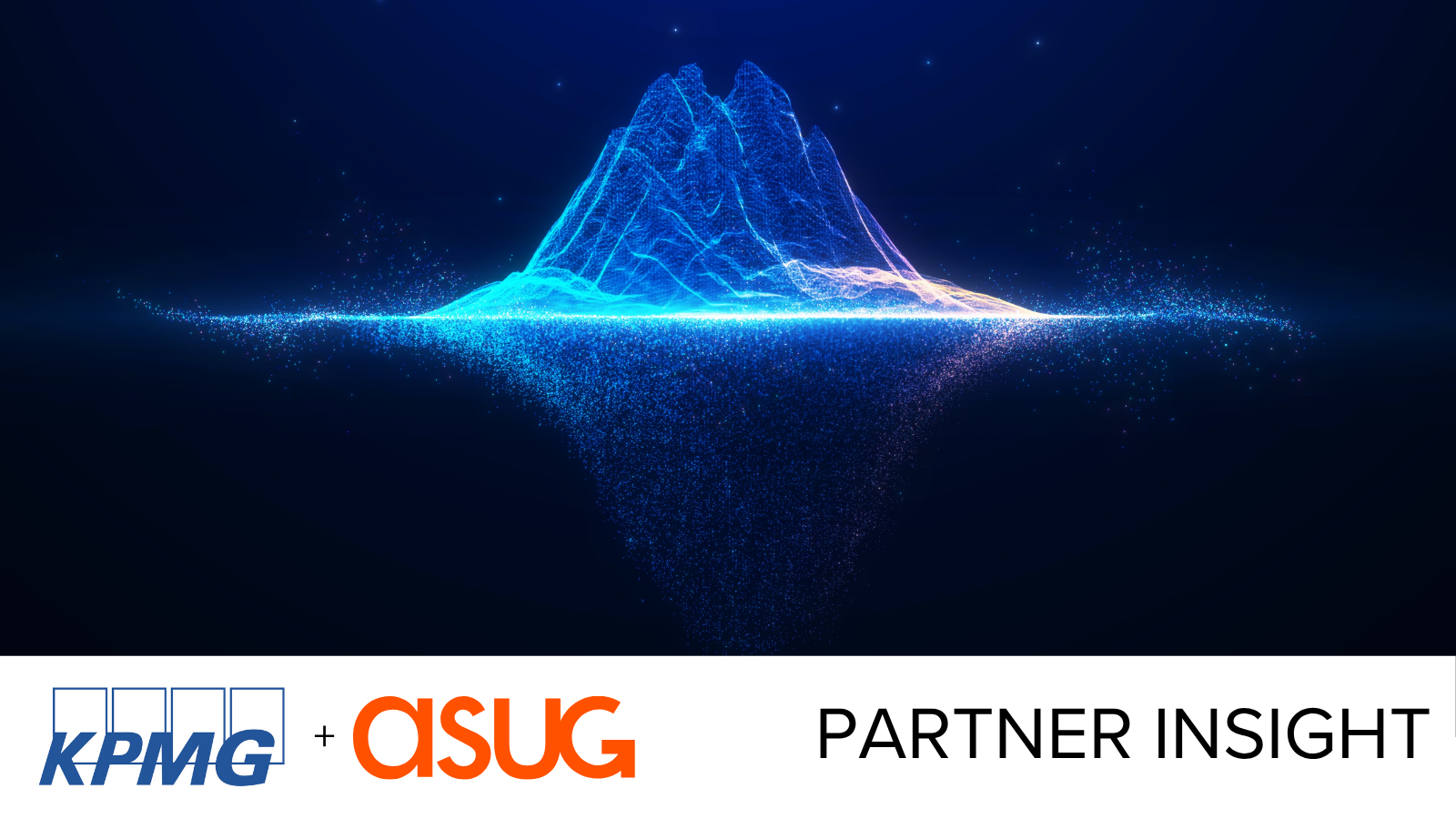
Think of an iceberg. The small part above the water is what leaders see — AI insights, dashboards, automated decisions. The much larger mass below the waterline is the work that makes those insights trustworthy: data quality, governance, trusted business definitions, semantic relationships, lineage, and especially business context.
Many programs spend the majority of their attention on the tip. They invest in models and use cases while under-investing in the foundation that determines whether those investments will scale. In utilities, where decisions affect reliability, billing accuracy, safety, and regulatory standing, that imbalance can have real consequences.
Why Context Matters
Context answers the basic business questions raw data cannot: What does this number actually mean? Who owns it? How was it calculated? When was it last updated? What other names does this term go by?
In utilities, these questions are rarely simple. The same term — customer, meter, outage, work order, revenue — can mean different things across operations, customer service, finance, and regulatory teams. Without a shared definition, AI systems fill the gaps with incomplete or conflicting logic.
The potential business impacts can show up quickly:
- Decision quality drops: Forecasts and recommendations rest on shaky definitions.
- Trust erodes: When people cannot explain or defend an AI recommendation, they stop using it.
- Regulatory exposure grows: Clear lineage and meaning become harder to demonstrate.
- Scaling gets expensive: Every new use case requires custom data work instead of building on a consistent foundation.
Strong context reverses this by establishing a common language, letting AI operate with the same context experienced employees already use. Like humans, AI solutions cannot accurately respond without the institutional knowledge you have amassed throughout your career.
This foundation becomes even more important as utilities modernize their technology landscapes with platforms such as SAP S/4HANA, SAP Analytics Cloud, and SAP Business Data Cloud. These technologies can enable significant advances in analytics, planning, and AI, but they still depend on clear business meaning and trusted context. Without it, even sophisticated tools risk delivering polished but unreliable outputs.
What This Looks Like in Practice
During a recent enterprise planning and AI readiness effort at a large North American electric utility, the initial focus was on high-value outcomes such as asset availability prediction, financial forecasting, and intelligent decision support. As the work progressed, it became clear that technology itself was not the primary constraint. Significant effort was required to harmonize planning data, align business definitions and reporting semantics, and establish consistent governance across finance and operational systems.
In one common example, teams discovered that terms such as “asset,” “loss,” and related availability metrics carried different definitions and calculation rules across operations, accounting, and reporting. Until those meanings were aligned, the underlying data remained sparse and inconsistent, making it difficult to build reliable models or produce AI-assisted forecasts that could be trusted.
The experience reinforced a broader lesson for utilities: enterprise AI readiness begins with trusted business context.
The Work That Has to Happen Below the Surface
Reliable AI requires deliberate investment in the submerged layers — the accumulated knowledge that made your enterprise what it is today.
It starts with business leaders defining and maintaining the meaning of critical data elements. Leaving interpretation only to IT or data teams does not work. A living business glossary that reflects how the organization actually operates is essential.
It continues with context — how data moves from source systems through the layers and into the AI environment. Lineage needs to be visible so that when results are questioned, the path back is transparent.
Trusted business context also must be built into initiatives from the start. Treating it as documentation after the fact almost always fails. The organizations that get this right treat business context as an enterprise asset with defined standards, ongoing maintenance, and sustained investment.
Finally, governance should connect data and AI teams with the business domains that own the outcomes. Without that link, even the newest tools produce fragmented results.
None of this work is glamorous, and it rarely shows up in the success stories. But it can determine whether those success stories can be sustained and scaled.
Lessons from Enterprise Implementation
Two patterns stand out from enterprise planning and AI programs. First, organizations that treat trusted business context as foundational infrastructure — rather than a side activity — move more quickly from isolated experiments to repeatable capabilities. Second, enterprise planning is often an effective proving ground: forecasting, scenario analysis, and driver-based planning force financial and operational data to carry consistent meaning across the organization, making gaps in definitions and governance visible early.
The Cost of Weak Foundations
When organizations under-invest below the waterline, the problems often surface gradually and then all at once. Forecasts become harder to reconcile, AI recommendations become difficult to explain, teams recreate definitions for each new use case, and regulatory or audit questions become difficult to answer. The result is not simply a data problem; it is slower adoption, higher cost, and diminished trust in AI-enabled decisions.
Recommendations
Leaders who want AI to deliver sustainable value should treat trusted business context as an enterprise capability rather than a one-time data exercise.
- Make business context a leadership priority: Establish named business owners for the critical terms and data products that AI and analytics will touch.
- Build context into initiatives from the start: Do not treat definitions, lineage, and governance as documentation to be completed after implementation.
- Design for reuse: Create trusted business context that can support multiple forecasting, planning, reporting, and AI use cases rather than rebuilding meaning for each project.
- Measure trust as well as technical performance: Model accuracy matters, but so do explainability, consistency, lineage, and the ability of business users to understand and defend AI-supported decisions.
Closing: Rising Above the Waterline
The next generation of enterprise AI will not be differentiated simply by access to increasingly powerful models. Those capabilities will become broadly available. The advantage will come from how well organizations connect those models to the language, meaning, and operating context of their businesses.
For utilities, that foundation sits below the waterline: trusted definitions, semantic relationships, lineage, governance, and enterprise data that carries consistent meaning from source to decision. Organizations that invest in this foundation will be better positioned to deploy AI, trust it, explain it, and scale it.
The most visible AI outcomes may happen above the waterline, but the work that makes them possible happens below it.
Kyle Bialek is a Managing Director at KPMG. Parag Shrivastava is Director of SAP Business Data Cloud & AI/ML at KPMG.
Some or all of the services described herein may not be permissible for KPMG audit clients and their affiliates or related entities.
You Might Be Interested In

Log in to save this article and keep your favorite resources in one place.
Log in to save this article and keep your favorite resources in one place.

Log in to save this article and keep your favorite resources in one place.
Log in to save this article and keep your favorite resources in one place.