Log in to save this article and keep your favorite resources in one place.

Materials Management with SAP S/4HANA is available for purchase from SAP Press. ASUG members can enjoy 15% off any SAP Press titles with the discount code 15ASUG.
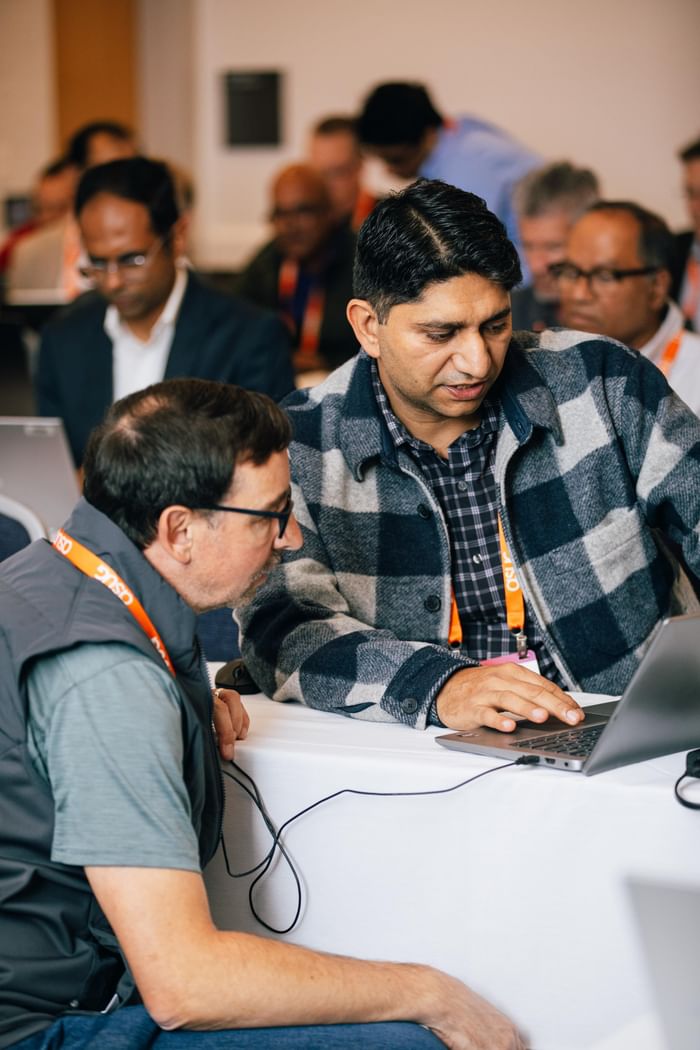
Having worked with SAP materials management processes and training users around the world for nearly 20 years, Jawad Akhtar, Solution Architect for SAP Digital Supply Chain, has extensive knowledge to share.
Akhtar has authored numerous columns for SearchSAP and spoken on the subject at ASUG events, and his latest SAP Press publication puts all of those insights in one place. Materials Management with SAP S/4HANA, distributed by SAP PRESS, guides readers step by step through configuring and managing the complexities of materials management processes and shares essential advice for getting the most out of an enterprise’s SAP S/4HANA landscape—even in the most complex of global enterprise landscapes.
This interview has been edited and condensed for length and clarity.
ASUG: There’s a wealth of information contained within the nearly 1,000 pages, but which chapters do you think readers will find most immediately helpful in improving their materials management data?
Akhtar: Master data forms the backbone of any successful SAP implementation and usage. For those looking to immediately improve their materials management data, I recommend focusing on Chapter 3 (Configuring the Material Master) and Chapter 4 (Material Master Data). These chapters provide the technical foundation for configuring material types and number ranges, and they offer a deep dive into every field and view of the material master record, which is the repository for all information related to a material. Additionally, Chapter 5 (Business Partners) is crucial because the business partner object is now the mandatory single point of entry for managing both supplier and customer master data in S/4HANA.
How exactly does materials management drive a supply chain within S/4HANA?
In S/4HANA, materials management is considered the engine that drives logistics and supply chain management. It functions as a core integrator by managing three essential flows:
- Material Flow: The movement of goods from suppliers through your company and eventually to the customer.
- Information Flow: The transmission of orders and real-time status updates on deliveries.
- Financial Flow: The generation of financial documents at every material movement, ensuring that inventory values are accurately reflected in financial accounting.
What do people using materials management often get wrong, which they’ll be surprised to learn in this book?
Users are often surprised by some of the following major shifts in S/4HANA:
- Mandatory Material Ledger: Many consultants who used SAP ERP may not have used the Material Ledger, but it is now a mandatory requirement in S/4HANA for inventory valuation.
- Business Partner Dominance: The traditionally separate “Vendor” and “Customer” master data have been replaced by the Business Partner approach, which is now the leading object for master data maintenance.
- MRP Live Performance: The new MRP Live tool carries out logic directly in SAP HANA, providing massive performance gains and automatically deciding whether to generate planned orders or purchase requisitions based on sourcing logic.
For companies converting data from legacy systems, you recommend having SAP automatically assign numbers to the materials, simplifying maintenance. What other actionable advice do you have for companies transitioning from legacy systems?
Beyond automatic numbering, companies should:
- Start Data Cleansing Early: Parallel projects for cleansing legacy data and eradicating duplicate or redundant records (like obsolete materials) should begin well before loading data into SAP.
- Assign View Responsibility: Different departments should be responsible for their specific data views in the master data upload files (e.g., sales for sales views, production for work scheduling views) to ensure accuracy.
- Copy, Don’t Create from Scratch: When creating new organizational units or material types, always copy a standard SAP-provided object to ensure all dependent table entries are copied, reducing errors.
- Learn and Use SAP Fiori: Fiori is a next-generation, web-based, intuitive user interface that offers rich features and functionalities to improve an SAP user’s productivity.
What advice would you give someone starting to navigate this solution for the first time?
Focus on exception management and real-time evaluation. In the modern SAP S/4HANA environment, tools like MRP Live carry out the complex planning logic directly in the HANA database, which frees you from managing the technicalities of the planning run itself. Your primary role as a procurement, material, or inventory planner is now to use the Stock/Requirements List to evaluate the supply-and-demand situation in real time. You must learn to interpret exception messages, which are the system’s way of alerting you to critical business situations that could disrupt your supply chain.
To excel at this, you should prioritize handling these exceptions based on their severity, starting with “abnormal ends” and structural problems before moving to less urgent informative messages. Leverage visual aids like traffic light indicators, which provide a quick list view of potential overstocking or understocking situations. Look beyond a simple “green light” and analyze the actual days of supply to ensure your inventory is in a perfect balance. By mastering these analytical cockpits and Fiori apps, you move from being in a reactive situation to a strategic or proactive supply chain practitioner.
How important are industry sectors to effectively using SAP S/4HANA, and what should those who need to create a new industry sector in the system know before they start?
Industry sectors are mandatory for every material master record and control the screen setup and sequence. They define which fields are hidden, displayed, optional, or mandatory. Those creating a new industry sector should know it must be linked to a field reference. If predefined sectors—like pharmaceutical or mechanical engineering—do not meet your needs, you can create a new one by choosing a single character identifier and providing a description.
Do you have any real-world examples of a materials management misconfiguration and how the company course-corrected?
One common critical misconfiguration is setting the valuation level incorrectly. SAP strongly recommends setting this at the plant level, which is mandatory for some features, and once set, you cannot switch between plant and company code levels without massive difficulty. Another issue arises with material group hierarchies; changes to these after implementation have far-reaching implications, so they must be defined correctly early on. Finally, missing automatic account determination settings often cause goods movement transactions to fail, requiring careful troubleshooting of transaction keys and valuation classes.
For those operating internationally, there are numerous intricacies with materials management. What advice do you have for those navigating a global landscape of materials and planning data?
For international organizations, I recommend:
- Leveraging the Material Ledger: It allows you to maintain inventory values in up to three parallel currencies, which is essential for global reporting and consolidation.
- Reference Purchasing Organization: This setup allows a centralized corporate group to negotiate powerful global outline agreements—such as quantity and value contracts—which local purchasing organizations across different countries can then leverage to secure high-volume pricing.
- Intercompany Stock Transport Orders: When you need to move materials between your own subsidiaries in different legal entities, you must master these orders with delivery and billing. This integrated process ensures that when goods move between company codes, the system automatically handles the complex requirements of internal sales, replenishment deliveries, and intercompany billing, ensuring that both legal accounting entities remain synchronized.
- Standardizing Descriptions: Define a material description policy using standard abbreviations and International Organization for Standardization (ISO) and American National Standards Institute (ANSI) names to ensure consistency across different languages and regions.
You are highly accomplished in your career with materials management and a prolific writer on the topic. What is the biggest way that SAP technology has changed, as it relates to materials management, and what has surprised you most along the way?
One profound evolution in SAP technology is the shift from static, reactive record-keeping to a system of proactive, real-time intelligence. In the traditional SAP ERP environment, planners often relied on fixed snapshots like the MRP list, which only reflected the supply-and-demand situation at the specific moment the last planning run was executed.
Today, S/4HANA has evolved into a dynamic navigator. Through the power of the HANA database, MRP Live now executes complex planning logic directly within the database itself, providing a performance boost that allows planners to run requirements planning much more frequently and react to supply chain changes in real time.
Furthermore, the technology has moved toward system-guided exception management. Rather than scrolling through endless reports, materials planners now use actionable Fiori apps like “Display MRP Master Data Issues” or “Monitor Material Coverage,” which proactively flag inconsistencies or potential stockouts for immediate resolution. We even see the integration of intelligent scenario lifecycle management, where regression algorithms can predict whether a purchase order item will be delivered on time or delayed based on historical supplier behavior.
What has surprised me most is how these innovations, particularly Demand-Driven Replenishment (DDR), have moved us away from relying solely on often inaccurate long-term forecasts and toward a visual, buffer-based pull system that protects the flow of materials.
Another significant change is the technological harmonization of master data and financial valuation, which has fundamentally simplified the landscape. In older versions of SAP, managing separate “Vendor” and “Customer” records often led to significant data redundancy and fragmented business processes. The evolution to the Business Partner approach as the mandatory single point of entry is a major shift; it allows us to maintain general information once and then extend that partner into various roles, such as a supplier for purchasing or a customer for sales. This change ensures that master data remains synchronized across the entire organization, reducing errors and simplifying the procure-to-pay cycle.
Accompanying this master data simplification is the evolution of the Material Ledger into a mandatory prerequisite for inventory valuation. Previously optional, the Material Ledger now serves as the subsidiary ledger for all materials, enabling actual costing by capturing every price and exchange rate variance throughout the period.
As a consultant, I find it remarkable that the system can now maintain material values in up to three parallel currencies simultaneously, providing global organizations with unprecedented transparency into their inventory performance and value-added processes. By technically unifying the logistics of materials management with the granular financial reality of actual costing, SAP has effectively bridged the gap between the warehouse and the corporate balance sheet.
Stay ahead with First Five, ASUG’s exclusive newsletter. Subscribe today for a curated email featuring top insights tailored for SAP users.
You Might Be Interested In

Log in to save this article and keep your favorite resources in one place.
Log in to save this article and keep your favorite resources in one place.

Log in to save this article and keep your favorite resources in one place.

Log in to save this article and keep your favorite resources in one place.