Log in to save this article and keep your favorite resources in one place.
In today’s digital economy, utilities must contend with shifting consumer demands, growing energy needs, and increasing regulatory and compliance standards. In the midst of these changes, many SAP utilities customers are on the path to adopting next generation technologies, implementing SAP S/4HANA, and migrating to the cloud.
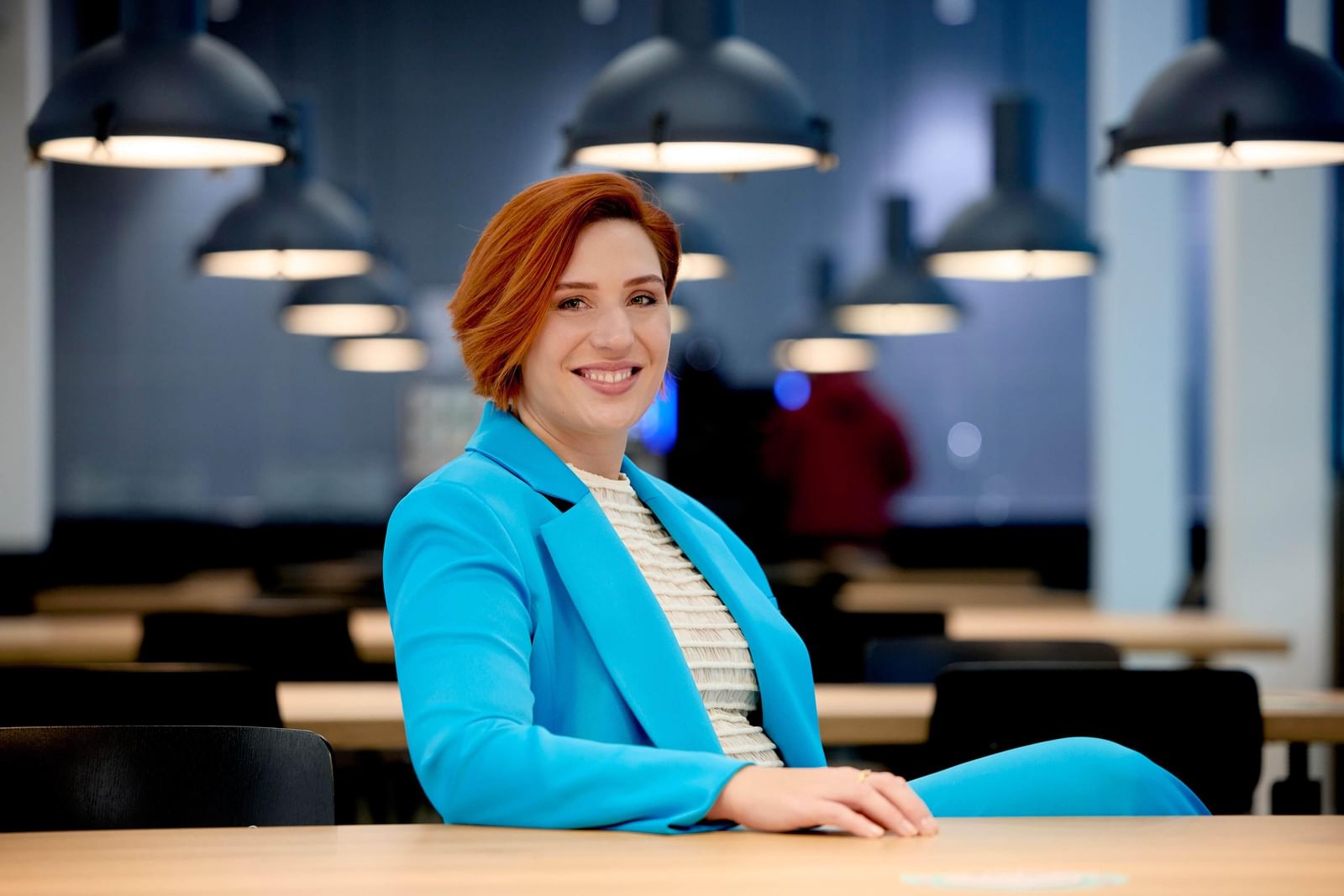
Ahead of the SAP for Utilities, Presented by ASUG conference, ASUG sat down with Daniela Haldy-Sellmann, Global Vice President and Head of the Energy and Utilities Industry Business Unit (IBU) at SAP, to discuss the evolution of modern utilities.
In conversation, Haldy-Sellmann reflected on how she’s seen the utilities sector evolve in recent years, what utility-specific use cases she sees ahead for SAP’s generative artificial intelligence (AI) embrace, and how SAP is helping its customers overcome industry-specific challenges.
This interview has been edited and condensed.
As you look specifically at North American SAP customers, how has the utilities industry changed in recent years?
The utilities industry in North America has undergone significant changes in recent years. One of the major challenges is the increasing demand for renewables, as well as distributed energy resources (DERs), and the investments required to connect these new generational sources to the transmission and distribution networks. This need for grid capacity extensions combined with the need to accommodate smaller consumer-grade DERs with bi-direction impacts is a major change area for the industry in North America. The U.S. government is recognizing these changes and supporting the energy transition through initiatives like the U.S. Inflation Reduction Act and Federal Energy Regulatory Commission (FERC) Order 898.
In common with the global industry, North American utilities also still need to become more operationally efficient while still improving the customer experience. SAP is here to support the utility’s delivery of reliable, safe and efficient energy through our platforms and tighter integration to operational systems.
One issue that we have seen across the globe — that didn’t hit the North American market as badly — involves heavy price inflations and fluctuations, specifically in deregulated markets. These have become a huge problem for retailers. And we see that, from a margin perspective, selling energy only is not attractive anymore. Therefore, retailers are much more focused on customer experience and this we can see in integrated markets as well. Complying with regulations is key to utilities and mandatory to participate in the market.
Similar to other industries, we also see missing young talent and a lack of qualified resources in utilities; our RISE offering addresses this issue as well, to allow utilities to focus on their core business.
As you speak to SAP utilities customers across the globe, what are some challenges that are top of mind for them?
One of the most pressing challenges they face is the integration of DERs. This is a recurring issue globally, not just in B2B scenarios but also in B2C situations where customers are feeding into the grid with their own energy sources, such as solar panels.
In addition, there is a growing need to update outdated grid environments and increase sustainable renewable energy capacity. The demand for new customer connections and service connections to the grid is also a significant concern for utility companies, particularly in North America, as they struggle to accommodate these DER additions without a solid technology foundation in place.
Think about incorporating assets on the grid that the utility doesn’t own, but possibly could leverage in resource plans and forecast modeling with customer programs. The one-way grid quickly becoming multi-directional is rapidly changing the demands of utilities.
How is SAP working with its utilities customers to address the specific hurdles and demands that they’re seeing? How do you see customers using SAP software to address and manage these challenges?
SAP works closely with its utilities customers to address their specific challenges and demands. As a global software provider, SAP offers industry-agnostic solutions and then customizes them to meet the specific needs of the energy and utility industries. We focus on adding industry verticalization where required to make the software relevant to our customers.
For example, looking at customer experience (CX), SAP is investing in the end-to end customer journey for utilities end customers by providing utilities-specific add-ons for SAP Service Cloud, SAP Emarsys, or the SAP Commerce Cloud to better serve our utility customers. But now CX is blending into operations with DERs and the multi-directional grid. CX is no longer just at the end of the commodity but must be embedded throughout numerous core business processes including asset management and field service.
Also, for field service management (FSM), half of our customer base are utility companies. We are ensuring the right resources are sent to the right locations and jobs with the right equipment, tools, and parts so the grid operates most efficiently. All using leading-edge technology with AI embedded. Add into that, we are further developing our industry-specific AI cases. Next to already existing computational AI cases like outsorted billing documents or implausible meter reading checks, we are investing into generative AI cases like the conversational self-service agent. We are planning to deliver two further industry-specific cases for Joule in the first quarter of 2025, like business process exception management for utilities, supporting the billing expert with guidance and explanations to resolve incidents quicker, and a utilities customer data environment assistant that helps to comprise and receive a summary of each customer via Joule, to make faster and better decisions to increase customer satisfaction.
Obviously, SAP has made a concerted effort to migrate its customer base to the cloud. As you look at the utilities industry, what are some of the benefits that utilities customers would specifically see when migrating to the cloud?
There are several benefits that utilities customers can experience when migrating to the cloud. These benefits vary for each customer depending on the individual situation/set-up. Some customers may struggle with a lack of resources or expertise to manage their IT landscape and data centers, and with inefficient, outdated, or lengthy processes that do not allow them to consume new innovations.
In the past, our on-premises environments provided great flexibility, allowing for the execution and handling of complex processes. However, this flexibility has also led to inefficiencies, such as the accumulation of unnecessary custom coding and user exits. Changes of processes, to accommodate technology, disruption, innovation, and the changing industry, is now where value-add is generated. Moving to the cloud allows us to revisit processes and follow a clean-core approach, thus delivering innovation more effectively to our customers.
At SAP, our focus is on enabling our customers to constantly consume innovation without the restrictions of time-consuming enhancement packs or upgrades. Moving to the cloud and redesigning core business processes allows them to do just that. Fit-to-standard is a very popular topic right now; as the industry changes, technology must keep up while minimizing risks.
Additionally, we have observed low adoption of computational AI cases among our existing utilities customers, due to individual set-up of systems and data silos. By migrating to cloud ERP, customers can better utilize AI and leverage their data across the platform, instead of operating in isolated silos. The increased speed and agility are an important reason for us to encourage the transition to the cloud for our customers in the utilities industry.
Let’s talk a little bit about regulations and mandatory reporting. How is SAP helping its customers with those processes?
SAP has always prioritized compliance with utility regulations, specifically in Germany and the United States as our biggest markets, making significant investments to ensure adherence. In the legislation of most countries, inter-company data exchange processes between the various market partners in deregulated energy markets have to comply to a strictly standardized regulatory framework. This means that all utilities are obliged to implement the respective market processes and data exchange formats.
In Germany, we offer a comprehensive public cloud solution to manage the market communication covering regulatory requirements.
In the U.S., a key market for SAP, we closely consider regulatory requirements like those set forth by FERC and have incorporated specific reporting fields in our ERP system to fulfill these obligations for many decades. Our platform also features an open API concept, allowing for further customization and development by external parties. Specifically to FERC and the changes slated for Jan 2025 required by Order 898, we at SAP are working hard to support these changes and continue our North America focus.
In cases where industry-specific requirements fall outside of our global governance, we actively encourage partners to contribute and build solutions that address these needs and fill in white spaces in the end-to-end process.
SAP has focused on embedding generative AI solutions across its cloud suite. What utility-specific use cases and AI functions are you excited about?
I am excited about several utility-specific use cases and AI functions already in existence, as mentioned before, but there are more functions available to utilities customers, such as intelligent collections, matching of incoming payments, goods received, and invoice matching. These are standard bill-to-cash finance areas, but they remain relevant to our customers.
In the asset space, many use-cases we currently deliver and are adding to soon including asset health prediction, maintenance optimization, and dispatch. Our solutions provide early alerts about asset performance, enabling reliability-centered and proactive maintenance scheduling plans, as well as optimizing dispatch and planning for field service technicians. We are also focusing on metering and markets, particularly in the validation of impossible meter reading results and, in the future, with enhanced DERs. Also relevant is the topic of registering and managing those DERs, as well as energy forecasting.
At the International Energy and Utilities Conference in Seville this year, we introduced a next-generation customer interaction with a conversation-driven self-service agent for utilities. Also, in the CX space, we offer intelligent product recommendations, the 360-profile summary, and a scheduling assistant for natural-language marketing analytics.
I am very pleased with the progress I am seeing. As an SAP end user myself, I am eager to see these advancements in our systems.
SAP has unveiled a very promising suite of sustainability solutions. How are you seeing utilities customers leverage those solutions?
There is significant interest in SAP’s sustainability solutions, with utilities customers leveraging them in various ways. For example, companies across the E.U. and globally are focusing on Environmental, Social, and Governance (ESG) reporting, and we are seeing an increasing number of customers adopting these measures.
As an example, Powerlink Queensland, which just presented at our event in Seville, Spain, recently implemented the SAP Sustainability Control Tower. Additionally, OGE, a German gas supplier, is utilizing SAP solutions such as Green Token to track and trade “green molecules,” via blockchain technology. This allows them to track production and capacities across Germany and their pipelines. A crucial aspect for customers like OGE is understanding the quantity of green molecules throughout their journey for accurate financial forecasting and control.
The release of SAP Green Ledger is expected to generate even more interest in sustainability solutions. This new offering will revolutionize the integration of sustainability and financial reporting by assigning carbon emissions to products and processes. This shift in perspective will be a game-changer.
As you look at the utilities sector overall, what are you most excited about?
The utilities and energy sector is currently undergoing a significant shift, making it an opportune time to be involved. The energy transition is becoming a widespread reality, and I am particularly intrigued by the increased competition and its impact on improving services for consumers. With the energy transition, consumers now can generate their own energy and contribute to the grid, while also fulfilling their own energy needs. We are an active part of the energy transition.
I am particularly impressed with the developments in markets such as Australia, the UK and Japan, where energy communities and deregulation are changing the industry. It is also interesting to observe the challenges posed by aging grid infrastructure, which must be maintained and adapted to accommodate new energy sources.
The necessity for collaboration among governments, across the industry, and software vendors is evident, and I find it compelling to see the industry come together to drive innovation. The collaborative nature of the utilities sector is especially intriguing to me, and I find it inspiring how much collaboration we see in the market.
For more utility insights from SAP leaders, check out insights specific to your industry. To hear more from SAP for Utilities, Presented by ASUG read our recap of the conference’s topics.
You Might Be Interested In
Log in to save this article and keep your favorite resources in one place.
Log in to save this article and keep your favorite resources in one place.
Log in to save this article and keep your favorite resources in one place.
Log in to save this article and keep your favorite resources in one place.