Log in to save this article and keep your favorite resources in one place.

Key Takeaways
- Connecting with industry peers to hear lessons learned is going to be most valuable for a utility preparing for — or going through — digital transformation.
- When aiming to implement AI in a business, enterprises must first know what business outcomes they’re seeking, then clean up data and understand their processes.
- How to drive necessary updates and innovations to legacy business processes.
As utilities across the U.S. and Canada face changing software landscapes, evolving customer demands, and preparing for AI-enabled teams, connecting with their network has never been more important.
Bringing together more than 1,200 utilities professionals in San Antonio, the 19th annual SAP for Utilities conference, Presented by ASUG, had a palpable energy of SAP professionals eager to share their knowledge, learn how to best migrate their data, and bring insights back to their home utility.
The first day of the conference gave attendees a look at how utility companies across North America are navigating modern industry-specific challenges, serving their customers in new and thoughtful ways, and leveraging SAP solutions to drive innovation.
Here are some of the key takeaways from the first day of SAP for Utilities, Presented by ASUG.
Understand the Foundations
Michael Sullivan, National VP of Renewable Energy and Utilities at SAP, took the keynote stage throughout the event to give important vocabulary and context to AI as it applies to utilities – a notion known as data ontology. This layer is requisite foundation organizations must establish in order drive consistent outcomes from AI agents and assistants.
Sullivan further emphasized that large language models need business context in order to make better decisions. Otherwise, they’re playing a game of fill-in-the-box. To demonstrate this, he asked the audience to fill in the blank after he said, “Old MacDonald had a farm,” to which the audience replied with a speedy “E‑I-E-I‑O.” Because we have been trained from a young age to know this song, we quickly know the reply. But when he said, “The sky is…” people didn’t know whether to say “blue” or “falling.” This is an example of ontology, a relationship of grammar and information.
For information science and AI, that ontology is provided via a knowledge graph, so an enterprise’s software understands the context of data and how it applies to the actual business outcomes. Utilities looking to implement AI have to start by understanding their data and how it relates to the business before becoming a so-called “autonomous enterprise.”
Reexamine Processes to Optimize the Business
If the humans setting up a platform don’t understand their processes, the software won’t magically build it.
Tom Keney, Director of Enterprise Solutions at Summit Utilities, hosted a session about AI-driven field service with SAP Field Service Management (FSM), where he shared that his governance team painstakingly went through every field of their Smart Forms. On some Smart Forms, they were able to reduce the fields by half, leading the teams to be more efficient due to facing less redundancy.
In a session hosted by Erica Ellis, Enterprise Architect at Avista, she shared that the organization has more than 1,600 applications, inconsistent process documentation, and unclear workflows that they must navigate before they go live on SAP S/4HANA by the ECC end-of-maintenance deadline. She walked attendees through her organization’s use of SAP Signavio and LeanIX, sharing lessons learned along the way.
Her advice for getting started on a digital transformation is to first have a clear business need, which will help ensure executive buy-in. That means starting slow, creating a minimum viable product, and filling out every fact sheet.
“Build it for your business. It’s your journey; you choose the path,” Ellis said. She also advised that fellow utilities have a clear understanding of how their products and systems interact. Start small and be intentional with language to have more powerful conversations.
Connect with Utilities Peers
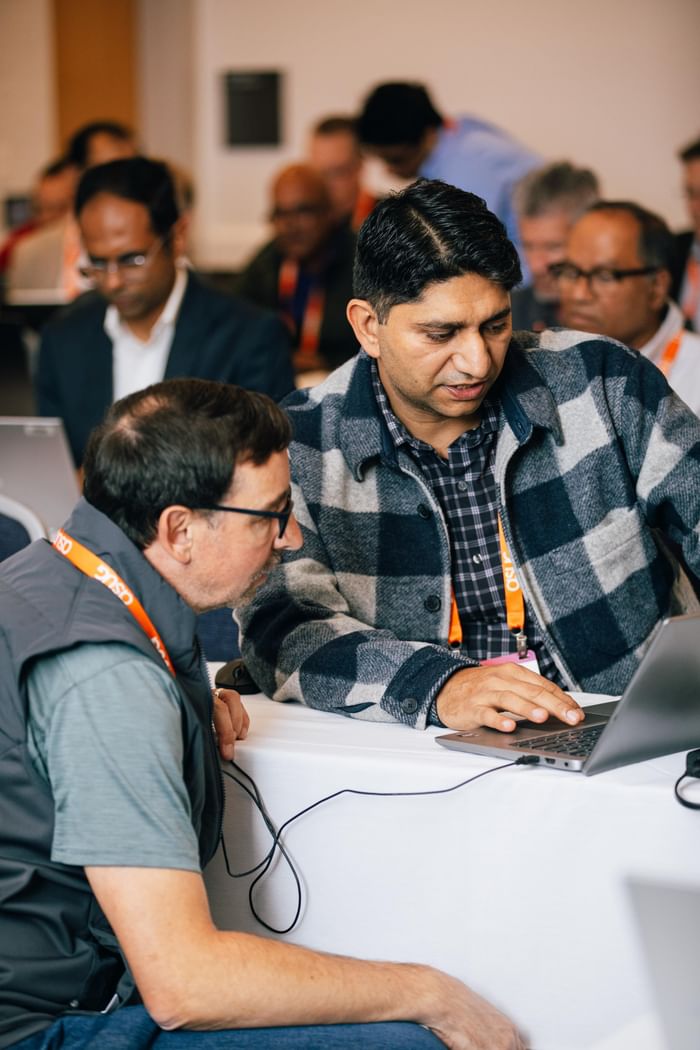
The utility industry’s unique commitment to collaboration and peer learning was a through line of SAP for Utilities, Presented by ASUG. Throughout panel discussion and networking opportunities, attendees disclosed how they used SAP solutions successfully.
Following her presentation, Ellis spoke with ASUG, underlining the importance of networking in the utilities industry. “It allows for conversation beyond the sales pitch, and it allows for discussion about the practicality of our choices,” adding that it’s not shameful to learn a lesson and share where you went wrong.
In the opening keynote, Sullivan called the gathering “a place where conversations that matter, that shape our collective future, can happen,” adding that “if there was ever a time that we needed a forum like this, it is now.” Attendees could connect through a variety of formats, such as an open-forum ASUG Community Conversation on AI, networking breaks, and direct access to SAP leaders, with a say in product direction.
Dan Johnson, Chief Information Officer at PPL Corporation, proposed that utilities each pick a handful of use cases and compare progress quarterly. The ability “to lead and follow, and to be able to collaborate as an industry, is what helps us kind of make all the things we’ve heard today look real,” he said.
Get Creative, and Stay Human
In a dynamic and different keynote, graffiti artist and speaker Erik Wahl shared messages of resilience via creativity, in between live painting — often with his hands.
Wahl shared with the audience his experience of losing his job when the Dot-com Bubble burst, which led to a period of fear and uncertainty for him. He healed from this time by his leaning into creative outlets, including sculpture, choreography, and poetry, which expanded his horizons to a successful career today.
He drew comparisons between his experiences and the current tectonic shifts spurred by AI. Among these dramatic changes, Wahl urged attendees to embrace a beginner’s mind and creative growth mindset like he did. In this new era of AI, “just sit back and watch and observe, and then look for ways again to expand into possibility, then contract and focus and execute,” Wahl said. “Think and ask different questions than other people are asking,” and you might find something that others haven’t yet thought of.
Stay tuned for continuing coverage of SAP for Utilities, Presented by ASUG. Our recap of the event’s second day will be published next week.
You Might Be Interested In

Log in to save this article and keep your favorite resources in one place.

Log in to save this article and keep your favorite resources in one place.

Log in to save this article and keep your favorite resources in one place.

Log in to save this article and keep your favorite resources in one place.