Log in to save this article and keep your favorite resources in one place.
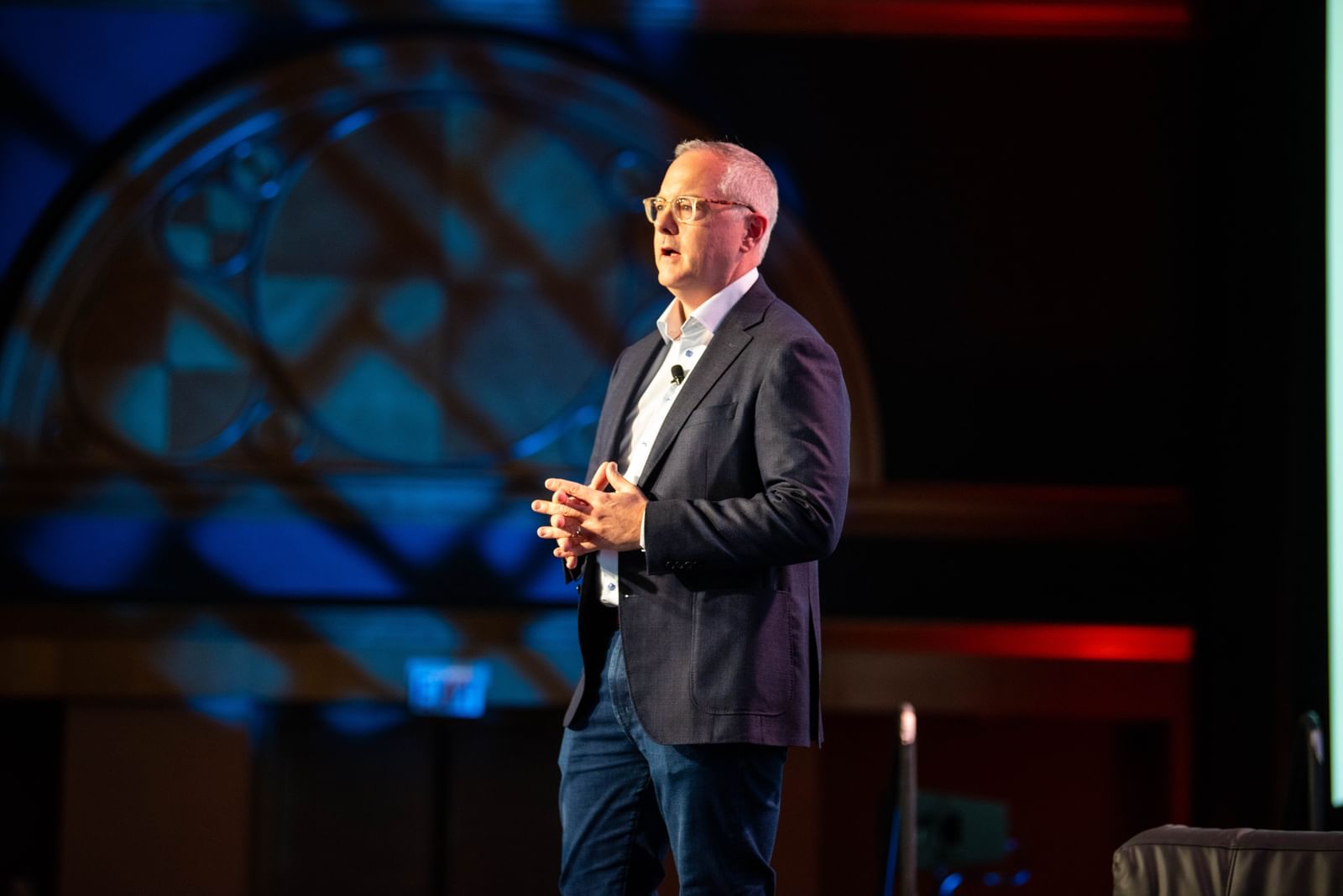
With SAP for Utilities, Presented by ASUG (September 9 – 11, 2024, Fontainebleau Miami Beach) upon us, hear from Michael Sullivan, National Vice President – Renewable Energy & Utilities at SAP, on the trends he’s observing in the utilities space today.
As utilities continue to transition toward a cleaner energy supply chain, growing renewable generation and storage capacity, hardening the grid, transmission build out, and transforming traditional power generation are all key components of the strategy to reduce emissions related to power production, transmission and distribution. Industry leaders are increasingly thinking and planning differently to address the challenges that accompany such a transition.
Adopting new technology along with organizational growth strategies will be essential to delivering power that is sustainable, reliable and affordable. A combination of data-driven decision-making, strategic partnerships, and investment in cloud ERP is necessary to keep utilities on the cutting edge of innovation.
The challenges faced by today’s utilities are highly complex and interconnected. As impacts of extreme weather events increase, the pressure is on for companies to reduce emissions and meet net-zero goals while investing in hardening the grid, integrating distributed energy resources and improving operational efficiencies. As electricity demand accelerates, including from data centers supporting AI and new cloud technologies, new tools and strategies will be required within enterprise resource planning systems and integration with other enterprise systems (e.g. ADMS, GIS, CIS) for utilities to keep up.
The nuance and complexity of these challenges and others is not lost on Michael Sullivan, National Vice President – Renewable Energy & Utilities at SAP, who believes that adoption of cloud ERP will play a pivotal role in accelerating transformation strategies, relieving the decades of technical debt present in this sector, and simplifying the process of integration.
Ahead of this year’s SAP for Utilities, Presented by ASUG conference (September 9 – 11, 2024, Fontainebleau Miami Beach), at which he will deliver the opening keynote, Sullivan sat down with ASUG to discuss the energy transition, cloud adoption, grid interconnection, significant load growth, and other challenges that SAP and its partners will collaborate with utility industry leaders to solve in the near- and long-term future.
This interview has been edited and condensed.
At last year’s SAP for Utilities conference, you spoke about the energy transition and specifically power generation and energy consumption shifting toward renewables and electrification. A year later, what has changed?
The energy transition is only accelerating, and utilities are actively addressing emergent challenges and opportunities spanning all facets of their businesses, from asset management to customer operations. One theme emerging from recent conversations with North American utilities is that, while renewable generation capacity is expanding, it is not moving as rapidly as it could because the electric generation interconnect process — getting those projects approved, built, and tied to the grid— is lagging.
The vision is there, but the execution is running up against a process that was developed and created for traditional generation projects. Renewable projects are more agile, much faster, and the pace at which they’re evolving… In 2024, nearly 25% of electric generation in North America will be through renewable sources. That’s how quickly it’s evolved.
This is one of many examples. For SAP, the question is how the core SAP solutions — around customer experience and asset management, for instance — will adapt, and how we’ll extend upon what we already do well to encompass the adjacencies emerging as a part of energy transition.
At this year’s conference, you’ll address a new challenge in significant load growth, which generative AI, crypto mining, and electric vehicles have contributed to. Tell us more about this challenge and what it says about the state of the energy transition.
At a macro level, the energy transition is about the decarbonization of the economy. That’s a lofty, ambitious, multigenerational project; making this happen will take decades. But it’s also clear that industry is lining up behind that ambition, despite any debates around how fast we need to do it and the consequences of not doing it fast enough. The momentum is clear. We’re moving toward this.
From a utility perspective, the load growth we’re experiencing as a result is unprecedented in recent decades and relates to new technologies which have come online rapidly and continue to expand quickly – such as cloud computing, artificial intelligence, crypto, heat pumps and electric vehicles. While there may be some questions regarding shape and pace of adoption curves, such as for electric vehicles (EV) which were hockey-sticking up but have leveled out, the fact is there is a still a steady growth rate.
Load growth was flat for years, and now all of the ISOs, in the various regions in the country are modifying their load growth projections at significant rates. Such load growth creates challenges for utilities in terms of generating capacity, as well as around whether their transmission and distribution grids are able to handle it. Add to that the complexity of distributed resources coming online, since it’s not as if all these generation assets are going to be utility-owned.
The utility customer has gone from being a rate payer to a prosumer to what’s being called an omnisumer by many. Utilities still must manage the customer as a recipient of services, but they are also installing technologies in their homes that need to be integrated into the operational model the utility runs. We’re seeing significant investment from SAP in thinking about what we need to build and where we need to partner in order to help utilities navigate that transition. In response, SAP is mapping out and developing a platform for distributed energy resources.
With that electricity demand increasing after two decades of essentially flat load growth, utilities now predict load growth doubling within the next decade. From a technology and business perspective, can you elaborate on how SAP is moving to support utilities in meeting that demand?
On this year’s keynote panels, we have representation from a number of contributors to load growth, including crypto mining and major data-center providers, and we’ll be discussing their impact and role in the energy transition. From a business model perspective, there’s a constant conversation between utilities and large data center providers in terms of synergies and opportunities; how can they construct and locate their facilities in optimal areas and be building in the right areas to consume load?
From those in crypto mining, we’ve learned they don’t necessarily care where their data centers are located. As such, there are dialogues regarding how they can potentially help balance load by putting their needs in areas where capacity is available, where they won’t overload consumption, as opposed to just building anywhere. There’s a business-model and coordination problem with all of this. This fundamental shift goes across multiple players in the industry, and it’s forcing dialogue and conversation that never happened before, across a broader value chain. That said, there are clear needs for is technology solutions to help manage this.
Think about the distributed energy resource management platform that SAP is envisioning. One thing SAP has historically done very well for utilities is meter-to-cash operations. We know who the customer is. We know the history of the customer’s consumption. We manage the process of billing that customer over time. That’s evolved to where we’re managing the process of providing additional services to that customer, facilitating the evolution of the utility call center into a team of energy professionals who can manage energy relationships with the customer. That continuum continues to move to the right, where we need to build platform and innovation capabilities that allow the utility to engage those customers as generators and work with them to facilitate the interconnection between customer-owned assets and grid operations.
One of the implications of load growth is that utilities, at times, hit capacity and need to manage load-shedding events. We’ve all witnessed rolling blackouts and brownouts that have happened historically. In the new world, we’ve got customers, whether large commercial and industrial customers or even residential customers that have battery storage facilities in their properties or manufacturing facilities, with solar-generating capabilities on the roof. Those customers become an asset to the utility in terms of managing load, because those customers can go off-grid on demand. But they have to agree to that, and that’s part of the relationship SAP manages.
The companies that provide software solutions to manage the operations of the grid, the flow of the electrons, need a relationship to the end customer. That’s what SAP does. We have this ability to provide programs and services to customers, to have them sign up to be part of load-shedding programs. Then, we as a system need to be able to communicate to the grid operating systems that this subset of customers has certain assets, which have this much capacity, and so that much capacity is therefore available; in the event of the need for a load shedding event, these customers have already signed up and consented to being part of these programs. Here are the constraints, the times of day, what these customers need to be willing to do this. You create this full loop between grid operations and the customer relationship. That’s one example of what we’re trying to solve with this distributed energy resource platform.
As utilities seek to speed up the interconnection of clean energy onto the nation’s transmission grid, given the backlog of solar, wind, and battery projects waiting to be built, the U.S. Department of Energy has developed a roadmap outlining near- and long-term solutions for challenges in transmission system interconnection, as part of its Interconnection Innovation e‑Xchange (i2X) program. It’s a complex puzzle to solve. What distinguishes the utilities succeeding in connecting their clean energy projects to the grid?
Utilities are in the midst of pushing to solve this, and there’s a lot of complexity around it. Those utilities that prioritize collaboration with SAP and their vendor ecosystem are leading the way. Many of the larger utilities in North America that run SAP to maintain their assets are already leveraging SAP to solve this problem, but they had to build custom capability around it. When you think about where SAP sits in the puzzle, we’ve got a new generating asset that’s going to come online. There’s the matter of managing the application process, the actual estimating and costing of those projects, the impact on the utility and the grid.
Much of that data sits within SAP; much of it sits outside of SAP. That’s why we’re seeing these as collaborative problems that we need to solve as an industry, but we’re working closely with utilities, based on what they’ve done historically with SAP, to take that groundwork and create standardized processes around that.
Fundamentally, SAP focuses on process optimization. How do we optimize? How do we look for latency in the process that exists today, to look for those touch points where SAP can solve perhaps not the entire problem — because the entire problem doesn’t sit within our domain — but at least solve for the challenges we touch. Collaboration and partnership here will be critical and differentiating.
Utilities in the SAP community need to focus on both maximizing current technologies and migrating to SAP S/4HANA. Can you speak about the unique position, challenge, and opportunity for utilities with regard to the ongoing global shift to SAP S/4HANA?
If we think about SAP S/4HANA and the transition to cloud, this connects to the problems we’ve been discussing and problems surrounding both current and future innovations like artificial intelligence (AI). Over the last 50 years, SAP has built a series of systems that encouraged the use of standard processes as much as possible. If we’re using a set of standard processes, by definition, we end up with a set of standardized data that facilitates interoperability. But the reality is: the adoption of that standard didn’t always happen, for a variety of reasons.
If we look at SAP ECC to SAP S/4HANA projects, one of the biggest challenges is how utilities assess everything that they’ve built, determine what they can retire and move to standard, and optimize the approach to delivering any critical developments to achieve truly sustainable systems as they move to the cloud. Many utilities built custom applications in SAP to help solve specific problems, like the interconnect challenges we already discussed, but if we’re maintaining those as custom applications going forward into S/4HANA, we’re creating more complexity to manage, as well as inconsistency from utility to utility.
In a world where more interoperability is going to be required to solve complex problems, that is a challenge. One fundamental opportunity with the shift to S/4HANA in the cloud is for utilities to prioritize this notion of fit-to-standard, to achieve what SAP calls clean core. In the utilities industry, where many existing SAP systems were first deployed in the mid-90s, it’s an opportunity to re-examine how those systems are configured to operate. The move towards a fit-to-standard model facilitates and creates greater consistency across these fundamental datasets, which then becomes critical to solving interoperability problems.
Modernizing these processes, as well, will set utilities up to leverage technologies still emerging, from carbon accounting to intelligent asset management — innovations that require utilities to think about business operations in a fundamentally different way.
If you look at the state of artificial intelligence, and all that’s happened with generative AI, businesses are starting to look at the state of AI, and they’re asking, “Are we getting business benefit? Are we getting the value we thought we’d be getting out of this?” In general, the answers are mixed.
We have seen some tech-focused AI projects and pilots sputter, but we believe this is tied to that subtle, age-old trap of technology for technology’s sake; in contrast, SAP’s fundamental belief and conviction is that the value to be extracted from AI — whether it’s more computational AI like traditional machine-learning algorithms, or whether it’s some of the new generative capabilities — is only present if AI is embedded within business processes leveraging business data.
We’re zeroed in on how to deliver AI capabilities embedded within the context of these processes. That then goes back to the conversation about the shift to the cloud, and the reason why it’s so imperative that we take our utilities to SAP S/4HANA in the cloud, and that we are dialed in on the need for that S/4HANA environment to be fit-to-standard and clean core. The more we move away from those standard processes, the more we are going to break these various AI models we’re trying to operationalize the business value out of. There’s a lot of downstream implication to creating bespoke and custom systems.
In the past, we’ve gotten away with it, because everybody was very much isolated, almost like a node on a network unto themselves, and they could deal with their processes. Now, we don’t exist in that environment. Whether it’s the infusion of new tech, like AI, or whether it’s how we drive to standardize complex processes, such as an interconnect that’s going to go outside of the walls of the utility and tie into multiple other enterprises and demand a level of data interoperability and connectivity, the imperative to drive toward standard in these areas is key. The solutions have matured sufficiently to allow for that.
30 years ago, the mantra of fit-to-standard existed, but the solutions weren’t necessarily to the point where they provided everything the utility needed. The solutions have matured; of course, we’re still going to find areas where we may need to expand and enhance, but SAP is building capability sets through SAP Business Technology Platform to allow for nuances in processes, such as localization driven by regulatory requirements, without impacting the core. Fascinatingly, with a few major projects we’re seeing now, business leaders at the top of the organization are saying they want zero customization. Fit-to-standard is their goal, because if they can truly standardize, they can fully scale, drive costs out of operations, and be ready to accommodate the change coming.
It’s been exciting to see the technology to do these extensions rapidly mature in a way that allows us to keep the core SAP S/4HANA system clean and for SAP to be able to manage and upgrade that solution in the cloud for our customers, as-a-service. The adoption rate around ERP as-a-service, or RISE with SAP, has soared in the utilities space over the last couple of years. It is very rare that we’re talking about a new project where they’re not envisioning ERP in the cloud.
Customer experience is another core focus area for those in the utilities space. What have you seen, in your role, of the current challenge that utilities face in fine-tuning systems and investing in CX ahead of migration?
We’ve been talking about this shift for a while, from a rate payer to a consumer, and so the tools and the technology have sought to accommodate that over time. The operational model of utilities, too, has sought to incorporate that over time. The forward-looking shift comes back to what you and I were talking about earlier, around distributed energy resources. The customer is now embedded or will be embedded in the utility operation.
That’s a very different view of the world than before. It’s not that it’s the vast majority yet at all, but we envision a world where there is decentralized generation happening across both utility-owned assets and across this customer base. The need to view even how a utility engages the customer, as the utility is more of an energy partner to the customer, has added to wanting to enable customers to sign up for new programs and services that allow them to actively participate in management of their energy consumption.
The next generation of consumers and business leaders is very concerned with energy consumption; this is going to follow a demographic pattern as well, but that pattern is accelerating. We see the need to provide a set of tools to utilities that allow them to manage that entire lifecycle with the utility itself becoming an advisor to customers, a partner to these customers around their management, consumption, and generation of energy.
SAP is increasingly investing in self-service capabilities, and in virtual agents, but even shifting to a cloud ERP system that effectively scale operations can be transformative as well for traditional customer care centers.
The nature of what we expect self-service agents and chatbots to be able to do has changed, as has what we expect out of agents directly managing customer calls in the call center. It’s very rare that we encounter utilities that don’t have mature and well-deployed self-service capabilities. Now, we’re moving to the next generation; previously, we’d been focused on how we offload calls from the call center, as a cost reduction move. How do we give a customer access to their bill? How do we allow them to pay their bill on time and online? How does this help us manage our cash flows, to augment and shift calls away from a call center?
The mentality has fundamentally shifted. We’re moving to a next-generation self-service paradigm which asks how we’re going to enable this consumer to manage energy resources in their home, whether that’s the EV, a Powerwall, or their heat pump. How are we going to serve them in an energy advisory capacity, how do we involve them, and how do we motivate them to become active? Some people are going to naturally default to this. That’ll be their default mode setting: “I care about the environment, I care about the impact I’m having, and I’m going to proactively manage this.” Across the entire customer base, there is a wide spectrum of behavioral patterns, though. New customer engagement platforms are focused on gamifying this, incentivizing people to becoming energy prosumers, right? We want to enable end-to-end energy consumers.
The ever-increasing complexity in integration can be a difficult challenge for utilities to overcome amid migration. What have you observed of this pain point? And what differentiates those utilities solving this issue from those that continue to struggle?
As SAP has moved all of our assets to the cloud, we’ve got customers who are running SAP S/4HANA, but many of those same customers are also running cloud services from SAP for human resources, for procurement, for travel and expense, for supply chain integration, etc.
Part of SAP’s push towards the core ERP needing to move to the cloud, such that we can continuously update it for our customers, is that this solves interoperability and integration challenges that may have existed within the SAP landscape. Through our cloud suite strategy, SAP owns the integration burden so that our customers don’t need to. Pivotal at this point is cloud ERP, because all of these systems tie into that as a hub. If we’re able to constantly update that and manage those integrated processes for our customers, we can make that seamless.
SAP has also really matured the cloud integration suite capabilities for external systems that exist within our business technology platform, such that we’re seeing customers standardize on BTP as a centralized way to manage process integration, inbound and outbound, to SAP through a single capability set. With the maturity of that platform comes the opportunity to optimize and simplify those integrations; as customers are moving to SAP S/4HANA in the cloud, we’re seeing a lot of them also take on the projects of driving simplification of those interfaces to dependent and external systems. That’s process integration.
Also, considering data interoperability, this is another massive area of investment as well as maturation that SAP has gone through. I’m excited about the capabilities that exist within SAP Datasphere. For customers that have historically worked with SAP, with SAP Business Warehouse (BW), it was a very SAP-centric view of the world. And SAP has really opened up, with SAP HANA Cloud and SAP Datasphere, the ability to have access to SAP data and allow that data to be exposed to and interoperable with other systems and other technologies, to federate data from multiple sources together, to get that holistic view. That capability set has matured tremendously and is best-in-class at this point, and the customers we’re seeing adopt that are extracting tremendous amount of value from that holistic view of how their data ties together.
Any parting words for the utilities community before we head to SAP for Utilities, Presented by ASUG in Miami?
I need to express my appreciation for the partnership and the collaboration that we see across the industry — and that ASUG is clearly a part of helping to facilitate. You and I have touched on the fact that some of these problems are really complex; they require a degree of interoperability, a degree of standardization. Those initiatives are hard to drive in highly competitive industries. We’re fortunate that this particular industry is one that values this collaboration. More than anything else, there’s a sense of appreciation on my part, for the degree to which utilities are embracing strategic shifts from SAP as a way to help drive simplicity and optimization of processes, and also to help solve for major problems.
The energy transition is rife with challenges, at both a macro and a micro level, that need to be solved. I see SAP’s commitment to working with our utility partners to help solve that. I’m even more encouraged by the degree to which we’re seeing utilities step into this and challenge us to get better in certain areas, and also allow us to challenge them in certain areas, like clean core, like fit-to-standard. The extent of openness to that challenge has been encouraging. We’re going to be able to solve these problems; it’s important that we tackle them together.
For more from Michael Sullivan, National Vice President – Renewable Energy & Utilities at SAP, read our recap of the SAP for Utilities, Presented by ASUG conference’s topics.
You Might Be Interested In

Log in to save this article and keep your favorite resources in one place.
Log in to save this article and keep your favorite resources in one place.

Log in to save this article and keep your favorite resources in one place.

Log in to save this article and keep your favorite resources in one place.