Log in to save this article and keep your favorite resources in one place.
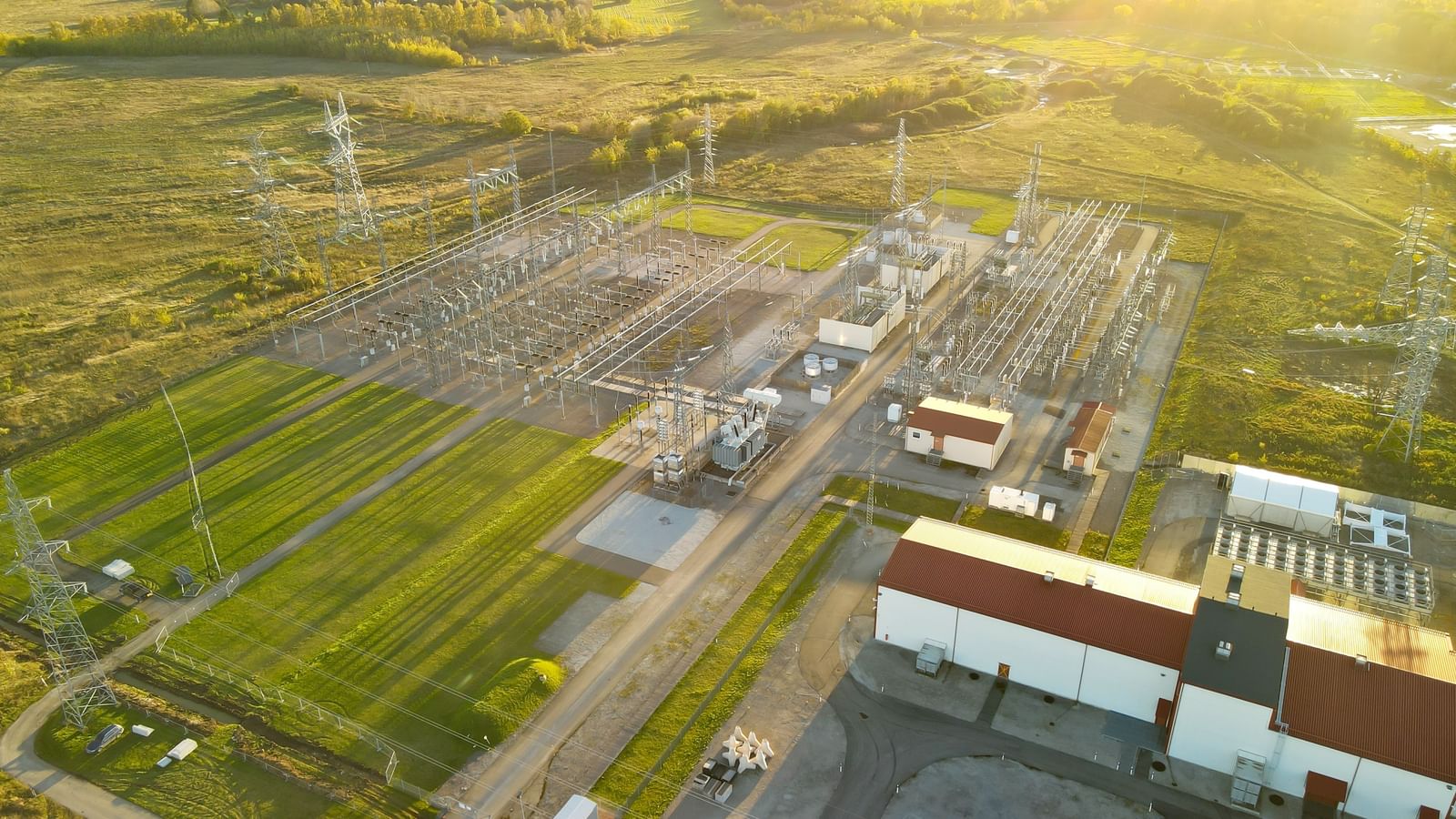
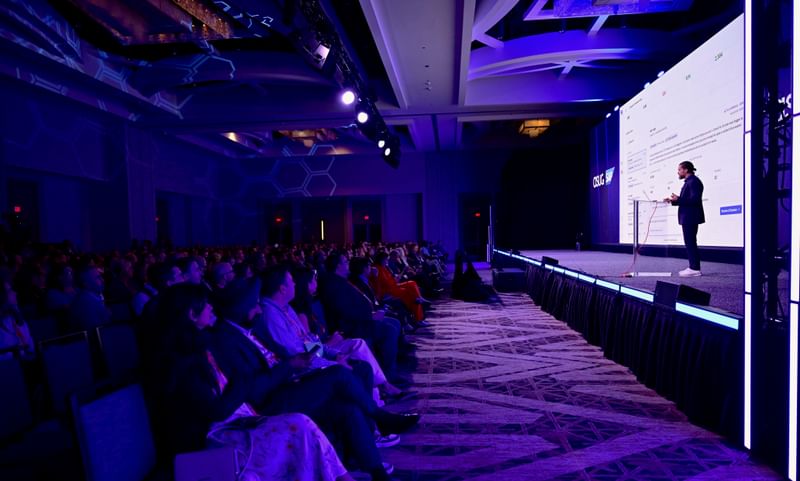
SAP for Utilities, Presented by ASUG, ran Oct. 6 – 9 in San Antonio, and its opening keynote began with a panel of Benjamin Franklin, Nikola Tesla, and Edith Clarke, or rather, AI holograms speaking in their names, live and unscripted. Michael Sullivan, National Vice President for Renewable Energy and Utilities at SAP, built the keynote on mindset, technology foundations, and co-creation, and on a question for attendees to carry through the week: “Are we ready?”
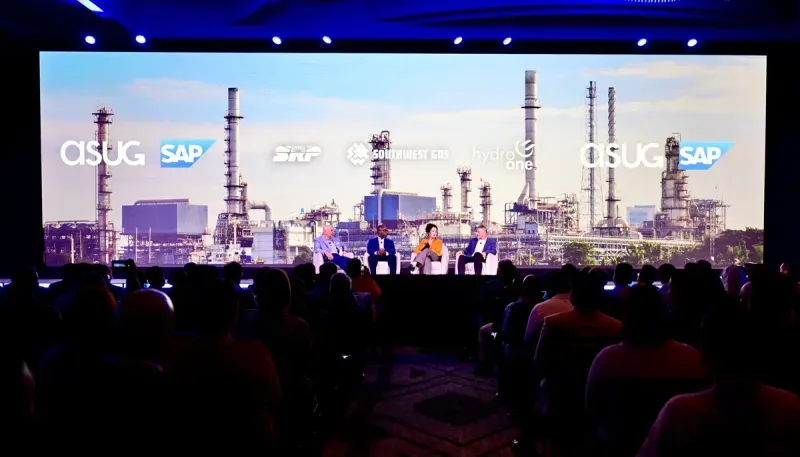
Sullivan announced Autonomous Utilities Management and brought PPL Corporation Chief Information Officer Dan Johnson on stage. SAP plans to develop the capabilities jointly with utilities, and a forward-deployed engineering team was already working inside PPL. On day two, SAP showed agents working on exception management and interconnection management, with a person making the final call in both cases. The closing panel of utility leaders responded with caution, emphasizing that data quality remains a concern and that safety and emergency response belong with people.
The morning after the closing panel, Sullivan, who has focused on utilities at SAP since 2011, spoke with ASUG about why AI makes business applications and clean core matter more, what ontology means for a utility, and what happens when SAP’s engineers show up on a customer’s front porch.
This interview has been edited and condensed for length and clarity.
What did you think was the best advice you got from the AI holograms?
There was an interesting theme around the intersection between creativity and courage. I think it was Edith Clarke who challenged us that, if you’re confident in your convictions, you need to show up in the room in that way.
Tesla dug deep into this idea of using your imagination to think through the outcome you’re trying to drive with a series of thought experiments. And then there was also a consistent theme of humility, too, and the need for collaboration and learning from each other that emerged. The whole interview experience was pretty fun.
With announcements coming so quickly, which ones should a utility leader pay attention to first?
With our team, I try to ensure that our primary North Star remains aligned to the outcomes that the industry needs to drive. I said it a number of times in my keynote: safety, reliability, affordability. The technology is merely a way to help drive those outcomes. We always try to filter everything that we’re hearing through, “does it truly help us move the needle on driving those outcomes for our customers?”
We have the privilege of being a dedicated vertical team in utilities. It allows us to sift through it based on customer priorities, and I would invite them to do the same.
You made a point of calling business applications the cornerstone. Why was that important to say to a utilities audience?
With the emergence of AI, there’s been this whole conversation around, well, do we need business applications?? Is SaaS dead?
Quite the contrary. Especially when we’re talking about things like your ERP, your customer information system, your core asset management systems, those applications are more critical than ever. The investments our customers have been making to modernize those are more important because they are actually setting up the foundations, the deterministic, rule-based processes, and everything that we’re going to want to apply AI on top of. Where we’re seeing real value from AI is in applying it against those systems that have defined processes, defined constraints, because otherwise, what’s the agent going to do?
What would you want a utility in the middle of an SAP S/4HANA migration to take from that?
I think the message that we’ve been bringing to market for the last couple of years around clean core and fit-to-standard is more relevant than ever. It’s about establishing the discipline necessary to adopt clean core standards and ensuring that any necessary customizations remain clean core-compliant. Ultimately, these systems provide the data, process knowledge and structure that the agentic frameworks rely on to drive the outcomes. Stay true to the course, I guess I would say.
Ontology was discussed a lot at the conference. What do you wish ASUG members understood about it as it relates to their own work?
What I want the community to really take away is that it is a definition of how your business operates, how all the different elements connect; it is a comprehensive map of the rules embedded in your S/4 platform, the configuration and process definitions, and the underlying logic SAP has built into the code. All of that is essentially inherited by that ontology. It is a map of the world, so to speak, for the enterprise.
It’s like the example I used in the keynote: a family tree. My mother gave birth to me; my brother didn’t. Those rules are encoded into the ontology. It’s very much the same way with an enterprise-wide ontology, but SAP is uniquely positioned to build that because of 50 years of process knowledge — and 50 years of understanding data. We have access to the design-time code. We understand exactly the constraints that were built into the code and the configuration, and we can inherit that in the ontology. Ontologies can be built by lots of other tools, but they’re inferring, whereas we know what was built.
You announced Autonomous Utilities Management, and the day two keynote showed interconnection management and exception management. What made those two the ones to feature?
We chose those two to feature because they’re very much part of an ongoing conversation we’re having with a number of utilities. Processing exceptions has always been a challenge that utilities have faced once they’ve deployed the SAP system. Not because exceptions are bad; each exception happens for a reason. But the process of resolving those exceptions has always been a very human and manual process.
We’ve been working with one utility on this interconnection topic for a while, and with the massive growth of data centers and the proliferation of distributed resources, those things all add on to the grid. That process has been very fragmented, and utilities have massive backlogs of these interconnection requests. We believe we’re in a unique place to contribute to the solution, and we’ve gotten validation from a number of clients that it’s a problem they would like SAP help to solve.
What are the next steps between seeing those demos and utilities being able to use them day to day?
We have created an organization of forward-deployed engineering teams who will sit with our customers and who will build these capabilities. The first step for our customers is to say, okay, this is something I’m interested in. Then we’ll go in. We’ll flesh it out with them and do a value proof phase.
Using one utility we’re working with as an example, two weeks ago we dropped a team in to work on Exception Management. We’ll spend about eight weeks there, ingesting their data and training the underlying model, and work towards getting it production-ready to deploy it.
From that point, we will have a template that we will be able to take to another utility. We’ll do the same process, but it’ll be accelerated. At a certain point, after doing two or three, we’ll be able to cascade it out to the broader ecosystem.
Every demo kept a person in control, and the closing panel talked about keeping safety conversations and emergency response with people. Which decisions do you think should stay with people today?
I think there are certain areas where we just need to ensure that the decisions being made are made by human beings, bringing a degree of responsibility, a social contract with each other, a genuine sense of accountability. As the panel said, safety is certainly one, but there’s probably a heuristic at play here which flags where the decisions could potentially impact human life or have significant negative consequences… these must stay in human hands to ensure accountability, even if AI aids the decision process.
AI is not entirely removed from that picture. For instance, if we’re sending a crew out on a normal day for planned work, but we didn’t take the weather into account during the initial plan, I want AI to inform the human beings that the wind’s going to gust to 30 miles an hour in localized regions and we cannot have people up on that pole. So, AI plays a part, but when it comes to safety, human beings need to remain in control. I think we should be approaching this with optimism and humility.
You said SAP will “land our development teams on your front porch,” and you thanked PPL for challenging SAP to think differently. What does working that way look like day to day for SAP’s teams?
As a product development company, if you are not mindful, you can sit back, assume you understand what your customers need, and then basically turn inward and build. This risks misaligned product/market fit. At the other extreme, you can show up and say, “Hey, tell us what you want and we’ll build it.” That approach could lead to almost an unmanageable amount of solution development and inconsistency.
SAP’s Industry AI approach avoids both traps — very much meeting in the middle. We are landing our development teams and our domain experts with our customers and interacting with them on a regular basis to drive the outcomes required by the industry. It’s an iron sharpens iron approach.
The example with exception management is a good one. Both of us brought our expertise to the table to discuss the challenge. In 48 hours or so, the SAP team had prototyped that demo. We brought it back to the utility, having mutually challenged each other, and the end result was an approach that solved the problem in a unique way. There was a collective degree of excitement about the approach, with many from both companies saying, “My goodness, we didn’t think about it that way, but that’s better.” This then forms the foundation for further optimization.
We’ve compressed this whole old idea of “give us your requirements, we’ll build your solution” down to “let’s have an active dialogue and let’s build together in real time.” These teams are meeting daily, and it’s a truly collaborative process to drive the outcome.
Early in your keynote, you asked, “Are we ready?” After everything you’ve heard at the conference, what’s your sense of the answer?
I think utilities are very ready for the type of engagement model that I just talked about. The panel on stage brought up very real and legitimate concerns about the quality of data and the things that are going to feed these systems.
But I also think, maybe it was Benjamin who said, “you’ve just got to start.” I think we’ll be able to figure out ways to use some of these AI tools to help accelerate the underlying cleanup necessary to deploy this at scale. So, I think they are ready, but they’re also wisely aware of the constraints.
What progress do you hope to report next year in San Diego?
One of the conversations that emerged throughout this week was the need for us to think about how we continue to foster an ecosystem in the community so that we’re constantly talking with each other about the progress that’s being made throughout the year. To their credit, that utility I had mentioned earlier is very much spearheading this idea. They had this concept an “AI Use-Case Bingo Card”, and what they’d like to do is implement a few areas initially, with other utilities joining to go after some different ones, and so on. Ultimately, each utility becomes a bit of a North Star around a specific domain area and the collective benefits.
Next year, what I would like to see is that we’ve progressed down the path of building a number of those capabilities with our customers, but also that we’ve established a learning community that continues to reinforce that progress. It would be tragic if all of this excitement didn’t translate into that collaborative work. SAP is very serious about engaging in a different way, but we can’t do that without the community.
You Might Be Interested In
Log in to save this article and keep your favorite resources in one place.

Log in to save this article and keep your favorite resources in one place.
Log in to save this article and keep your favorite resources in one place.

Log in to save this article and keep your favorite resources in one place.