Log in to save this article and keep your favorite resources in one place.
In the U.S., trucks serve as the backbone of supply chain transportation, with the Bureau of Transportation Statistics estimating that trucks account for 79.6% of all intrastate shipments and the American Trucking Association reporting that trucks moved 72.6% of the entire country’s freight in 2022. However, trucks are also significant sources of greenhouse gas emissions. As enterprises invest in carbon accounting while working toward net-zero emissions, the need for more vehicles powered by alternative fuel sources has dramatically increased.
Based in Phoenix, Nikola Corporation is working to establish the foundation for a hydrogen refueling network and spur the growth of the North American hydrogen industry. Nikola began manufacturing and shipping vehicles in March 2022, prior to which the company was busy connecting the dots with an engineering/design centric focus. The challenge since then has been to gracefully navigate a shift-of-gravity from design to production and delivery. The organization began producing heavy-duty commercial battery-electric vehicles, including its line of Class 8 hydrogen fuel cell electric semi-trucks, referring to trucks with a gross vehicle weight over 33,000 pounds.
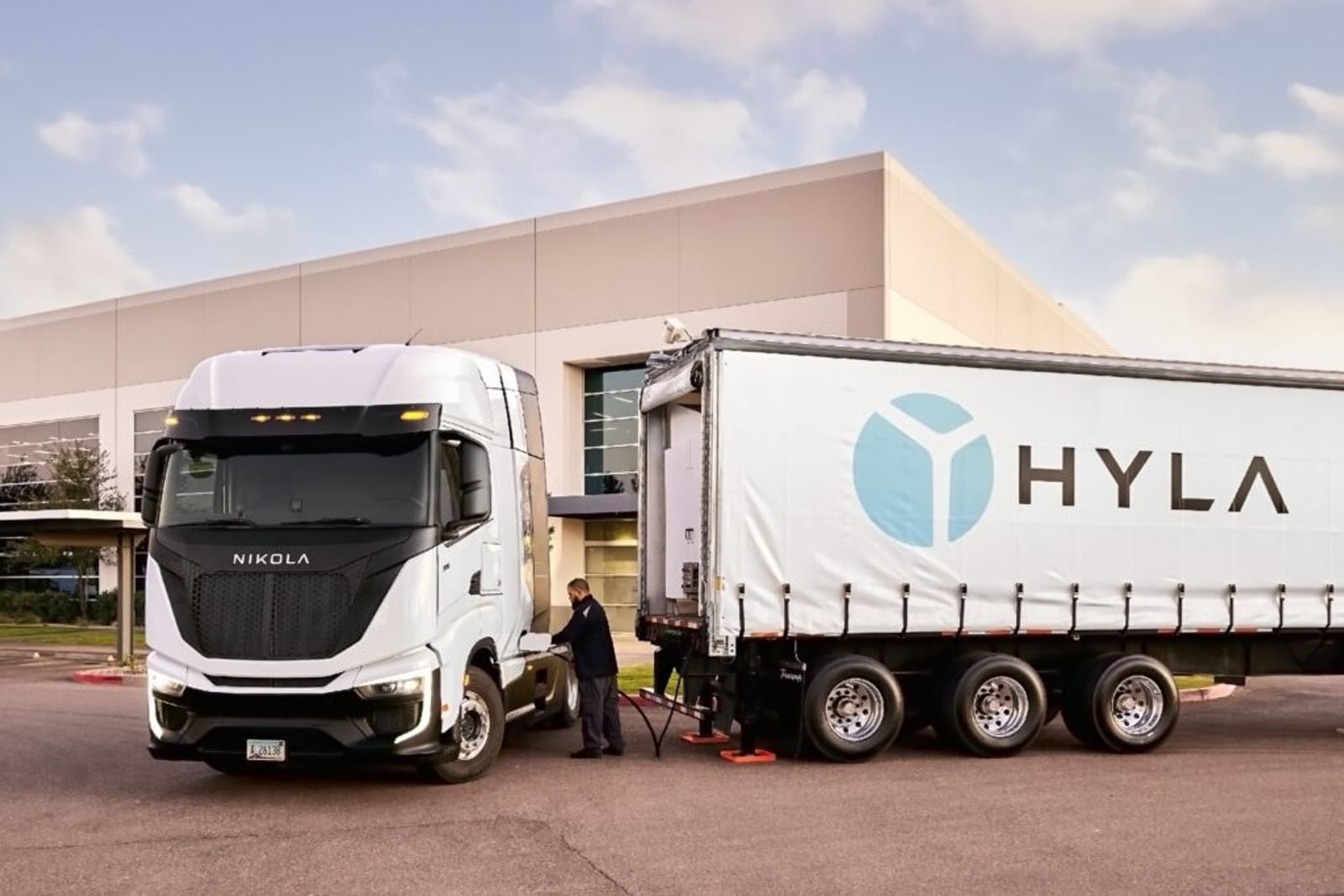
Additionally, Nikola leaders are working with energy distributors to develop a sustainable, dependable network for hydrogen-powered vehicles. Recently, Nikola announced the opening of additional HYLA modular hydrogen refueling stations in Ontario, Long Beach, Santa Fe Springs, California, as well as Toronto. These milestones advance Nikola’s goal of pioneering solutions for a zero-emissions world.
“This is not something for which an economy of scale has been developed,” Dan Cirignani, Principal Solution Architect at Nikola Corporation, recently told ASUG, noting that traditional diesel-powered vehicle manufacturers — which dominate the roads and the trucking industry — had spent decades establishing well-tuned models to manufacture and distribute their products.
In pursuit of business growth, Nikola sought to adopt an “alchemy” of innovation and best-in-class business practices, according to Cirignani. In 2022, the organization began its RISE with SAP journey by implementing SAP S/4HANA Cloud, private edition. With this solution in place, the organization embarked on its mission to manufacture and distribute Class 8 trucks at scale.
Scaling Nikola isn’t important just to Nikola: one market-driver behind Nikola’s industry are Zero-Emission Vehicle mandates, (i.e.: “ZEV Mandates”). ZEV mandates are regulatory policies and local or national laws that set ambitious targets for the conversion to zero-emission vehicles. On a national level these mandates are in effect, for example, in Canada, Germany, the United Kingdom and on a local level within the US they are in effect for California, Colorado, Connecticut, Maine and elsewhere. Generally, ZEV mandates require graduated conversions to zero-emission acquisition by buyers and exclusive availability by sellers by various government-set target dates. For example, California mandates a conversion to zero-emission vehicles by 2035.
These conversions aren’t black and white or over-night. In particular, for fleet buyers of Class 8 semis, such as those Nikola manufactures, acquisition and conversion starts now. Fleet buyers must learn how these vehicles work, what their maintenance requirements are, how their infrastructure differs from the existing fossil-fuel infrastructure and participate in expanding the infrastructure during the leading period from now until 2035.
Nikola has an advantage here because where it comes to long-haul trucking, hydrogen packs some powerful advantages. Compared to battery-electric alternatives, hydrogen-electric semis have ranges around or above 500 miles. This is an attractive proposition for fleet-buyers operating under ZEV mandates.
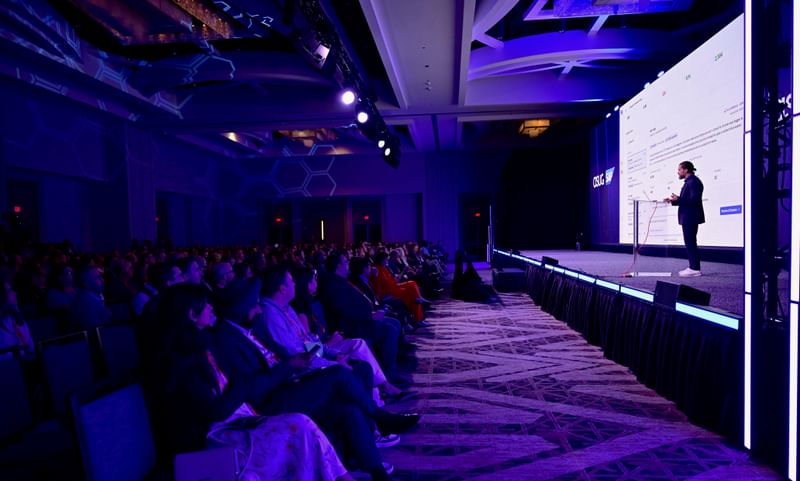
With many such mandates targeting net-zero emissions by 2035, Nikola is focused on developing a supply chain capable of providing its innovative trucks to customers seeking to reduce carbon emissions from their vehicle fleets. “Establishing an efficient economy of scale,” Cirignani said, “will allow customers to successfully leverage Nikola’s trucks to meet those forthcoming goals and mandates.” Ahead of his presentation at the ASUG Best Practices conference (Oct. 14 – 16 in Houston), Cirignani discussed the complexities of developing new economies of scale and how SAP is one of the tools helping Nikola on its mission.
Building an Economy of Scale
As Nikola set its sights on mass-producing its innovative suite of trucks, processes and supply chain initiatives were put into place to facilitate such a goal. “We are coming into this market with something that is better for the future,” Cirignani said. “But we must build an economy of scale to be successful.”
Building such an economy of scale goes beyond developing supply chains to ensure steady and reliable access to the materials and components necessary to build trucks. Nikola also needed to build an ecosystem for its customers to consistently refuel the trucks. “In order for people to use that vehicle you’re selling, they need a network,” Cirignani said, emphasizing the importance of dependable, accessible refueling stations. “That represents a fundamental strategic priority here at Nikola.”
As a start-up, Nikola possesses processes and options in its “toolkit” to facilitate building a dependable hydrogen refilling network that might be an expensive luxury for established players with sunk investments distributed across numerous mass-markets, where some of those markets may not be well suited to a scalability or infrastructure challenge. “What’s nice about a Class 8 semi-truck that you don’t have going on with an ordinary vehicle is they follow predictable routes and schedules,” Cirignani said. “When you’re trying to scale your infrastructure that makes the challenge considerably easier.”
Nikola has already opened four of its HYLA modular refueling stations along with three partner stations in California, with 14 operational refueling solutions expected by the end of the year. As it manages refueling those stations, Nikola can leverage the information gathered from stations to implement sustainable refueling plans. Cirignani indicated that fleet sales alone provide a basis for early forecast of aggregate hydrogen demand when servicing low volume, high geographic density fleets. It will be necessary to implement dispenser-monitoring and OTA-reporting capabilities to provide distribution planning systems with the means to forecast hydrogen demand at specific locations and dates.
Converting from Engineering-Centric to Manufacturing-Centric Operations
Establishing an economy of scale to support Nikola’s Class 8 truck production required transforming the organization’s engineering-focused operations to a manufacturing-focused model that will eventually enable producing the current target capacity of up to 2,400 trucks per year on three shifts.
“This is a challenge purely because of the maturity of the company,” Cirignani said, emphasizing that Nikola’s mission transitioned from developing the product to producing it for wider-spread consumption over time. This process includes transitioning from leveraging an engineering bill of materials, which specifies exactly what goes into a truck, to using a manufacturing bill of materials, which articulates the processes and order of operations required to assemble a vehicle.
The need to supply customers with options that deviate from a standard model in order to secure greater market share additionally complicates this process. Nikola allows for some customization of certain aspects of its trucks, such as alternative fifth wheel configurations and seat options.
Offering more options is a key means of building an economy of scale for production and adopting a manufacturing process wherein the manufacturing bill of materials drives production. To accomplish this the company needs a solution that offers critical supply chain management functions, including managing production orders, inventory management, distribution, and sourcing.
“We operate in a complex supply chain,” Cirignani said.
There are over 30,000 individual parts in one of the truck’s bill of materials. While there are sometimes three to four different types of products — such as fasteners — that can accomplish a specific job, the organization must dictate which type of fastener must be used and, therefore, ordered.
Adopting SAP S/4HANA
Nikola eased its operational model transition from an engineering-centric to a manufacturing-centric while facilitating optionality and building an economy of scale by implementing SAP S/4HANA. When the company decided to move from its previous ERP solution to SAP S/4HANA Cloud, private edition, it leveraged RISE with SAP to implement its new ERP platform in four months — making it one of the fastest SAP S/4HANA implementations on record.
“Across the automotive industry, SAP is quite standard,” Cirignani said.
Nikola wanted to adopt a solution that its employees were familiar with and that could help the organization tackle challenges specific to its products. For example, manufacturing Nikola’s Class 8 trucks demand many sub-assemblies.
“We need a solution that facilitates sub-assembly supply chain operations for 3,000 to 4,000 vehicles,” Cirignani said.
Cirignani noted that SAP S/4HANA also enabled the organization to house any vital customization “outside of the core,” allowing Nikola to drive a “clean-core” methodology across its technology landscape as it transitioned to the new ERP system.
Core functions of SAP S/4HANA helped with transitioning between engineering-centric models intended to generate designs to operationally-centric models that are intended to scale. “In order to go from start-up manufacturer to scaling to mass manufacturing, we have to identify the connections between certain silos,” Cirignani said. “SAP ERP is one tool that helps a great deal, because it’s all about starting with the end goal in mind.”
By utilizing SAP, Nikola could leverage existing solution sets to accomplish its goals. Manufacturing bill-of-materials, forecasting and distribution operations in SAP S/4HANA were a few of the functionality aspects that Nikola appreciated.
SAP solutions also “impose discipline” on users, he added, highlighting that real-time connectivity to an organization’s general ledger negates the need to manually transfer critical information from one source to the general ledger.
“In real time, our transactions are composed immediately on the general ledger,” Cirignani said.
Looking Ahead
With many of its critical operations facilitated in SAP S/4HANA, Nikola can drive sustainability by improving its operational efficiency as it provides its customers with increasingly customized options for its truck and a network of refueling stations they can rely on.
“Our competitive advantage is that we’re in this space of efficient electric vehicles,” Cirignani said. “We don’t need to make anything any harder for us by trying to reinvent solutions for batch management, interchangeability, forecasting, secondary distribution, and backwards planning. We can use the existing solution set that others have used before and already figured these processes out.”
Nikola is continuing to expand its scale and is prepared for the growth of the hydrogen refueling ecosystem to transform commercial transportation operations.
You Might Be Interested In

Log in to save this article and keep your favorite resources in one place.
Log in to save this article and keep your favorite resources in one place.

Log in to save this article and keep your favorite resources in one place.

Log in to save this article and keep your favorite resources in one place.