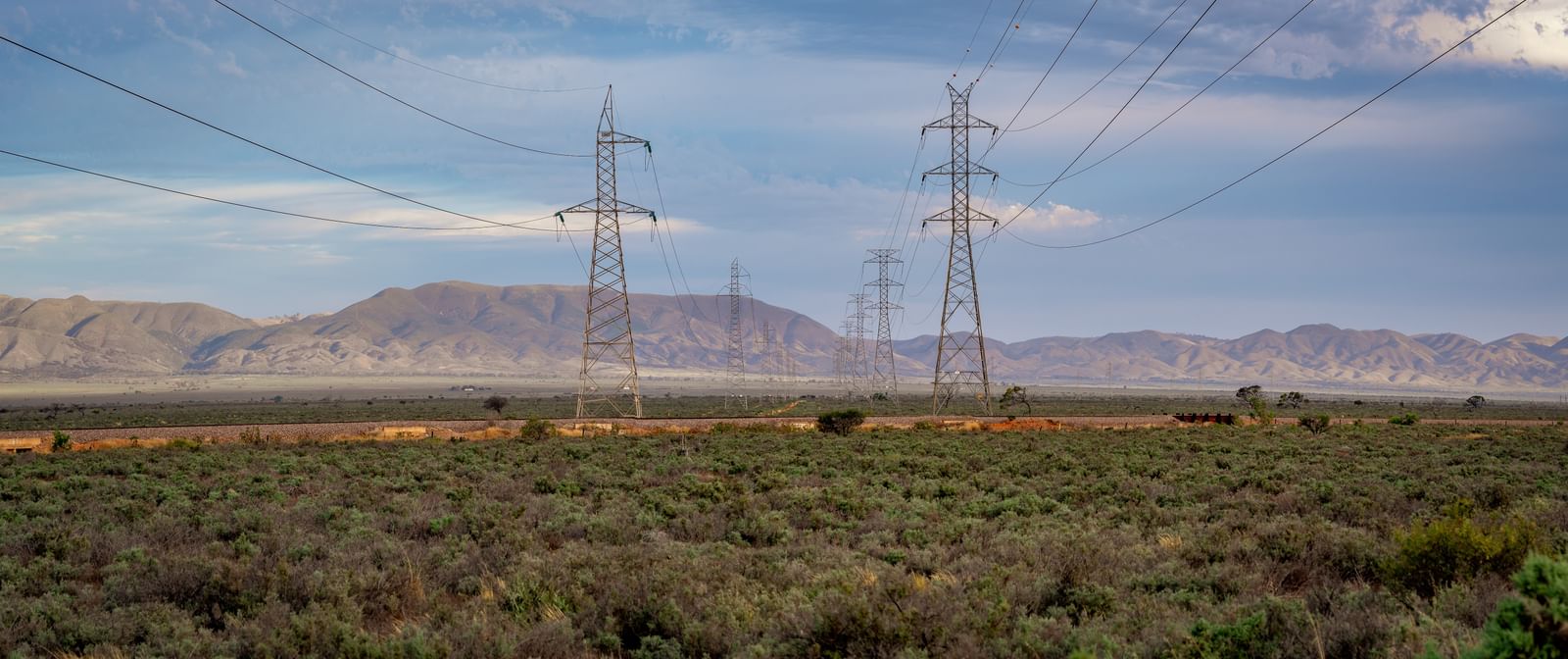
The principal electricity distributor in South Australia, SA Power Networks manages the infrastructure necessary to deliver power to over 1.7 million customers, delivering electricity from high voltage transmission network connection points operated by ElectraNet. 

Ensuring the integrity and maintenance of the wires, poles, and substations critical to providing so many people and businesses with electricity is a multi-faceted undertaking, complicated by the growing number of smart devices and electric vehicles that rely on SA Power Networks’ services.

According to Travis Smith, Principal SAP Enterprise Architect at SA Power Networks, his company's mission is no less than “orchestrating how energy flows, from homes and business to the grid and vice versa." To facilitate this goal, SA Power Networks facilitated a dual SAP S/4HANA migration, shifting two critical IT instances within the same business transformation. 

As Smith detailed to Jim Lichtenwalter, Senior Producer of ASUG Podcasts, on an episode of ASUG Talks last fall, SA Power Networks implemented an SAP S/4HANA IS-U (Industry Solution for Utilities) instance for its meter-to-cash operations, and then a separate S/4 instance for its organizational ERP system.

During the conversation, Smith not only discussed the specifics of these two migrations but also articulated main keys for success in digital-transformation projects and his advice for enterprises embarking on their own SAP S/4HANA journeys.

Dual S/4 Instances

In 2015, SA Power Networks SAP S/4HANA journey began when it first implemented the SAP HANA database. Then in 2019, the organization undertook a large digital transformation project aimed at replacing aging non-SAP systems responsible for the company's customer and market systems. 

"This played a role in allowing us to participate in the national electricity marketing and fulfill our role as a distributor,” Smith added, while setting the stage for further SAP transformation. 

SA Power Networks then proceeded with implementing SAP S/4HANA Utilities (IS-U) version 2023 and moving the platform instance into the cloud, specifically focusing on ensuring the instance could house its meter-to-cash processes and supporting network billing operations; for this meter-to-cash-centric transformation, the company took a greenfield implementation approach.

“It was a conscious decision to separate [meter-to-cash] from our ERP stack because the two systems and processes that run them are very different,” Smith said, explaining the decision to oversee projects involving two S/4 instances.

Specifically, SA Power Networks’ meter-to-cash operations necessitated a large ERP system to handle a huge volume of transactions. However, only a small number of end users needed to utilize this instance in their day-to-day work. Additionally, these processes are governed by very strict compliance and stability standards instituted by governing and regulatory entities.

Conversely, the SA Power Networks ERP system has a “very different appetite,” compared to its meter-to-cash processes. “Just trying to get these two worlds to align, it's just very difficult," Smith said, noting that SA Power Networks ultimately decided against bringing them together onto the same S/4HANA instance. “We preferred to have the agility and maneuverability around the different parts of the business understood.”

In January 2023, the organization upgraded its ERP system from SAP ECC to SAP S/4HANA leveraging a brownfield implementation strategy. While Smith noted that responsibility for the project—compared to the SAP S/4HANA IS-U upgrade—sat more squarely within SA Power Networks’ IT organization, business stakeholders were still heavily involved in the digital transformation project.

Smith also noted that, as of last fall, SA Power Networks was still in the process of moving both instances into a private Microsoft Azure environment.

Why S/4?

According to Smith, it was an easy decision for SA Power Networks to embrace SAP S/4HANA, as the distributor had been a legacy SAP ECC customer stretching back to 1998.

“We really didn’t consider too many options other than moving to S/4,” Smith explained, emphasizing critical updates and upgrades in the ERP platform, including simplification of data models, increased efficiencies in specific mission-critical) processes, access to deeper insights, real-time reporting capabilities, and improved extension and integration management capabilities as driving factors behind the organization’s adoption.

“S/4 actually allows you to be a bit more agile and innovative,” Smith explained. “You can start doing extensions in a far quicker manner, in a more composable manner.”

Looking at adoption from an IT perspective, S/4 was the best option for a utility of SA Power Networks' size, Smith added, citing “strong industry solution support” and the network billing capabilities in in SAP S/4HANA IS-U as critical factors. However, this wasn’t purely an IT decision.

“From a business perspective, we are also seeing a greater degree of interconnected processes,” Smith said. “We're seeing efficiencies within the finance space.”

Adopting a Top-Down Support Approach

Obtaining stakeholder and leadership buy-in was critical to the success of both projects. Smith noted that adopting a “top-down support” structure benefited SA Power Networks’ business transformations immensely, ensuring adequate resources and necessary funding. 

“Any business transformation needs to be business-led,” Smith said. “If you don’t have that strong top-down support, it’s like swimming against a rip.”

Smith encouraged other IT leaders to establish a transformation’s vision and purpose early—honing in on what exactly the enterprise is hoping to achieve with the project. Additionally, he recommended that organizations actively prepare to go through the process of transformation, emphasizing the fact that these projects vastly impact not only business processes and workflows but also a company’s working culture.

Obtaining critical executive board support for these transformations, meanwhile, is foundational, Smith said. This helps to ensure the flow of monetary resources and support necessary for a large-scale project to succeed: "If you can get an executive sponsor—someone that is really championing the cause of what we’re trying to do around their peers—that certainly helps.”

As projects kick off, leaders should identify stakeholders in key parts of the business impacted by incoming change. “There needs to be top-down support to see the different parts of the organization come together,” Smith said. “Every part of the organizations still has its own priorities, so [change management] needs to be centered around [communicating] how important this transformation project is for the organization as a whole — because they are disruptive by nature.”

Advice for Other Enterprises

As companies embark on their own S/4 projects, Smith had one crucial piece of advice: “Slow down!”

“Don’t be in a rush to get through the early phases of a project,” he said, further encouraging transformation leaders to work backwards from a specific deadline. Furthermore, enterprises should ensure change management and consultant resources are in place before kicking off a digital transformation.

“These phase-zero activities can make or break a project,” Smith concluded.

Want to continue reading this article?

Become a member and get access to all ASUG benefits including news, resources, webcasts, chapter events, and much more!

Log in

Not an ASUG member? Learn more