Log in to save this article and keep your favorite resources in one place.
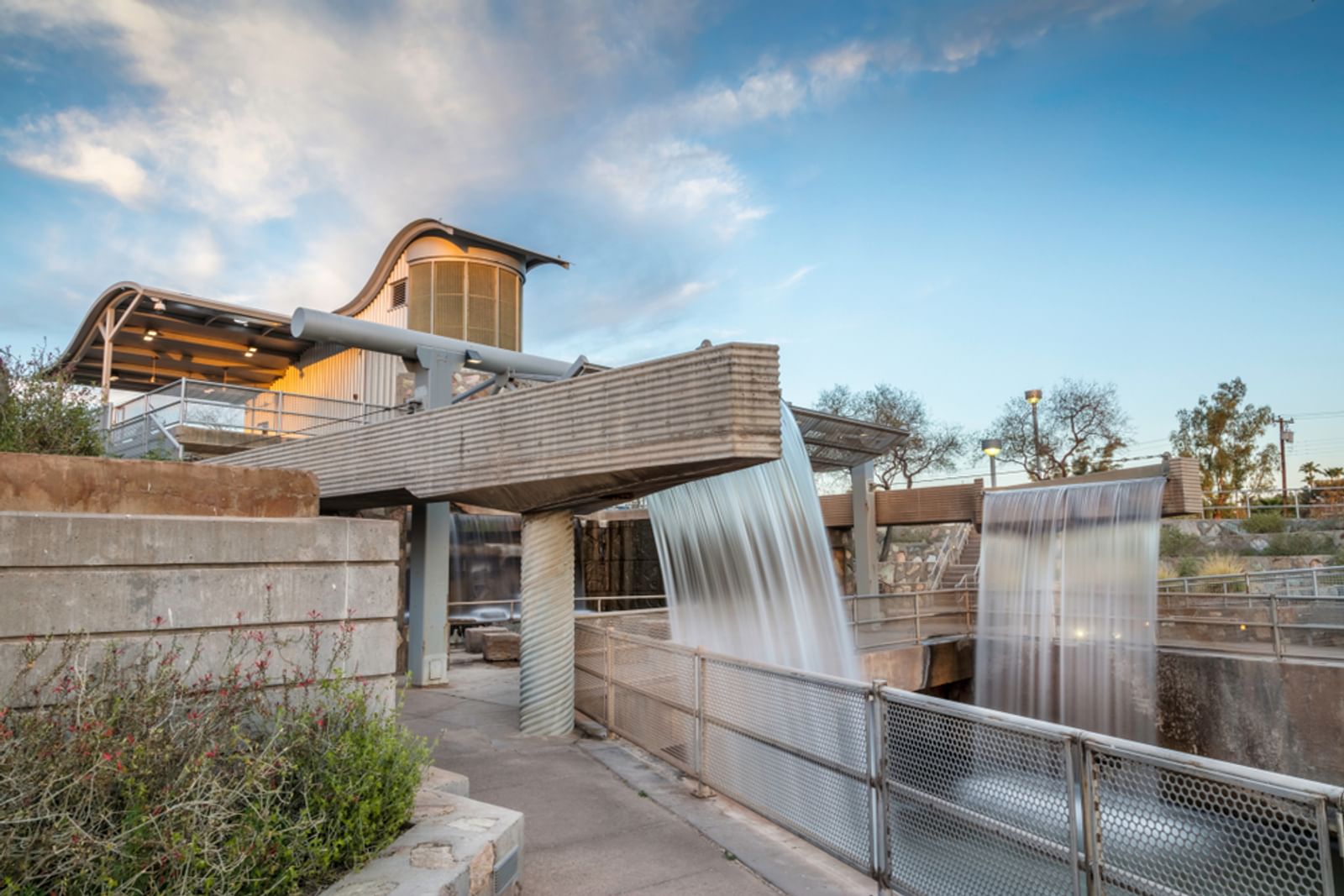
Salt River Project (SRP) has long stood out as one of the most distinctive utilities in the United States. Established in 1903 to bring water and power to the desert, the community-based, not-for-profit provider now serves more than two million people across central Arizona.
Over the past two decades, SRP has steadily reinforced that mission through initiatives such as its M‑Power prepaid energy program — the largest in North America — deployment of smart meters, investment in wind, solar and battery projects, and adoption of ambitious carbon-reduction goals.
SRP’s record of innovation set the stage for its latest transformation: becoming the first electric utility to implement SAP Service Cloud 2.0. At a time when many utilities were only beginning to move from earlier versions of the software, SRP made the strategic choice to bypass 1.0 altogether.
Choosing 2.0 and the Greenfield Challenge
With nearly 400 customer service representatives and millions of customers depending on quick, seamless support, SRP viewed the adoption of Service Cloud 2.0 as both an operational necessity and a chance to extend its legacy of customer service leadership into a cloud-driven future.
The decision to implement Service Cloud 2.0 was driven as much by timing as by technology. While many utilities were still in the process of adopting 1.0, SRP recognized that SAP had already shifted its development focus to the newer platform.
“It’s really timing and opportunity based… Where are you on your SAP journey?” said Gibbons Saint Paul, Director of Customer Modernization at SRP, who spoke to ASUG ahead of his session at the SAP for Utilities, Presented by ASUG conference (Sept. 9; 2pm MT in Bluebird Ballroom 2B). “It was perfect timing for us, where V2 is still new, but it is built off the footprint of V1 with several technology and utility advancement that are standard on version 2.”
This strategic choice came with its own complications. SRP was not layering V2 onto an existing commercial platform but instead moving greenfield from a decades-old customer information system. Transitioning to the public cloud required a mindset shift across the organization.
As Saint Paul explained, “Coming from a homegrown system, including the front end, is always challenging because it’s about accepting that it’s public cloud — trying to understand what you have to modify from a utility perspective as far as business processes into screens that are already developed. It’s more of a journey of change, organization, and knowing what we can accept.”
Ensuring continuity of service meant preserving the fundamentals. From turn-ons and shut-offs to moves and transfers, certain activities could not be compromised. SRP’s ultimate expectation was that representatives could still perform all of their essential tasks, just within a different workflow and interface.
A Customer-Focused Transformation
SRP’s implementation of Service Cloud 2.0 was driven by one clear mission: ensuring customers continue to receive reliable, responsive service. Nowhere is this more evident than in its prepay energy program.
“It’s a high-touch customer where our entire footprint, as well as our SEW footprint, needs to be very responsive and reactive when it comes to helping our customers with our prepay solution,” he explained, while discussing the demands of the program.
The requirement extends beyond call center responsiveness to the flexibility of the technology itself. Service Cloud 2.0 provides SRP with tools like mashups and extensibility, which make it possible to configure customer processes in ways that reflect SRP’s longstanding practices.
Saint Paul described the importance of flexibility and configurability within an SAP footprint: “How do we work around that to ensure that we still don’t charge certain aspects that are important to our customers? We need to ensure that we’re not violating the supportability of a business process that we have to have, but we’re still able to provide the appropriate customer experience and level of service that our customers have always started from SRP.”
“At the end of the day, it’s all about serving our customers,” he emphasized. Every system decision must flow outward from that principle, whether it involves enabling digital self-service, maintaining reliable call center operations, or integrating additional information into the CX environment.
Change, Strategy, and Looking Ahead
The scale of SRP’s transformation required a deep commitment to change management. Nearly 400 customer service representatives will be impacted by the transition to Service Cloud 2.0, making it the largest software platform shift in the utility’s history.
To prepare, SRP created a dedicated business integration workstream focused exclusively on change, supported by a network of change champions embedded on the front lines. Their role is to guide team members through the new processes, terminology, and workflows, ensuring alignment across the organization. “Programs can fail with a lack of appropriate change management,” said Saint Paul.
SRP paired its move to Service Cloud 2.0 with a migration to RISE with SAP, the private cloud version of S/4HANA. Taking both steps at once keeps the utility on SAP’s active roadmap rather than maintaining systems that would quickly become outdated. In Saint Paul’s perspective, there is “safety in numbers”: when more utilities move to V2 and RISE, their shared input influences how SAP develops the products going forward.
Looking ahead, SRP views solution architecture as one of the greatest challenges in its modernization journey. The days when meter-to-cash could be supported by a single vendor are gone. Today, the utility relies on a patchwork of more than eight providers to deliver a seamless customer experience, including Siemens, OpenText, Paygo, SEW, and SAP itself.
Coordinating those systems requires teams of solution architects and product owners, each managing a different domain within the overall landscape. “One solution architect can’t know all,” he said.
Even with the complexity, SRP remains focused on the bigger picture: proving that a cloud-based SAP platform can sustain its long tradition of award-winning customer service. The transition may involve hard work and incremental adjustments, but the goal is clear.
“Right now, it’s on us to prove that we will still be top-notch in customer service on an SAP CIS footprint, and here’s how we were able to accomplish that,” said Saint Paul while discussing the message he planned to deliver at his SAP for Utilities session (Sept. 9; 2pm MT in Bluebird Ballroom 2B).
Achieving that vision means equipping representatives with the right tools at the right speed, enabling customers to manage their accounts seamlessly across digital and call-center channels, and demonstrating that a utility with more than a century of history can continue to lead in customer satisfaction as it embraces the cloud.
“We are in the middle of building our solution right now,” he said. “We’re in the fire, building for our customers future and expectations, understanding what is important to them and our team members. I think it’s just understanding, eyes wide open, what to expect.”
You Might Be Interested In

Log in to save this article and keep your favorite resources in one place.

Log in to save this article and keep your favorite resources in one place.
Log in to save this article and keep your favorite resources in one place.

Log in to save this article and keep your favorite resources in one place.