Log in to save this article and keep your favorite resources in one place.
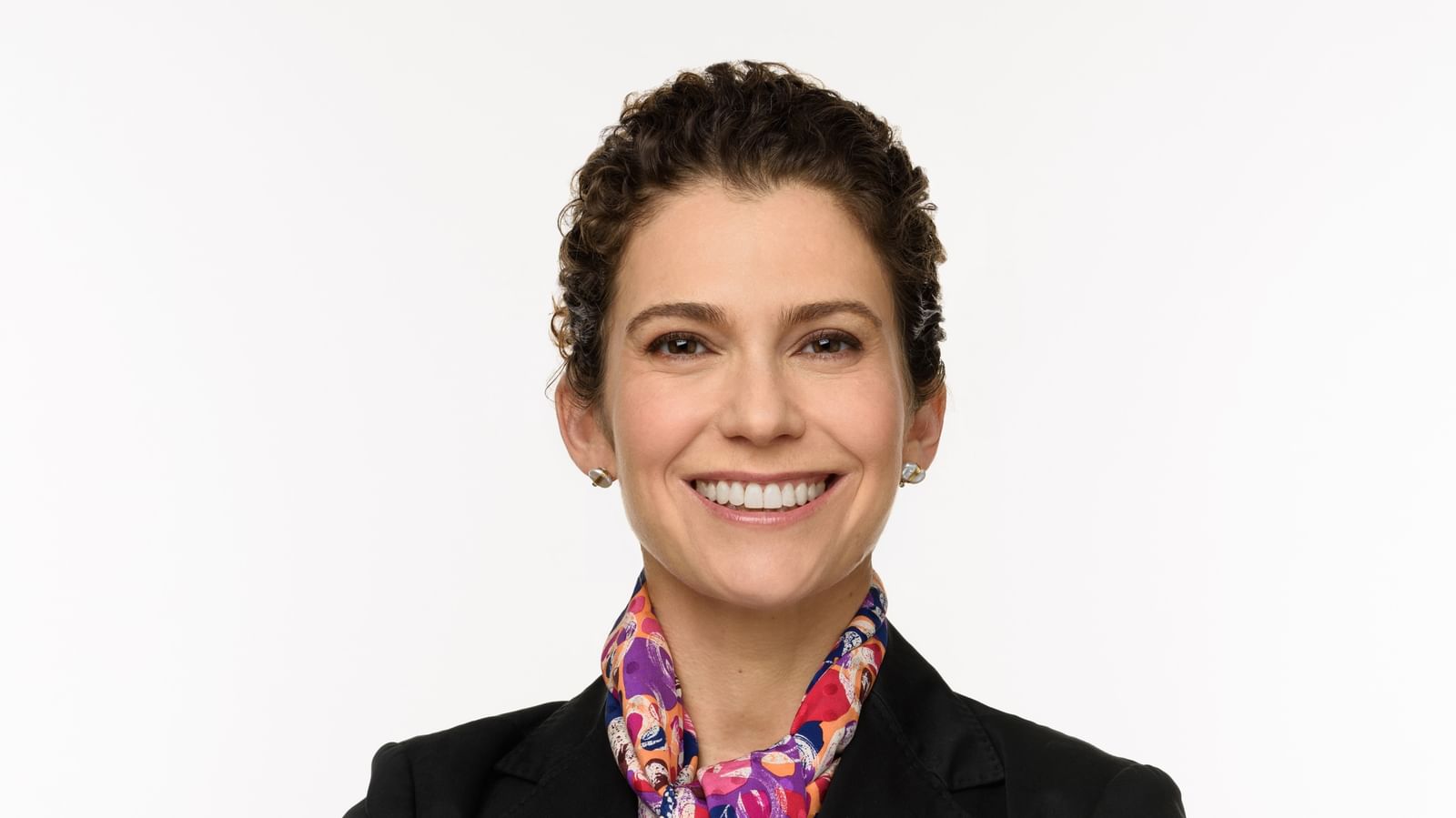
Sustainability is leaving the slide deck and entering the system of record as SAP customers integrate carbon, materials, and risk data into the workflows that run their business. Sophia Mendelsohn leads that effort at SAP as Chief Sustainability and Commercial Officer, shaping internal programs and customer strategy. Her background spans executive stakeholder work and the classroom; she created Harvard Extension School’s first ESG course.
In this interview, Mendelsohn rejects the profit-versus-purpose binary and argues for treating carbon like money, tracked with actuals, not proxies. She focuses on moves that build on systems companies already own and ties product-level metrics to transportation, maintenance, and compliance.
The entry point is small yet impactful: the keystrokes inside an ERP system that become a work order, a tax line, or a safer plant.
This interview has been edited and condensed for length and clarity.
Q: You’re approaching your second anniversary as chief sustainability and commercial officer at SAP. You have a long career in similar roles. Looking back on your experiences before SAP, what have you learned about making sustainability part of the core business strategy, and how is that influencing the way you work with SAP users today?
The first thing is to take the outside-in view and, first and foremost, ask, what is the business user? I literally mean you, the user. I don’t mean the account. I don’t mean the board. I mean the person with their fingers on the keyboard, making a decision about an individual process. What are they trying to do with sustainability? What do their small pieces add up to together?
I have never asked a customer to care about sustainability. I’ve only asked them to engage in conversation with us about their business goals and how ERP achieves that, and how sustainability can help them get more value out of their ERP. That unlocks what they need to do not only with their ERP, but with sustainability, always taking it from that outside-in point of view.
The second is that sustainability is very much here to shift a business model. It is not to reduce business, it is not ancillary, and it is not to save penguins and polar bears. It is about asking the customer what they need to shift in their business model, and, for that board or C-suite or CEO-level vision, what are the process shifts that need to be done? Business models change based on how business execution changes.
Q: What made you interested in sustainability originally?
What made me interested in the beginning was that we’ve presented a false choice: either you can be good or you can be profitable; you can be sustainable or you can grow. Ultimately, we all know that’s a losing value proposition. You cannot continue to grow indefinitely without a stable climate to base your business on and natural resources that are inputs to that business.
We’ve seen that with European tourism in the south in the summer. We’ve seen that with commodity prices like Macau and Kasi. We’ve seen that with logistics and slowdowns in ports and storms. We all need a stable climate for business to thrive, and business needs a reliable and renewable source of natural resources, inputs, and energy that they can price and count on to be there in their supply chain in the future.
Q: You’ve described sustainability as a data challenge at its core. If companies treated sustainability data with the same weight as financial data, what’s the first change we’d see in how we operate?
First, we would stop guessing. No more guesswork.
That is about going from estimates to actuals. And guess where the actuals are? Your ERP. We’re so deep in ERP land, you know that the actuals are in your material master and in your bill of lading.
We have to stop guessing at emission factors and carbon footprint based on estimates of how much we spend and look for that data in our ERP. The second is that we would cut sustainability information along the lines of business.
The first thing your listener or reader needs to know is that most sustainability information is cut along scopes — my immediate Scope 1, Scope 2, and Scope 3. We can shift that from a corporate concept to a product: how does business measure money? Group level, entity level, country level, P&L level, SKU level, and account level. Those are the two major things we need to shift to treat carbon like money.
Q: Many companies are still managing sustainability reporting in manual or disconnected methods. What changes when that work moves into SAP systems? And if you were mapping out the first 90 days of that shift, where should they focus?
When you have work in a spreadsheet, in an unstructured data lake, or in an application designed just to do one thing, you’re using your team’s time badly because you’re creating manual work for them. And you’re using your budget badly because you’re extracting structured data, un-structuring it, and then asking a partner to restructure it. The first thing that happens is automation: automatic pull from a material master; automatic pull at the SKU level.
That creates context and, in most cases, preserves context that will allow for AI functionality. AI’s output is only as valuable as the structured data it’s based on.
Now, your second question. There’s a three-part roadmap. First, we pull data from your ERP and make sure we’re using the right data from your ERP. Second, we’re calculating net new SKU- or product-level data, or batch-level data, in an SAP sustainability application and contributing it back to your ERP.
Anyone can pull out in a one-way street of value from your ERP; we’re making this a two-way street. We pull the information, we calculate and create new information, and then we contribute it back.
Third, you transfer it to a business process. You know your dangerous goods; you can import that dangerous goods information at the transportation level into Transportation Management. Your emissions — based on accurate data from your ERP — transfer back to Asset Management. You know the calculated cost of a plastic tax or a packaging fee; you can transfer that at the account level.
Q: As more companies aim to make their sustainability data credible and comparable, how do you see industry standards and networks shaping that journey? What’s most important for SAP users to focus on as they navigate this landscape?
Settings and standards.
We always help our customers look for the most common denominator. I’m thinking about someone who is bombarded by needs from their colleagues and by standards. SAP is looking to consolidate regulations and reporting requirements into streamlined applications, so you don’t have to go and buy a new app for each problem.
Q: Regulations and reporting requirements continue to evolve, and timelines often shift. How can customers make the most of the uncertainty by building a stronger foundation now rather than scrambling later?
We talk a lot about no-regrets moves. A no-regret move is one that helps you comply without fear of over-investment later. The most fundamental cornerstone of a no-regret move is making sure you’re getting maximum value out of the ERP system you’ve already invested in. So, every time there’s a new regulation or a new process change in sustainability, the first question to ask is, can I do this within the context of the ERP I’ve already created? How can I keep as much leverage and use out of what I’ve already paid for before I go out and create a separate end-to-end solution?
Q: AI is being embedded into areas like EHS and product compliance. If you had to pick one area in which AI could show measurable improvements quickly, what would it be?
Oh my goodness, it’s hard to choose just one. But here’s one of my favorites:
When an engineer or a worker is walking the factory floor or the field, they might see something that could be a safety issue or hazard but not necessarily report it. The old way is to stop what you’re doing mid-process, go back to the field office, talk to the field manager, get the paperwork, fill it in, submit it, get a question back, and see a huge lag time between that very manual, paper-oriented process and anything changing on the floor. Is it worth it?
Now you can have EHS on your phone. Pull out your phone, talk to Joule in real time, describe a safety incident in natural language, and make sure that the information you see on the factory floor is contextualized as you would experience it as a worker. On the back end, your colleague can receive it and receive an automated recommendation of what to do about it. So cool.
Q: What does sustainability done well look like for SAP users? What will separate those who do it well from everyone else?
Doing it well means you understand there’s a proliferation of regulation and reporting coming, and that if you only do a surface Excel report, you’re leaving datasets out of your decision-making process. Your competitors might be looking at an EU CSRD report, an ISSB report, a plastic packaging or a Carbon Border Adjustment Mechanism tax, and saying, “I need to begin to bifurcate by product or by SKU what the carbon, the water, the plastic, the packaging is, so I can begin to design for different markets and match the commodity or the product best to the market.”
I was talking to a large traditional energy company, a traditional oil and gas company. They have begun to invest significantly in low-carbon products — not just energy, but also chemicals. They want to be able to capture that and then distribute certain products to markets where they’re most rewarded.
The data they need to do that, the processes they need to create, and the data they need to inject into existing processes overlap between reporting and regulation. They’re not asking, “How do I comply? How do I race to report?” They’re asking, “How do I make more margin? What data do I need to have accessible to do that?” And, by the way, that’s the same data I’ll use to comply.
My CEO and my CFO can sleep at night knowing that what we say externally and what we say internally is the same thing, because it has come from the same data source.
Q: Any parting thoughts or words of advice for ASUG members?
I don’t think we talk enough about AI in general — Can you imagine? It seems like there’s nothing else we can talk about. But there’s so much specificity around AI that I’m worried CIOs, when they’re making their AI investments and decisions, are missing a stakeholder at the table: the chief sustainability officer.
If I have a message, it’s to make sure that when you’re compiling your AI strategy and budget allocation, you work with the chief sustainability officer. That colleague has real regulatory needs, forcing events, and timelines. It would be asinine to have them do that without AI, and they know that, so they’re going to be looking for it. It’s best we have it as one conversation rather than outside separately.
There’s a story I’ll end with. I was talking to a CPG customer, and we were talking about AI and sustainability. They said, “I just wish we had had this conversation when we were in the middle of our transformation — when the C-suite was at the table, when major architectural decisions were being made, when tens of millions of dollars were being allocated. Now I basically have to go to RFP for a pencil.” We’re missing an opportunity to get more value out of the dollars already spent if we’re not bringing sustainability to the table.
You Might Be Interested In

Log in to save this article and keep your favorite resources in one place.

Log in to save this article and keep your favorite resources in one place.
Log in to save this article and keep your favorite resources in one place.
Log in to save this article and keep your favorite resources in one place.