As enterprises look ahead, the pace of disruption in enterprise software is expected to accelerate this coming year, driven by advances in artificial intelligence, data platform capability, and computing power.

Back in 2018, technologies such as transformer architectures and attention mechanisms had been discussed in academic conferences, years before the first large language models, including GPT-2 and GPT-3 as well as the DALL-E text-to-image deep learning model, were publicly released.

Even so, a catalyzing moment for AI came in late 2022, when ChatGPT started to capture the imagination of millions — and this technology became a major market disruptor. Showcasing the potential of generative AI, the AI chatbot reached over one million sign-ups in just five days and, within two months, had an estimated 100 million active users.

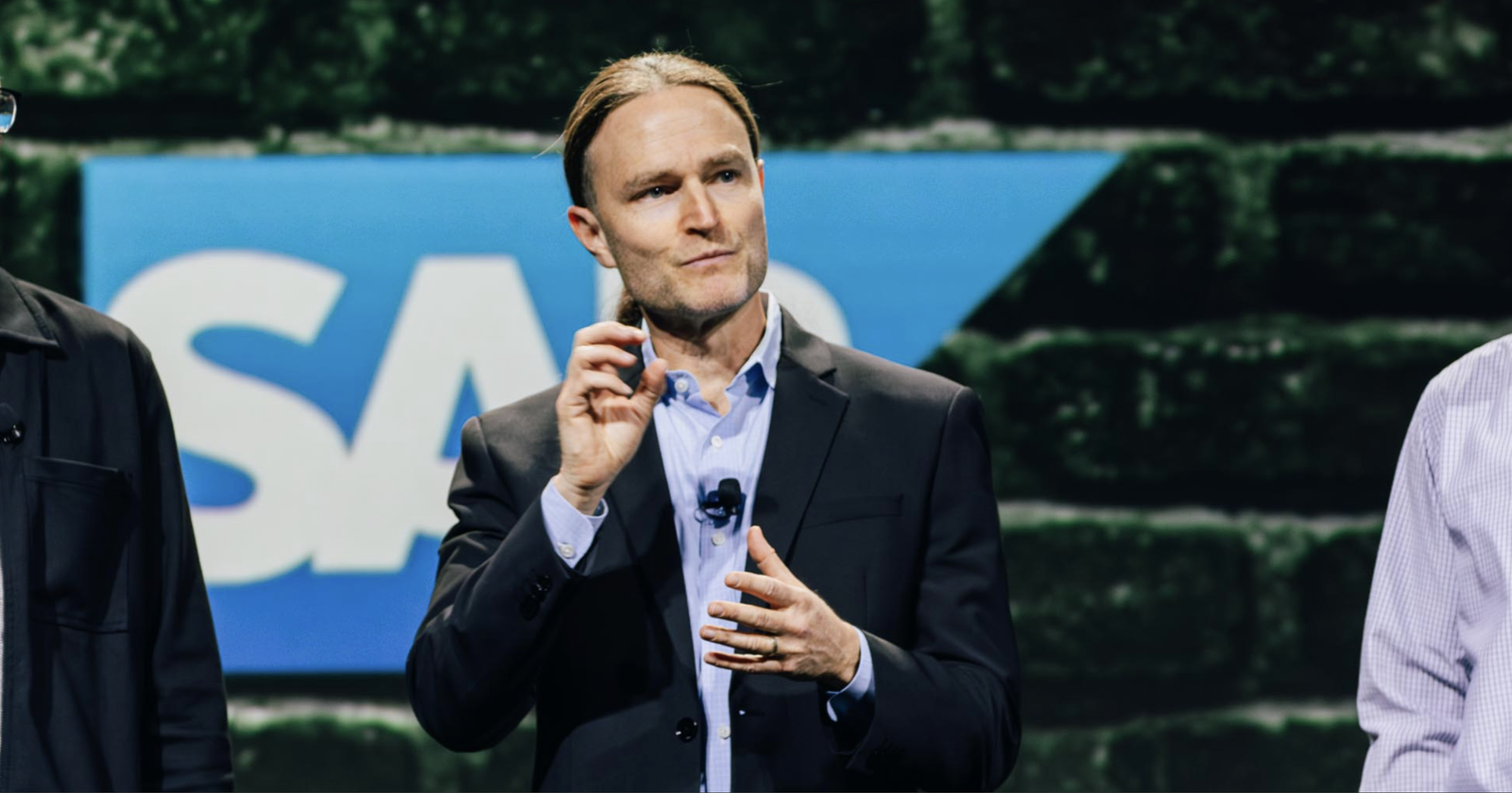
Since then, a lot more has happened — and at record speed. In the year ahead, organizations should anticipate more AI-based market disruptions, and they need to get ready to harness them, according to Yaad Oren, Managing Director of SAP Labs U.S. and Global Head of Research and Innovation at SAP SE.

“We hear at academic conferences, and we see in early startups, many very disruptive trends,” Oren told attendees at last fall’s ASUG Tech Connect conference. “I think a few of them will positively impact our work lives in three to five years.”

At SAP, considering the potential evolution of enterprise technology—and determining where the company should invest in various innovation areas—is a core component of Oren’s roles and responsibilities.

In his mind, six “main disruptions for customers” have emerged; in response, SAP is actively investing to build future products that will allow its customers to respond. “We are preparing for a certain reality,” Oren said.

The Six Disruptions

1. The future of AI: AI-native software architecture

    Traditional software design patterns are increasingly giving way to AI-native architectures, which are expected to dominate the workforce of the future. The evolution of AI itself represents the most significant transformation ahead, according to Oren; what we see today is only “the tip of the iceberg,” he said, noting that “post-transformer architectures” could address the limitations of transformer architectures found in today’s generative-AI models, particularly those related to high computational demand and memory inefficiency.

    In moving beyond standard transformer models, some analysts have coined the term artificial generative intelligence (AGI), though Oren is skeptical of this term. What’s certain, in his mind, is that future AI innovation will enable the technology in fundamentally new ways, including by allowing it to define goals autonomously rather than simply responding to prompts.

    The memory capabilities available in AI models are certain to expand, increasing their ability to recognize and store information about users over time; this differs from today’s models, which lack efficient long-term persistent memory. The future of AI could also lie in its ability to gain greater contextual awareness while understanding and adapting to human emotions and behaviors, as well as to other sensory inputs. This may result in new types of reasoning and ways of deriving business insights, while ushering in new ways ​for humans to interact with enterprise software.

    To be prepared for this shift, Oren recommends that enterprises focus on embedding AI that demonstrably works by supporting business processes, delivering strong user experience, and building on their company’s foundational architecture.

    2. The future of data: data flywheel unleashed

      As the world’s usable data becomes accessible to AI models, the ability to generate, manage, and enhance proprietary data will be a critical source of competitive differentiation. 

      The evolution of data platforms will fundamentally change how enterprises manage information. Oren noted two key trends: the growing reliance on synthetic data generation (with most AI models in 2024 trained on at least 50% synthetic data) and the advancement of data quality tools and metadata management.

      Oren also highlighted that, while AI today excels at learning from images and voice, most enterprise data still cannot be efficiently consumed and interpreted by AI due to low quality, being too unstructured for certain models and lacking semantic connections between different data types. Much of what can underpin business results in real-world scenarios, such as momentum data (gestures during a meeting, for example), remains largely untapped by current AI systems. These emerging data types are still in their infancy, but they have the potential to enable new forms of AI reasoning beyond text, voice, and images.

      Oren emphasized the growing importance of the “data flywheel effect” for future data platforms. SAP’s data flywheel operates through a core cycle in which AI-embedded applications generate increasing amounts of data as users interact with them; this data is harnessed via a clean data strategy on SAP’s platform, enabling the training of ever-improving AI models that, in turn, make applications more effective and continue the cycle.

      This approach is implemented across three layers: AI (with SAP’s copilot Joule focused on productivity), data (with SAP Business Data Cloud enriching SAP and non-SAP data sources), and applications (with SAP Business Suite covering end-to-end processes). This strategy delivers measurable results, Oren said, with SAP research revealing that AI drives a 31% return on investment for users who’ve adopted AI, underscoring that truly effective modern applications require powerful AI at their core.

      3. The future of UX: Hyper-personalized user experiences

        Current software interfaces are losing relevance as a new generation enters the workforce with raised expectations for hyper-personalized experiences. Oren pointed to industry research that shows future user expectations will demand generative UI — screens that dynamically adapt and change rather than remaining constant. The new generation will also require more emotional connection to their interfaces, reflecting their upbringing in an AI-driven environment. Concurrently, immersive technologies—such as augmented, virtual, and mixed reality—are gaining traction, indicating a further shift toward more all-enveloping user interactions.

        4. Quantum computing breakthroughs

          Oren told attendees that while quantum computing isn’t ready for its mainstream moment just yet, it is advancing faster now than ever, due to substantial technology-industry investment and government support. In 2025, the White House issued a memorandum identifying five priorities in fiscal 2027, including quantum information science and technology, making it a national priority with significant government incentives.

          For enterprises, quantum excels at exponential optimization problems like those found often in supply chain management; if built to specifically support supply chains, quantum could hold the key to solving complex distribution challenges that traditional high-performance computing cannot handle efficiently. SAP has recently partnered with IBM to work on solving optimiziation problems with the latest quantum computing technologies. 

          5. Advent of physical AI: Robotics

          Physical AI will also enter core business domains in the future, inflating the need for emerging enterprise software capabilities. In addition to actively investing in quantum, SAP is investing in robotics at the software layer in preparation for physical AI, enabling robots from hardware partners to connect to enterprise systems, learn how to perform business tasks, and operate at scale in a governed manner.

          Robotics represents a rapidly evolving field in which software capabilities already exist, but costs remain prohibitive for large-scale deployment, Oren explained. SAP is working with early customers on proof-of-concept projects, particularly in warehouse management scenarios. The integration combines AI reasoning with physical capabilities, enabling robots to perform complex tasks while answering questions and observing their environment.

          “A few years from now, most likely, you're going to see that you have a team of human agents and robots who will report to you,” Oren told attendees.

          6. The future of cloud: Distributed, secure, and trusted cloud

          As compute demands rise amid geopolitical fragmentation, a new standard of secure and distributed cloud will evolve to enable business success.

          The distributed, secure, and trusted cloud represents a fundamental shift in enterprise architecture to support the reality of agents, robots, and augmented teams, Oren said.

          In a reality where AI agents may grow exponentially in enterprise landscapes, sometimes creating their own dedicated agents, the cloud infrastructure must evolve to support this augmented reality with appropriate networking, trust, and privacy capabilities. This transformation requires new enterprise architecture approaches to manage the complexity of human-AI-robot collaborative environments effectively, he said.

          Want to continue reading this article?

          Become a member and get access to all ASUG benefits including news, resources, webcasts, chapter events, and much more!

          Log in

          Not an ASUG member? Learn more