Log in to save this article and keep your favorite resources in one place.
In a recent Enterprise Architects Reddit thread simply named “Enterprise Architects: What are you?” one professional laid out a detailed, deeply personal account of a role that blurs the lines between business analysis, solution design, and enterprise strategy, only to be met with a chorus conflicting definitions.
The adage goes: Ask 10 EAs what they do, and you’ll get 10 different answers. Ask them what keeps them up at night, and you’ll get one: the feeling that the expectations are infinite, the resources are finite, and no one in the room fully understands the weight of what this role carries.
This debate highlights a fundamental reality: EAs are navigating one of the most complex and consequential roles in the enterprise, often without clear support. That is why the ASUG Enterprise Architect Community has grown: it champions the people driving business transformation and helps keep them in the driver’s seat.
The Role Has Never Been More Critical — Or More Complicated
The ASUG 2026 Pulse of the SAP Customer Research makes it clear: with 65% of EAs increasing their SAP investments and 70% identifying AI and ML as the technologies most likely to reshape their organizations, the stakes have never been higher. And yet SAP S/4HANA migration remains the number one challenge, with more than half of EAs navigating that complexity right now.
EAs are being asked to do more than architect systems. They are expected to:
- Govern clean core while accommodating the customizations the business genuinely needs.
- Drive enterprise modernization without disrupting revenue, customers, or financials.
- Manage technical debt while simultaneously delivering on today’s roadmap.
- Build AI readiness in organizations that want results yesterday.
- Connect SAP and non-SAP ecosystems into a coherent, governed whole.
- Keep data strategy, lineage, and ownership intact across an increasingly complex landscape.
EAs are the strategic orchestrators of transformation — the people responsible for translating business vision into technology reality, at speed, under pressure, with stakes that have never been higher.
Their responsibilities are wide-ranging. Beyond designing systems, EAs actively drive innovation by leading experimentation, modernizing legacy environments, and building the flexible, secure frameworks that support long-term growth. As trusted advisors to leadership, they ensure technology investments align with business priorities, reduce complexity, and position IT as a catalyst for transformation rather than just a support function.
If transformation is a journey at full speed, EAs are the ones who map the road, plot the course, and make sure the entire organization is heading in the same direction.
But as AI reshapes SAP landscapes at breakneck speed, that position has never been more complex or more consequential. There is both a skills gap and a talent gap emerging as organizations struggle to define and hire for EA roles, while a generation of experienced EAs are retiring and taking decades of institutional knowledge with them.
The Support from ASUG
For EAs, the ASUG community is not an add-on. It is the blueprint for multilayered, foundational support providing the connection, clarity, and growth this role demands. From podcasts, such as Navigating Enterprise Architecture and AI and The Role of an Enterprise Architect, to virtual events covering topics like AI in action, business and IT alignment, and building a connected view of transformation, to articles exploring everything from strategies to the evolving identity of the EA role itself, the ASUG Enterprise Architects Community offers a steady stream of practitioner-focused content designed to meet EAs exactly where they are and help them get to the next step on their journey.
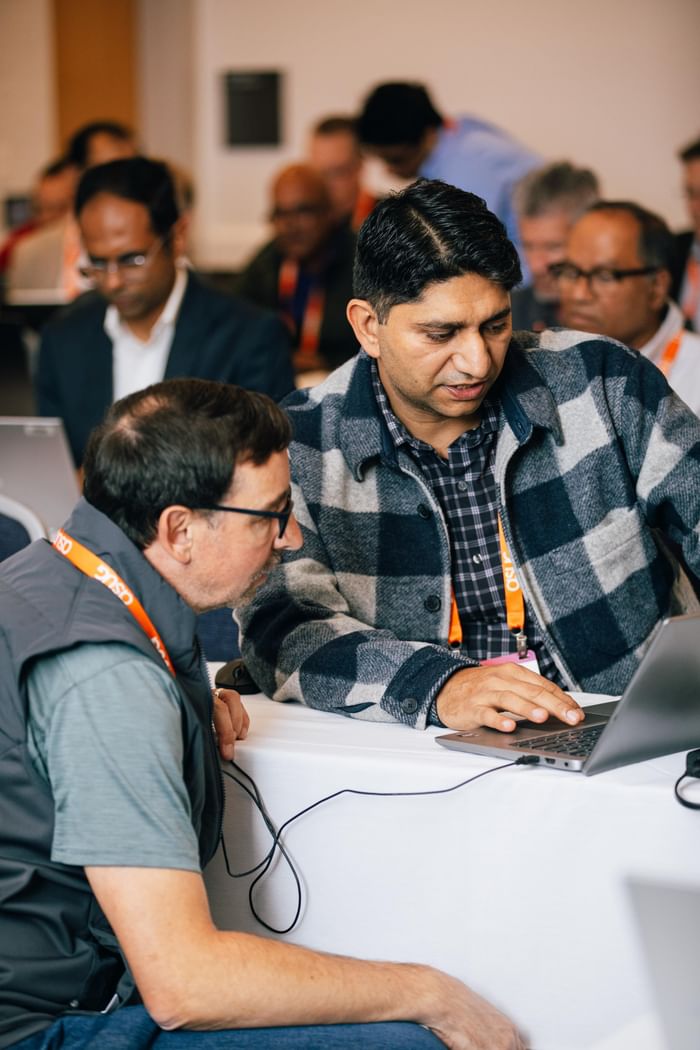
And it does not stop at content. This is one of ASUG’s most vibrant and active communities. It’s a practitioner-led space where EAs work alongside one another, sharing experiences, challenging perspectives, and co-creating solutions to build confidence, capability, and a stronger sense of connection across the ecosystem. Most recently, SAP CEO and Chairman of the Executive Board Christian Klein joined ASUG CEO and Chief Community Champion Geoff Scott to discuss how AI is being pragmatically embedded across the SAP portfolio and what it means for EAs shaping long-term roadmaps.
Here is what being part of this community actually looks like:
- Peer Exchange That Goes Beyond Surface-Level: Community Conversations give EAs a space to surface challenges without the filter of a vendor pitch or a conference panel.
- Cross-Community Connection: ASUG has built intentional bridges between the EA Community and SAP Business Transformation Management (BTM), connecting dots across the entire SAP ecosystem so architects are never operating in silos.
- A Private Network Built on Trust: A private LinkedIn group gives members a space to connect and collaborate outside of formal sessions — because the best conversations often happen between events.
- A Growing Community Resource Center: Practitioner-driven resources, research, and insights curated for the EA role specifically, not repurposed from somewhere else.
- A Dedicated Homebase Email: A monthly guide to keep content relevant and top of mind for the community.
If the EA’s mission is to ensure every project supports the overarching goals of the organization, then who is supporting the EAs? This community is.
The Value Being Generated
In this supportive ecosystem, members are finding each other and speaking openly about the complexity they are actually carrying.
In ASUG Community Conversations (all available on demand through the EA Resource Center), members are candid about what they are up against:
- “Across the HR landscape, we are driving an application modernization effort to converge regional systems into one global, standardized solution.”
- “Maturity and capability are a moving target. The tool is one way to go, but flexibility and adjusting based on priority is the key.”
- “The architecture is much more than just SAP — it needs to encompass the whole ecosystem, including costs for all needed aspects.”
- “Integration of a modern solution like SAP S/4HANA with legacy solutions, and trying to work through the security setup to use modern solutions, adds to the challenges list. Also trying to upskill resources to use the latest and greatest.”
- “We have enterprise infrastructure and applications, but I am focused on SAP HCM and SuccessFactors — and we are lagging with inconsistencies.”
These voices reflect a community wrestling with challenges in real time. The challenges are structural, organizational, and deeply human. From these gatherings, we are lucky enough to witness a community that is finding some of their best solutions from peers who have already been through it.
On-Site Presence at the Events That Matter
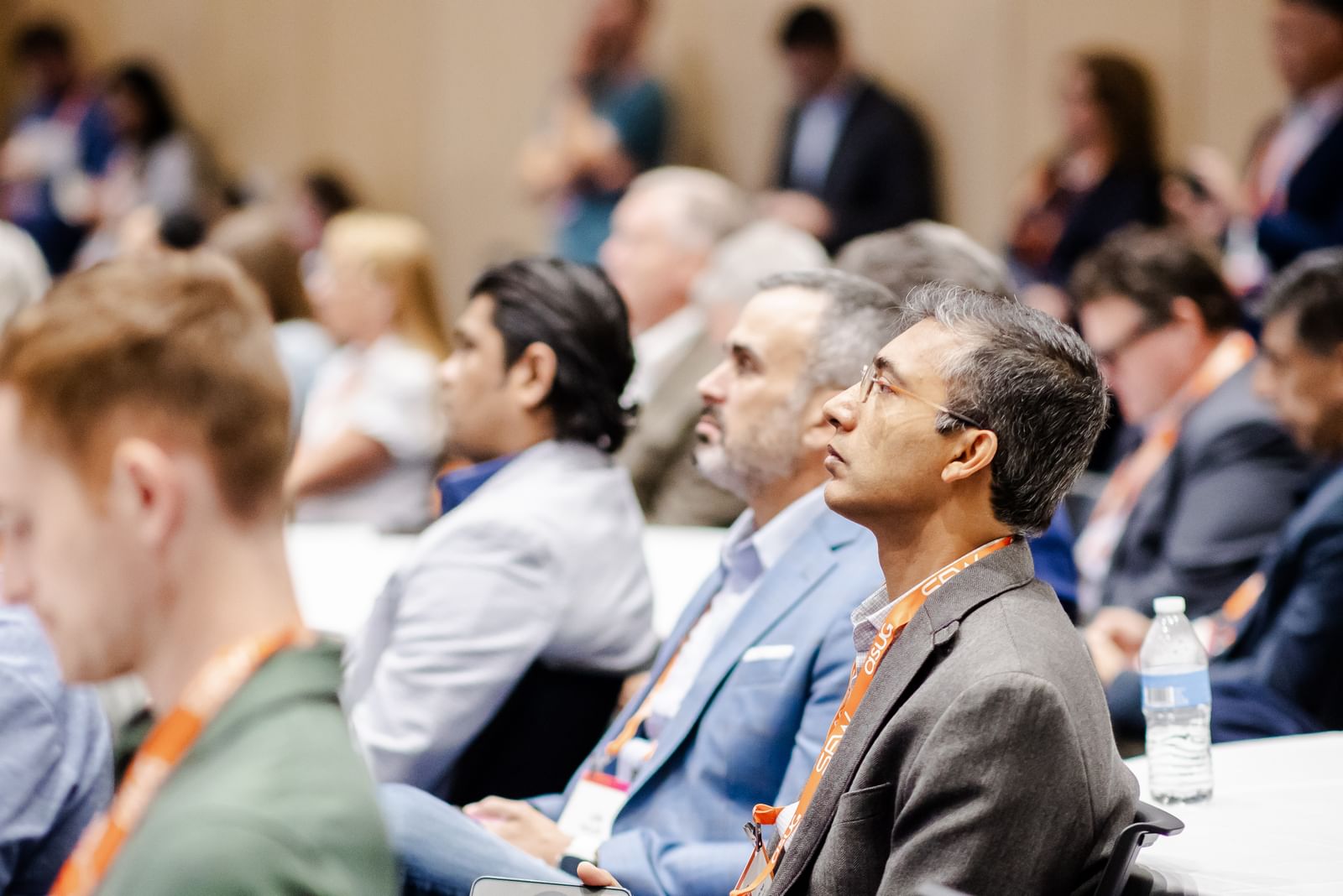
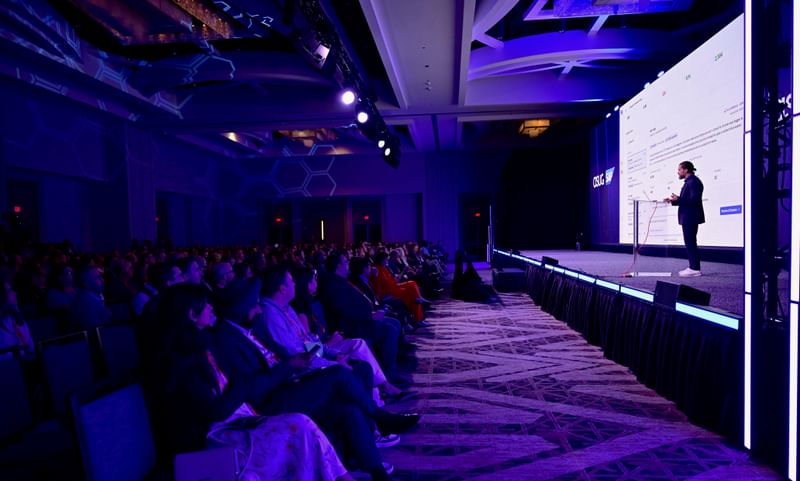
The ASUG EA Community exists far beyond a digital vacuum. We bring these conversations to life both virtually and in person, often collaborating with the SAP BTM community. This year, that includes both the ASUG pre-conference seminar Enterprise Architecture & Business Transformation Management: A Deep Dive and the ASUG Community Conversation with the BTM community at SAP Sapphire and ASUG Annual Conference, as well as our continued presence at ASUG Tech Connect, which remains a primary hub for EAs to connect face-to-face.
In addition to its online and in-person event offerings, ASUG also shows up at events as a consistent voice on the community’s behalf. From the Next Generation SAP Enterprise Architect Learning Forum to the SAP Cloud ALM Summit, our goal is to ensure EA practitioners are represented in the rooms where decisions are made, while gathering the key insights and inside information to bring back to the group.
That presence is intentional. As Kelly Dowling, ASUG Director of Product Strategy — Communities, shared after attending the EA Forum in Newtown Square, “Spending time at the Next Generation SAP Enterprise Architect Learning Forum last month, it was clear this is a community that thrives on shared experience and practical insight, and it reinforced that what we’re building at ASUG is aligned with their needs.” It’s a reflection of how we continue to listen, learn, and show up in the spaces that matter most to EAs.
What’s Coming: SAP Cloud ALM Summit (April 14 – 16)
For EAs responsible for aligning strategy with operational execution, the SAP Cloud ALM Summit is the next opportunity to see how transformation capabilities come together across the SAP ecosystem.
Sessions will cover:
- AI-driven transformation and autonomous operations
- Integrated toolchains supporting transformation programs
- Clean core implementation approaches and governance
- Validation strategies for RISE with SAP projects
- Hands-on sessions for monitoring and managing SAP environments with Cloud ALM
This is not a passive observation event. It is a place to bring your hardest questions and leave with real answers — alongside peers who are navigating the same terrain.
Your Seat at the ASUG Enterprise Architecture Community Table Is Waiting
EA is evolving faster than any job description can capture. The expectations are high, the landscape is shifting, and the isolation of the role is real. But it does not have to be.
The ASUG Enterprise Architects Community is where practitioners come to be seen, challenged, and supported as the strategic leaders this moment demands. Whether you are governing a clean core migration, building an AI readiness strategy, or simply trying to make sure the whole ecosystem holds together, you belong here.
Your next steps:
- Join the ASUG Enterprise Architect Community.
- Register for the SAP Cloud ALM Summit — April 14 – 16.
- Register for upcoming ASUG Community Conversations on April 21 and April 23.
- Explore previous Community Conversations on demand in the EA Resource Center.
- Reach out to your dedicated EA support person, Nadalee Williams, and say hello.
You Might Be Interested In

Log in to save this article and keep your favorite resources in one place.
Log in to save this article and keep your favorite resources in one place.

Log in to save this article and keep your favorite resources in one place.

Log in to save this article and keep your favorite resources in one place.