To keep up with the accelerating pace of change in enterprise technology, SAP continues to sharpen innovation and learning across its ecosystem.
Andre Bechtold, President of SAP Industries & Experiences, recently sat down with ASUG Executive Exchange to detail how the company is serving as "customer zero" for its technologies to ensure innovations are thoroughly tested before reaching customers and to discuss how SAP is using demonstration environments where business value—not product features—leads the conversation.
Bechtold also details SAP's evolution in learning strategies—from traditional classroom training to personalized, multi-format “edutainment” that accommodates different learning preferences while ensuring consistent, reliable content. With a modernized approach to annual certification renewals and the expansion of SAP Experience Centers (including a new retail city in Walldorf, Germany), customers will discover fresh opportunities to engage with SAP's ecosystem and ensure their implementation partners retain current expertise in rapidly evolving technologies.
This interview has been edited and condensed.
ASUG: How is SAP aligning its solution and innovation strategy to help enterprises accelerate digital transformation? How is SAP making innovation tangible?
Bechtold: At a software company like ours—where AI is a key driver of our portfolio going forward for our customers’ needs—it can be tricky to keep pace across all the different initiatives. We need to support them in prioritizing initiatives, structuring them effectively, and ensuring the right knowledge levels are in place to help companies improve.
At SAP, we have industry councils, where company leaders collaborate on both internal and external use cases we can demonstrate to customers. We always try to manage the most complex business processes by identifying the most valuable use cases new technologies can address. This is what we have also done with AI.
We met with key internal stakeholders to think about how AI could best improve current work in specific areas. We’ve made massive investments in new learning journeys for all the different roles across SAP. Whether it’s applying AI in the code lines of our core products, optimizing business processes, or enhancing daily workflows, our goal is to help employees understand how AI can help them in practical, relevant ways.
Given the range of tools—some people use Copilot; some are using Google Gemini—we decided to put this [material] all together in a chat AI hub and dedicated learning page that offers resources from high-level overviews to in-depth technical content. Everyone can come to this platform, use it, and give feedback about new ideas, new use cases, or what they want to manage with AI.
For me, one of the most important pieces is managing AI in a structured way. Without that, it’s easy to get lost in the speed of innovation and technology.
ASUG: It sounds like you see yourselves as “customer zero” – testing and applying innovations internally so customers can learn from your experience. How does this work in practice, and how does it impact your customers?
Bechtold: That's a very good point because, in many ways, I’m always customer zero in my demo landscape. It’s the most holistic end-to-end portfolio landscape of SAP, complete with demo data, fully connected systems, and real integration scenarios. Whenever there’s new software, I’m typically the first to implement it in this environment as customer zero.
There’s also another customer zero, which is our own IT department, which manages production use cases in parallel. We’ve learned that early involvement with product development results in better releases. We can deploy on our demo landscape as a customer zero, then give feedback on what is working and what is not before it reaches customers. It's a good working model, but it’s not always easy. We must balance the speed of innovation with the trust customers place in us to deliver high-quality, secure products.
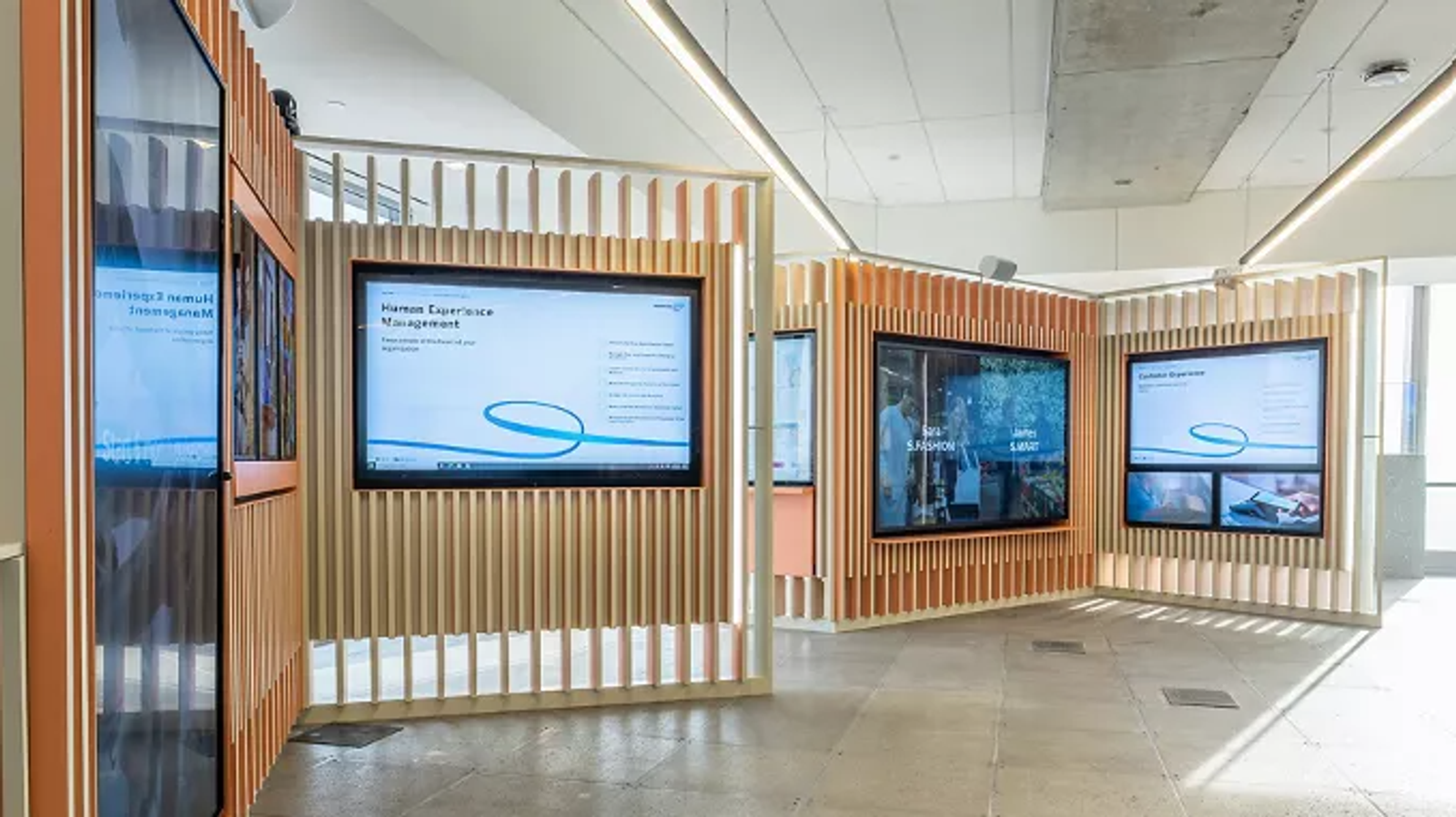
In our SAP Experience Center, we build reference landscapes based on the latest technologies, whether for retail, discrete manufacturing, or process manufacturing industries. We start with a plain-vanilla reference landscape and gradually make it productive with all the new innovations, integrating partner solutions along the way and stress-testing their scalability. We then start to run the processes and create transactions in the systems.
I'm always convinced that bringing a customer to a productive landscape—where they can see a working, productive system in action, even in the public cloud—is far more compelling than any demo we could show on the system at a customer site. This way, it is real: they can touch it, they can feel it, they can talk to the developers directly. This is the most powerful way to showcase the value of software.
ASUG: Today, one can find over 6,000 job openings on LinkedIn for enterprise architects, which constitutes both an opportunity and a challenge. How can SAP help bridge the gap and get people trained and certified to fill those roles? The same applies to AI skills, as demand is growing faster than the talent pool. What can you share about learning journeys to address this, and what goals do you and the team have for the second half of 2025?
Bechtold:. The current shortage of enterprise architects in the market represents a massive talent opportunity. Whatever we do for our external audiences—partners, customers, and students—we also do for our internal teams. Our goal is to ensure the same level of knowledge across all groups and to lead internally with best practices.
We’re in the process of certifying all our internal enterprise architects, to date, already well over 90% are successfully certified. The same certification—with identical content, structure, and hands-on training—is already available for partners and students. It’s a rigorous process. Enterprise technology certification often requires practical experience, but the resources are available to anyone with access to our learning page. This is a shift: we’re now treating our internal workforce the same way we treat our partner ecosystem.
One of my key priorities is to achieve a level of knowledge that is consistent across channels. This is similar for demos. Partners now have access to our internal demo landscape. This is a big change. At the beginning of last year, partners only had access to 8% of our landscape – today, they have access to 100%.
In return, we expect partners to support us, get certified, and show up to customers with full knowledge and certification. It’s not acceptable anymore for one consultant to be certified while the rest of the team lacks formal training. We are also making it a priority to drive this awareness in our customer base and to evaluate the expertise of those delivering it.
Certifications matter. If they’re not being pursued, the value of technology won’t be fully realized. Ultimately, it comes down to showing customers the true value of our software.
A CFO in the consumer product industry shouldn’t see the same demo as someone in mining. These are completely different industries and have different areas of business focus. We must scale industry-specific, customer-specific use cases. The goal isn't just to teach; it's to inspire.
ASUG: What advice do you have for executives under pressure right now? Those already on SAP S/4HANA are focused on maximizing the value of what they’ve implemented, while others on RISE with SAP are working to stay on top of constant maintenance cycles. Everyone is trying to make sense of AI—both internal use cases and broader, non-SAP use cases. How can we help them find a path to realize value, empower their teams, and navigate the skills gaps and resource constraints to succeed?
Bechtold: That’s a complex question because you touched on multiple points. At some point, you simply must start, but not in an unstructured way. I always expect a minimum level of knowledge about certain technology or what SAP systems can do.
My approach is very pragmatic: begin by identifying the 10 key processes most at risk. These could be based on current economic trends in whatever country I’m doing business in, trending behaviors in certain industries, or key drivers of the business. From there, assess how technology like AI can support those processes, both with what’s currently available and then also looking at roadmaps.
Then ask: How long will it take to get there? Not just in terms of implementation, but also in managing the data, driving change management, optimizing processes, and preparing the people involved.
That’s why we use what we call an ‘experience and go live’ model. We start with a workshop and with the customer, we define the 10 key processes. We bring in best practices, sometimes from other customers in the same industry or even sometimes from other industries. Then, we define processes and set up a system, sometimes even just in a sandbox environment. From there, we build a prototype to showcase how it could work using their data and processes based on their definitions and input. And then they can see—relatively fast—how this could work for them.
For me, that’s the key: if you’re running a business and trying to figure out how to leverage AI, it can get very expensive without focus. You don’t always need the most advanced large language model. In some cases, a smaller, more targeted model can deliver better results, if it’s aligned to your specific needs. Random pilots across every area with no clear purpose won’t help.
This comes back also to exactly what we are doing at SAP: defining the use cases using a value engineering approach. Start with the most valuable use cases, then pragmatically start to implement prototypes, then see how it could be scaled and brought to life afterwards. This, for me, is the perfect approach, but all of this requires a foundational understanding of the software as well as of the technology.
ASUG: Let's talk about new ways people are learning – what you refer to as “edutainment,” with personalized learning paths and immersive experiences. How is this evolving? We haven't touched on the generational aspect yet. How are you thinking about the needs of everyone, from Zoomers to Boomers?
Bechtold: It's a good point. About two years ago, we recognized the need for better—and free—learning experiences with e-learning journeys and more hybrid instruction and learning models.
The pace of innovation, especially with AI, has accelerated rapidly. Today, you can go to ChatGPT and nearly simulate an exam just by prompting it the right way.
The problem is that you don’t always know the source or reliability of that content. That’s why it is essential for us to offer free learning that’s trustworthy—especially in an AI-driven world with large language models and a flood of content.
We also need to offer new technologies driving trends in learning, and we need to make them available for our learners who need to spend as much time as they can with the customer. Learning needs to be personalized at scale, fast, and relevant to today’s jobs. And, with the multiple generations in the workforce, we must support diverse learning preferences: from instructor-led training to quick five-minute Spotify or TikTok learning experiences to podcasts for those who are commuting or on the move.
Again, that is why we need to make use of all the technologies out there to solve the learners’ requirements. Research consistently shows that, even with AI coming, there will be a massive lack of talent in many industries.
We need to serve the developer community, for example, engineers who enjoy gamification as a way to train in the system, to code, and to get direct feedback, perhaps not in person but all online. We also have the sellers who need to sell software to our customers. We have resellers who may want to do pitch training in front of a customer with customer objectives and who are looking for personal interaction. We have enterprise architects who also have different kinds of learning behaviors. We need to face all that complexity. At SAP, our portfolio is broad and complex, so we must use technology to create efficiency and relevance at scale.
Ultimately, SAP is a product-led company. No matter where people sit in the organizations, they should understand our products, at least at a high level. Everyone should be able to have a meaningful conversation with a customer about our portfolio. That is not something that I think is too much effort to ask. It’s foundational. I think we’ve lost some of that product knowledge over the past few years. Rebuilding it is a top priority.
ASUG: Experience centers play an important role for SAP. Looking ahead to the rest of the year, what are your experience center goals and how will those evolve?
Bechtold: We’ve found a very good model, and I’d say that’s one of our biggest achievements. The SAP Experience Centers now operate on a financially sound foundation, which allows us to run them relatively independently of budget constraints.
We also work together with co-innovation customers and partners, and we finance them together. We track the outcomes, and the return on investment has been significant. When customers visit a shared center, we consistently see higher potential for upselling and cross-selling because they see the context of their industry and the value of the SAP portfolio.
Building on that success, we’re continuing to expand. We’re refreshing certain centers with new use cases and taking things a step further to make them even more realistic. For example, we built a ‘retail city’ in collaboration with three partners, complete with innovation stores for grocery, fashion retail, and sports retail. SAP employees and their families can shop there 24/7. We run it on our reference landscape, a full public cloud with some partner solutions on top.
Looking ahead, one of my dreams is to produce and operate a fully functioning supply chain—from sourcing and production to shipping and selling—managed entirely through our systems. This would bring the promise of our technology to life. In retail and consumer products, this extends to warehouse and inventory management, which also relates to other industries like discrete and process manufacturing.
We’re already linking some of these elements across centers, and we’re building supply chain management and last-mile-delivery scenarios in partnership with customers. We’re also innovating beyond commerce. At one of our campuses, we’ve created an energy park that reflects real-world energy management use cases for utility-heavy companies. A lot of things are coming together, step by step. Of course, all this must be managed carefully. But my team is leading, and showing all this to customers has proven more reliable than anything else we could present.
ASUG: One last question: what can you say about the Get & Stay Certified program at SAP? How is SAP keeping its certification programs relevant and valuable for professionals in the face of rapid technological change?
Bechtold: Our goal is to establish a common knowledge level in the market across all the channels: across partners, customers, all our employees, and students.
In the past, we offered certifications, but they were not very hands-on. We want people to practice and show their skills in a hands-on system whenever applicable. In the past, if you had a certification, it did not expire. But with the current pace of innovation -- especially in areas like AI, data management and cloud technologies -- you cannot be up to date if you hold a two-year-old certification. That’s just old content.
You always need to have the latest and greatest knowledge, and to boost it by best practices. After starting this last year, we now have our first cohort of certified consultants. This is a huge change in certifications for us, but we’ve also made it easier to stay current. Participants complete pre-assessments and skills checks before renewing their certification, so they can focus on what’s new and what has changed. They can test their knowledge before they [attain] the new certification.
It’s imperative that we update our certifications every year, especially for our partners and the broader ecosystem. We expect they’re always up to date with certifications. For customers, this is super important. Customers are paying close attention to whom they work with, and they want assurance their partners are fully up to date. This is the foundation and baseline. We expect you to Get & Stay Certified. It's a common theme now: you need to update your certification after one year.